Thailand is signalling to the Trump administration that an escalating tariff regime could prompt a recalibration of its military partnership with Washington, marking an unusual move to link security commitments with trade negotiations. Government officials plan to embed this warning into a counterproposal during reciprocal-trade discussions set to resume later this month, according to a source with knowledge of the deliberations who spoke on condition of anonymity. Although the language will remain deliberately general, Bangkok has made clear that substantially higher tariffs could trigger a reassessment of its participation in joint military exercises and other defence initiatives, the official indicated.
The leverage play reflects Thailand's precarious economic position following the imposition of a 12.5 per cent tariff on the bulk of its exports under Section 301, a statutory mechanism the Trump administration has deployed to penalise what it characterises as unfair trading practices. Thailand enjoyed a trade surplus of US$51.4 billion with the United States last year, making it highly vulnerable to protectionist measures. The nation ranks among dozens of countries now scrambling to secure improved trade arrangements amid the broader escalation of American trade barriers.
In pursuit of more lenient tariff treatment, Thailand has already tabled several concessions. Bangkok has offered to dismantle its own tariffs and align with American standards for imports of beef, lamb, and alcoholic beverages, moves designed to address Washington's concerns about alleged manufacturing overcapacity. The Thai government has also committed to expediting legislative action against the importation of goods manufactured using forced labour, another priority for American negotiators. These measures underscore how trade discussions have evolved into comprehensive talks involving multiple government agencies and business interests rather than narrowly focused commercial discussions.
What distinguishes Thailand's approach is the unprecedented invocation of its strategic security alliance in a trade context. Thailand represents one of only two formal US treaty allies in Southeast Asia, the other being the Philippines, and this relationship has historically been the cornerstone of American military presence and strategic influence throughout mainland Southeast Asia. By threading security considerations into trade negotiations, Bangkok is essentially signalling that the alliance—built over decades through sustained diplomatic and military engagement—should command premium consideration when tariff schedules are being determined.
Commerce Minister Suphajee Suthumpun articulated this position last month, arguing that Thailand's longstanding strategic partnership with the United States, formalised through the Treaty of Amity, entitled it to preferential trade treatment. She additionally highlighted Thai investment in American enterprises as further justification for exemption from the most onerous tariff levels, setting a threshold of 19 per cent as the ceiling for negotiations based on earlier discussions. This framing transforms the negotiation into a discussion about valuing strategic relationships rather than merely haggling over tariff lines and commodity classifications.
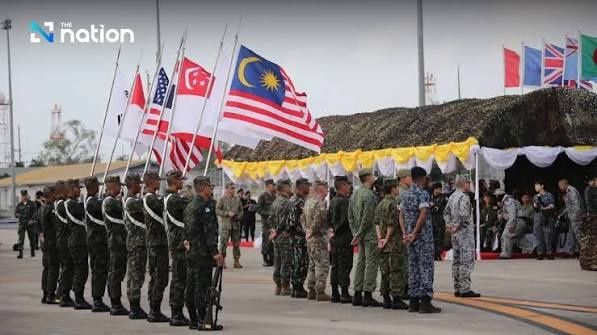
The centrepiece of Thai-American military cooperation is Cobra Gold, an annual multinational exercise co-hosted by both nations that Washington describes as the largest annual joint military drill conducted on mainland Asian soil. The 2024 iteration attracted approximately 8,000 military personnel from 30 participating countries, illustrating both the scale of the operation and its significance as a demonstration of American commitment to regional security architecture. Participation in such exercises carries substantial symbolic weight, signalling alliance solidarity and military interoperability at a time when China's strategic influence in the region continues to expand.
The Thai military establishment has remained circumspect about the proposed linkage between trade negotiations and security cooperation. Defence Ministry spokesman Surasant Kongsiri declined to confirm or verify the proposal, instead suggesting that negotiations would more probably focus on deepening defence collaboration. The spokesman for Thailand's armed forces declined to comment, while the Pentagon and Thai Commerce Ministry similarly avoided immediate responses to inquiries. This studied silence reflects the delicate diplomatic position involved in threading commercial leverage with security commitments—discussing such connections too publicly risks alienating Washington or appearing to weaponise the alliance.
Thailand and the United States have weathered previous tensions in their military relationship. Following the 2014 coup that disrupted Thailand's democratic governance, Washington substantially scaled back Cobra Gold and suspended numerous military engagement initiatives, a punitive response to the extraconstitutional political transition. However, defence ties were gradually reconstructed as Bangkok managed the international fallout and demonstrated renewed commitment to democratic principles. This historical precedent demonstrates that while the alliance has proven resilient, it is not immune to political pressures and strategic reassessments.
Recent messaging from the Pentagon has publicly reaffirmed the robustness of the bilateral defence relationship. During a visit to Bangkok the previous week, Undersecretary of Defense Elbridge Colby met with Thai Permanent Secretary for Defense General Tharapong Malakam and publicly reaffirmed that both nations had recommitted to strengthening the partnership. This rhetorical emphasis on alliance renewal, delivered at an opportune moment, may represent either genuine enthusiasm for enhanced cooperation or a measured response designed to counter suggestions that the relationship could be subject to conditionality based on trade outcomes.
For Southeast Asian observers, Thailand's negotiating posture signals something broader about how security relationships in the region are being recalibrated in the context of great-power competition and economic pressure. The willingness to link military cooperation with trade terms, even if expressed indirectly, suggests that traditional Cold War-era alliances can no longer be taken as fixed arrangements insulated from commercial considerations. As the Trump administration pursues what it frames as corrective trade policies, nations that have long benefited from security partnerships with Washington face the uncomfortable reality that such relationships may increasingly carry explicit economic value propositions.
Thai officials framing the negotiations as a whole-of-government effort involving foreign and defence ministries alongside commercial interests reflects this recognition. The strategy essentially acknowledges that Thailand cannot compartmentalise its relationship with the United States into discrete security and economic domains, but must instead orchestrate a coherent national response that articulates how various dimensions of the partnership reinforce each other. Whether this approach succeeds in securing tariff relief remains to be seen, but it establishes a template for how middle-power nations might leverage their strategic utility in bargaining with a more assertively mercantilist Washington administration.

