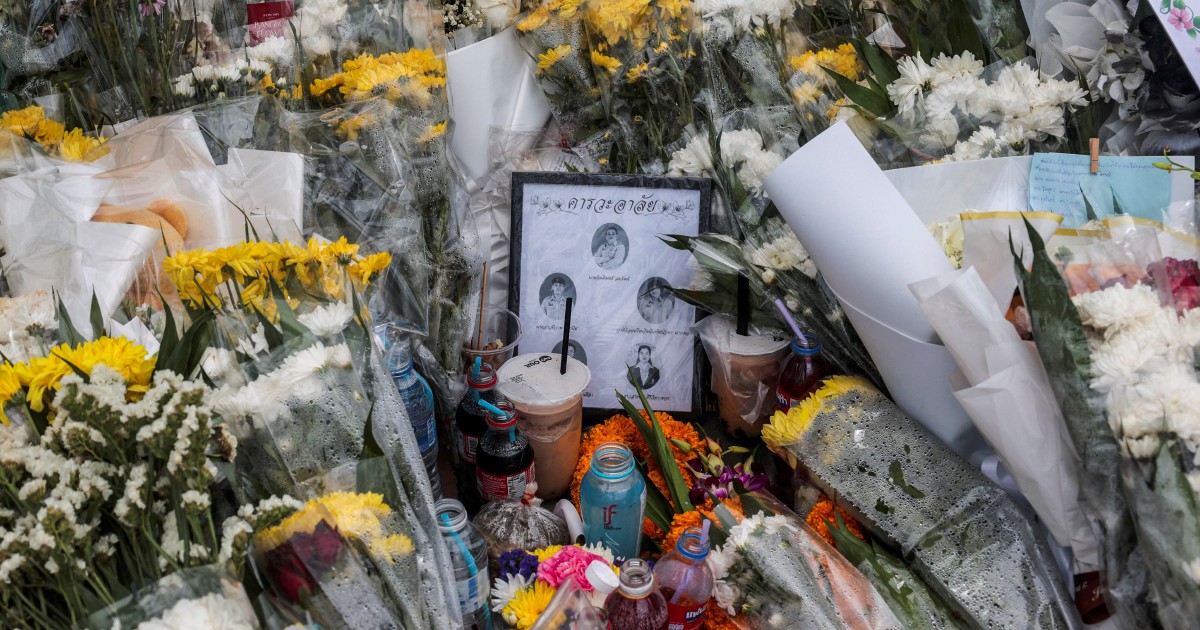
Thailand's government has moved swiftly to tighten firearms regulations in the aftermath of a tragic school shooting that claimed multiple lives last week. Prime Minister announced the suspension of gun licences on Tuesday, signalling an urgent policy response to the violence. The decision comes as the bodies of the young assailant and two grandparents who died in the incident were laid to rest through cremation in Nonthaburi province, marking a somber conclusion to the immediate aftermath of the tragedy.
The suspension of firearms licences represents a significant intervention in Thailand's civilian weapons landscape. Such regulatory moves are typically enacted when mass casualty events raise public safety concerns and force policymakers to reconsider existing protocols governing weapon ownership and licensing. The Thai government's decision suggests recognition that current mechanisms may require strengthening to prevent similar incidents from occurring. This measure will likely affect thousands of licensed gun owners across the country, pending clarification on whether the suspension is temporary or will form the basis for more permanent legislative reform.
The tragedy itself underscores the complex intersection of adolescent psychology, family dynamics, and weapon access that periodically manifests in violent incidents across Asia. The fact that the gunman was a teenager raises questions about supervision, mental health support systems, and how access to firearms is regulated when young individuals are involved. In Thailand, where school safety has become an increasingly prominent public concern, this incident will almost certainly catalyse broader discussions about campus security protocols and early intervention programmes for at-risk youth.
The cremation of the victims represents both a practical and symbolic moment for the affected families and the nation. In Thai Buddhist tradition, cremation typically occurs within days of death, allowing families to begin their mourning process according to cultural practices. The simultaneous cremation of the three deceased individuals reflects the interconnected tragedy of the event, where an intergenerational family rupture occurred through a single violent act. The grandmother and grandfather who lost their lives were not incidental casualties but central figures whose deaths underscore the deeply personal nature of this loss.
From a regional security perspective, Thailand's response invites comparison with how other Southeast Asian nations have addressed mass violence incidents. Malaysia, Indonesia, and the Philippines each maintain different regulatory frameworks for civilian firearm ownership, with varying degrees of restriction. Thailand's decision to suspend licences places it among regional governments taking demonstrable action, though the effectiveness of such measures often depends on implementation rigour and whether underlying social factors contributing to violent behaviour are simultaneously addressed through comprehensive programming.
The timing of this announcement carries political significance within Thailand's domestic landscape. Recent years have seen the country navigate complex transitions involving questions about governance, institutional reform, and public safety. A government demonstrating responsiveness to security crises can strengthen public confidence, particularly when action is visible and timely. Conversely, the efficacy of the licensing suspension will be judged not merely by its announcement but by its actual implementation and measurable impact on preventing future incidents.
The broader policy conversation surrounding this event likely extends beyond firearms regulation alone. Mental health services, early warning systems within schools, family support infrastructure, and community intervention programmes typically feature in comprehensive responses to adolescent violence. Thailand's approach will require coordination across multiple government agencies and potentially partnerships with international experts in school safety and crisis prevention. The most effective long-term solutions generally combine reasonable regulatory measures with robust social support systems designed to identify and assist troubled youth before critical incidents occur.
For Malaysia and other neighbouring countries, Thailand's experience offers both cautionary lessons and opportunities for comparative analysis. Mass shooting incidents remain relatively rare in Southeast Asia compared to some other regions, yet the vulnerability of schools to violence is a concern shared across multiple jurisdictions. Malaysian policymakers monitoring the Thai situation will likely assess whether existing security protocols in Malaysian educational institutions require enhancement and whether licensing procedures for firearms owners adequately safeguard public safety.
The international dimension of this incident should not be overlooked. Thailand's suspension of gun licences may attract scrutiny from international organisations focused on weapons policy and public health, while also potentially influencing regional dialogues about best practices in civilian firearms regulation. The Association of Southeast Asian Nations, though primarily focused on geopolitical issues, increasingly engages with transnational challenges including public safety and violence prevention. Thailand's response will contribute to evolving regional norms around how governments address mass violence incidents.
Moving forward, the success of Thailand's regulatory intervention will depend on several factors including the clarity of suspension criteria, the timeline for policy development, and whether complementary social interventions are implemented simultaneously. The suspension itself is a necessary first step, but sustainable violence reduction typically requires multifaceted approaches combining access restriction with mental health service expansion and community-level prevention efforts. The cremation of the victims marks the end of immediate crisis management; the harder work of policy implementation and institutional reform lies ahead.

