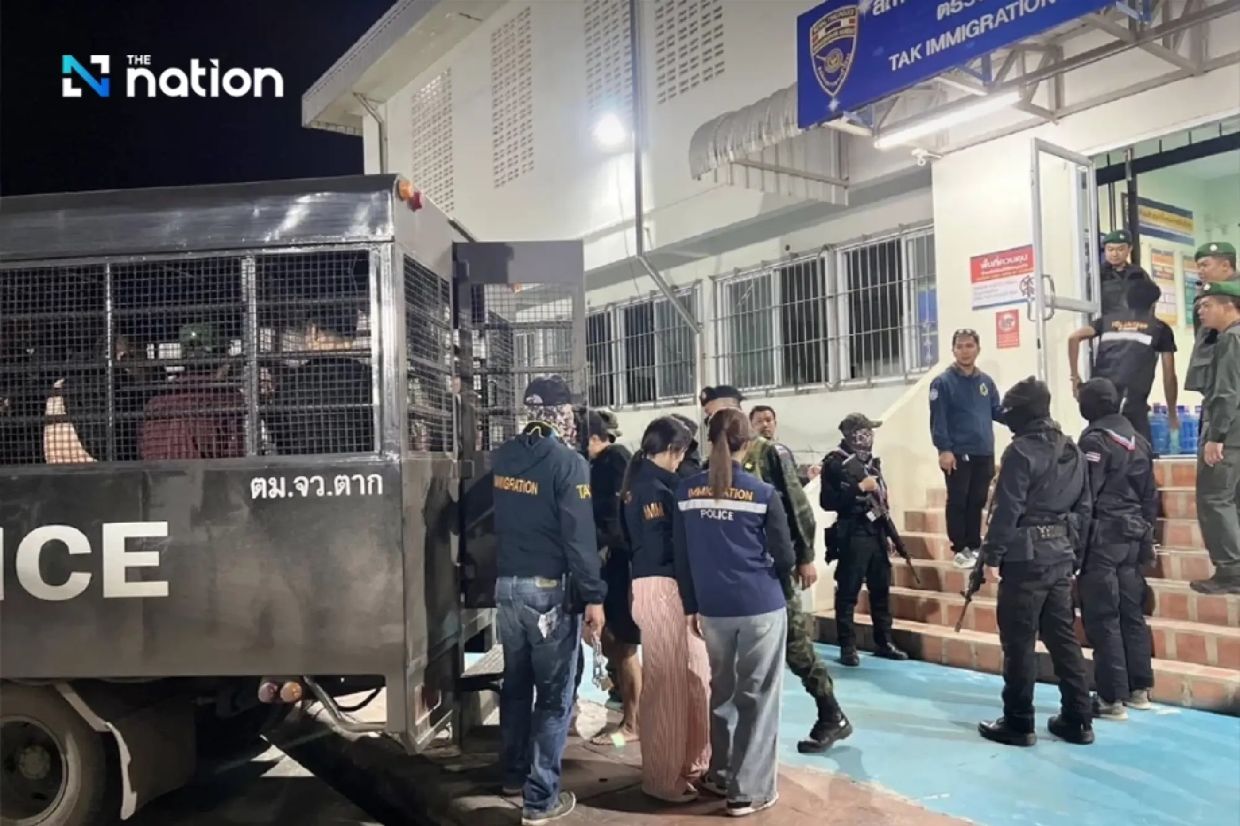
Thailand's government is undertaking a significant overhaul of its immigration framework, determined to streamline the removal process for foreign nationals engaged in criminal activity. The initiative reflects mounting frustration within law enforcement agencies that existing legal safeguards have inadvertently become obstacles, keeping criminal suspects in custody for extended periods whilst bureaucratic procedures, appeals and diplomatic coordination unfold. This administrative bottleneck has become increasingly problematic as Thai authorities have ramped up enforcement operations targeting foreign offenders across the country.
The urgency of this reform effort stems partly from decisions made earlier in the government's tenure. In July 2024, Thailand introduced a 60-day visa exemption for visitors from 93 countries and territories, a policy designed to boost tourism and visa-free entry numbers. However, this well-intentioned measure created significant security blind spots. Because visitors no longer required advance visa applications, Thai embassies could not conduct pre-arrival screening of criminal backgrounds, financial status or other risk factors. The absence of this checkpoint meant that individuals with hidden criminal pasts could enter the kingdom undetected, and some subsequently exploited the system through repeated border runs to extend their stays indefinitely rather than returning home as intended.
Security agencies eventually recognised that this loophole had enabled problematic patterns of foreign settlement and illicit activity. Authorities documented cases of undocumented workers competing with Thai citizens in hospitality, retail and entertainment sectors; criminal networks involved in sophisticated call-centre fraud schemes; money laundering operations exploiting Thailand's business registration systems through nominee arrangements; and grey-market financial networks funnelling capital through illegitimate channels. Tourist hotspots including Pai in Mae Hong Son province, Pattaya in Chonburi, Koh Phangan in Surat Thani and central Bangkok became particular flashpoints for these activities, drawing heightened police and military attention.
The Anutin administration responded by making transnational crime suppression a cornerstone of national security policy. Immigration Bureau officials, Royal Thai Police units and other enforcement agencies received directives to strengthen their screening protocols and field operations. Four specific operational measures were introduced: enhanced monitoring of travellers exhibiting unusual patterns of repeated entries and exits without discernible legitimate purpose; intensified vetting of nationals from high-risk jurisdictions; deeper integration of international criminal databases with domestic security systems and Interpol records; and restrictions on overlapping visa arrangements that could facilitate indefinite stays. These measures represented a fundamental shift toward preventive security rather than reactive enforcement.
Recognising the broader problem, the Cabinet made the decisive move on May 19, 2026, to cancel the 60-day visa exemption entirely for all 93 beneficiary nations. Thailand is reverting to bilateral country-by-country visa arrangements, with most visitors now limited to maximum stays of 30 days. Government officials justified this reversal by arguing that the scheme had failed to deliver its promised economic benefits—tourist arrivals did not increase proportionally to the expanded visa-free access, nor did visitor spending rise accordingly. More critically, the security costs of the arrangement far outweighed any tourism gains, leaving the kingdom unnecessarily exposed to criminal enterprise and requiring intensive police operations to manage the consequences.
Despite these enforcement gains, a critical weakness remains embedded in Thailand's legal architecture. Once foreign offenders are arrested and detained, the machinery for their removal from the kingdom operates with frustrating slowness. The Immigration Act of 1979 grants detained foreigners multiple procedural rights that, whilst important safeguards, create significant delays in deportation timelines. Upon notification of a deportation order, individuals may appeal to the Immigration Bureau within 48 hours, submitting evidence and legal arguments. Whilst such appeals are adjudicated, deportations are typically suspended except in cases deemed sufficiently grave. Furthermore, the Immigration Commission possesses discretion to postpone removals or grant temporary stay extensions on humanitarian grounds or to address legal complexities. These protections exist for legitimate reasons—preventing arbitrary removal and ensuring human rights compliance—yet they have combined to create backlogs of detainees languishing in Thai custody whilst their cases meander through multiple administrative and judicial layers.
Practical impediments compound the legal delays. Many detainees lack financial means to purchase airline tickets for their own repatriation, obliging Thai authorities to coordinate with foreign embassies for travel cost coverage—a process frequently hampered by bureaucratic lethargy or diplomatic friction. In cases where extradition rather than simple deportation applies, the procedures become even more Byzantine. If Thailand maintains an extradition treaty with the detainee's country of origin, the Attorney-General must evaluate the case before referring it to the courts; if no treaty exists, the Foreign Ministry must petition the Attorney-General, who then requests a court extradition order. Each stage introduces potential delays and opportunities for legal challenge. Police spokesman Pol Lt Gen Trairong Phiwpan has acknowledged that whilst non-invoking detainees can sometimes be repatriated relatively quickly, those mounting human rights defences or exercising treaty-based appeal rights face protracted waiting periods, sometimes measured in years rather than months.
Prime Minister Anutin Charnvirakul has now entrusted Deputy Prime Minister Pakorn Nilprapunt, who holds oversight of legal affairs, with spearheading a comprehensive revision of immigration statutes and subsidiary regulations. The initiative focuses particularly on Sections 54 and 55 of the Immigration Act of 1979, which govern foreign national removal procedures. The government's goal is to engineer faster, more flexible and more effective deportation mechanisms whilst scrupulously maintaining compliance with Thailand's international human rights obligations. This balancing act reflects Thailand's memberships in the United Nations Human Rights Council and its commitments as a signatory to eight major international human rights conventions covering children, women, racial discrimination, torture prevention, disability protections and prevention of enforced disappearances—binding commitments that constrain how aggressively authorities can pursue deportations without judicial oversight.
Anutin has publicly articulated the government's position with characteristic directness. Thailand welcomes foreign visitors, investors and entrepreneurs operating within legal boundaries, the Prime Minister stated, but those who exploit the kingdom for criminal purposes or inflict harm upon the national interest must face swift legal consequences and immediate removal. The current system, he emphasised, permits some convicted offenders to resume ordinary life and activities whilst deportation procedures remain pending—a perverse situation that multiplies opportunities for repeat offending and undermines the deterrent effect of criminal justice. The government's intention is to close these loopholes through legislative amendment rather than abandoning the human rights framework that international law demands.
Treirong's explanation of extradition procedures reveals the genuine complexity underlying seemingly straightforward removal cases. Each detainee's circumstances—whether the home country maintains an extradition treaty with Thailand, whether human rights claims are asserted, whether serious crimes versus immigration violations are at issue—determines which legal pathway applies and how many bureaucratic stations a case must pass through. Reforming this system requires threading a needle between competing imperatives: accelerating removals sufficiently to reduce detention centre burdens and prevent re-offending, whilst preserving meaningful judicial review and human rights protections that prevent abuses. Deputy Prime Minister Pakorn's forthcoming consultations with the Interior Ministry, Royal Thai Police and other agencies will presumably focus on identifying procedural bottlenecks susceptible to streamlining without compromising substantive justice.
For Malaysian observers and Southeast Asian policymakers, Thailand's predicament offers instructive lessons about managing open borders and liberal visa policies alongside security concerns. The rapid proliferation of transnational crime networks—particularly call-centre fraud operations that target victims across multiple jurisdictions and money laundering schemes that exploit nominee business structures—represents a regional phenomenon affecting Malaysia, Singapore, Cambodia and other jurisdictions. Thailand's decision to sacrifice tourism growth targets in favour of enhanced security screening suggests that several governments in the region may ultimately conclude that visa-free arrangements carry hidden costs extending beyond raw security metrics. Moreover, the legal complications Thailand faces in deporting foreign offenders—the interplay of extradition treaties, human rights obligations and administrative discretion—are obstacles that Malaysia and other ASEAN members share. Successful reform in Bangkok could establish templates applicable throughout Southeast Asia, particularly regarding how nations can accelerate criminal deportations whilst maintaining credible human rights compliance.