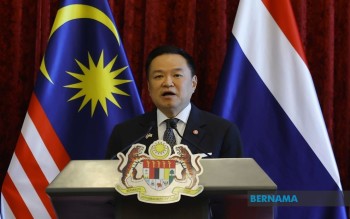
Thailand is confident it can achieve a US$30 billion bilateral trade target with Malaysia by 2027, according to Prime Minister Anutin Charnvirakul, who made the announcement during an official visit to Kuala Lumpur. Speaking at a joint press conference with Malaysian Prime Minister Datuk Seri Anwar Ibrahim at Perdana Putra Complex in Putrajaya, Anutin indicated that the neighbouring country stands on the cusp of surpassing this ambitious figure, particularly given that current trade volumes have already reached approximately US$28 billion.
The Thai premier's optimism reflects the robust economic relationship between the two nations. Malaysia represents Thailand's most significant trading partner within the ASEAN bloc, a position underscoring the strategic importance of the bilateral economic engagement. Anutin's confidence is not merely aspirational; it is grounded in concrete cooperation initiatives already underway. He noted that both governments are actively working through established mechanisms to sustain momentum towards the target, with officials planning to convene the joint trade committee to formulate even more ambitious objectives once the current milestone is reached.
For Malaysian policymakers and business communities, this development carries substantial implications. The trajectory towards US$30 billion in bilateral trade demonstrates the deepening economic integration between Malaysia and Thailand, two economies that share complementary industrial bases and geographical proximity. This growth would represent an expansion from current levels that already positions bilateral commerce as a cornerstone of Malaysia's regional trade architecture. The significance extends beyond mere numerical targets; it reflects a strategic commitment to consolidating supply chain partnerships and market access across sectors vital to both nations' economic futures.
Both leaders emphasised the importance of leveraging the distinct strengths each economy brings to the partnership. Anutin stressed Thailand's commitment to bolstering regional value chains and supply chain resilience by building on what each nation does best. This approach recognises that competitive advantage in today's global economy derives not from isolation but from strategic coordination that allows each partner to specialise in areas where they possess inherent or developed capabilities. For Malaysia's manufacturing and services sectors, such coordination offers opportunities to integrate more deeply into Thai supply networks while maintaining their own competitive positioning.
The strategic focus areas identified by both governments signal where bilateral cooperation will intensify over the coming years. Food security has emerged as a critical priority, reflecting broader Southeast Asian concerns about supply chain vulnerabilities and self-sufficiency in essential commodities. Thailand, with its significant agricultural sector, and Malaysia, with its diverse agribusiness capabilities, can collaborate to strengthen regional food systems. Energy security represents another frontier, where both nations face challenges of diversification and sustainable transition. Digital economy and high-tech industries represent the future growth frontier, where Malaysia and Thailand can position themselves as innovation hubs within ASEAN and compete more effectively in global markets.
Anwar's response underscored Malaysia's determination to meet the stated objective, with specific institutional commitments mobilised towards this end. The involvement of the Ministry of Foreign Affairs and the Ministry of Investment, Trade and Industry indicates that achieving the US$30 billion target is not being treated as a peripheral objective but as a central pillar of national economic strategy. By institutionalising responsibility for this goal, Malaysia signals to Thai counterparts and the business community that the target carries serious political and administrative backing.
The broader context of Malaysian-Thai cooperation extends well beyond trade statistics. Anwar emphasised that economic collaboration serves as the foundation upon which other forms of bilateral engagement are constructed. By strengthening economic ties and achieving shared prosperity, the two nations create stability and mutual interest that facilitates cooperation across diplomacy, cultural exchange, and security matters. This comprehensive approach to bilateral relations reflects a mature understanding that sustainable partnerships require deep integration across multiple dimensions of national life.
Tourism emerged as another area where both leaders recognised significant potential. The travel and hospitality sector represents a crucial component of both economies' services industries, and increased bilateral trade activity naturally generates business travel and opportunities for expanded leisure tourism. Malaysia's well-developed tourist infrastructure and Thailand's appeal as a regional destination make reciprocal tourism promotion mutually beneficial. Enhanced visitor flows between the two nations contribute to cultural understanding and people-to-people connections that reinforce governmental relationships.
Antin's visit to Malaysia marks his first official journey to the country since his reappointment as Thai Prime Minister in March 2026, underscoring the political importance assigned to the bilateral relationship. The timing and high-level nature of the visit demonstrate Thailand's prioritisation of the Malaysian connection within its broader regional strategy. For Malaysia, hosting such a significant Thai delegation represents recognition of Malaysia's economic weight and strategic importance within ASEAN architecture. The bilateral meeting between the two premiers allowed for comprehensive review of progress achieved in various cooperation areas and identification of new opportunities for deepening ties.
Looking forward, the pursuit of the US$30 billion trade target serves multiple functions. It provides a concrete objective that focuses government and business efforts on tangible outcomes. It creates accountability mechanisms that encourage officials on both sides to maintain momentum and address obstacles to trade and investment flows. Most importantly, it signals to investors and business communities that Malaysia and Thailand are committed to sustained bilateral integration, providing the policy stability and institutional support that encourage cross-border commerce and investment. As both nations navigate the complexities of regional competition and global economic transitions, their deepening partnership offers a model for pragmatic, mutually beneficial cooperation within Southeast Asia.

