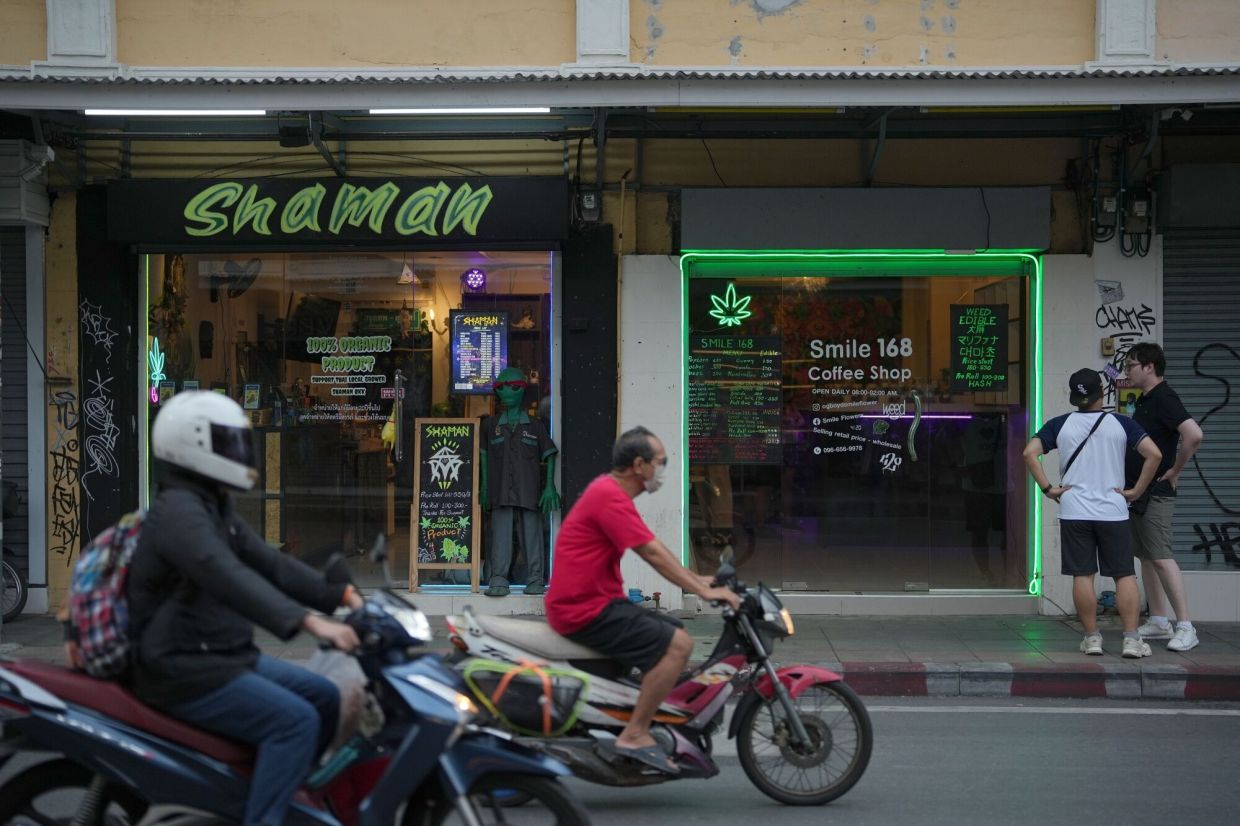
Thailand's Public Health Minister Pattana Promphat has accelerated efforts to reshape the country's cannabis regulation through a comprehensive new legislative framework that would restrict all uses to strictly medical applications. Presented on July 7, 2026, the draft Cannabis and Hemp Act represents a significant tightening of current oversight mechanisms and directly addresses what officials characterise as widespread abuse of Thailand's more permissive cannabis licensing regime since its initial deregulation.
The proposed legislation emerges from mounting concern within Bangkok's bureaucracy about the uncontrolled proliferation of cannabis retail outlets and evidence of large-scale diversion of domestically produced cannabis to international markets where the substance remains classified as a narcotic. Pattana's announcement underscores a fundamental policy shift by Thailand's ruling coalition, particularly the Bhumjaithai Party, which had championed cannabis deregulation as an economic opportunity. The new direction signals that the political consensus favouring recreational access has fractured, replaced by a more restrictive approach aligned with Thailand's traditional stance on drug control.
A critical gap in the existing regulatory architecture prompted this legislative overhaul. Current rules governing cannabis sales, transfers, and extraction rely on scattered ministerial regulations and Thailand's Act on the Protection and Promotion of Herbs, but these instruments contain no provisions addressing cultivation itself. This absence has allowed producers to operate with minimal oversight, creating conditions for supply chain failures and facilitating illegal export. The draft bill would close this loophole by imposing regulatory control from the initial cultivation stage through final retail dispensing, establishing a comprehensive governance chain that currently does not exist.
The government estimates that approximately 6,000 cannabis retail outlets across Thailand either lack valid licences or operate with credentials that have expired. This figure represents roughly one-third of the 18,000 outlets that have operated since 2023, when cannabis outlets first expanded significantly. Since licensing periods extend for three calendar years, the Ministry of Public Health anticipates that 6,000 additional outlets will face licence expiration during 2026 and 2027. Of the outlets with expiring credentials, only about 1,500 have renewed their authorisations, leaving a vast majority operating in legal limbo and creating enforcement challenges for already-stretched regulatory bodies.
Enforcement represents a central component of the ministry's strategy to restore order. Pattana announced that Bangkok is dramatically expanding its inspection capacity by mobilising police units and local administrative organisations, bringing the total number of authorised enforcement officers into the tens of thousands. This force multiplication reflects recognition that the Department of Thai Traditional and Alternative Medicine's existing staff cannot adequately monitor such a dispersed industry. The ministry has established a digital registry of all properly registered outlets, complete with GPS coordinates and licence expiration dates, available on its website. Any cannabis shop not appearing in this database is immediately classified as operating illegally, exposing its operators to arrest without requirement for extensive investigation.
The international dimension adds urgency to Thailand's regulatory tightening. Although cannabis is not classified as a narcotic substance under Thai law, it remains strictly prohibited in most destination countries, including those where Thai cannabis has been detected at border crossings. This jurisdictional disjuncture has created enforcement complications, as Thai authorities must simultaneously conform to domestic regulations while accounting for the criminal law of importing nations. Pattana acknowledged that large-scale smuggling operations have exploited gaps in coordination between Thai Customs, the Department of Thai Traditional and Alternative Medicine, and Airports of Thailand. The previous practice of issuing paper-based cannabis licences created vulnerability to counterfeiting; the ministry has shifted to electronic-only credential distribution to reduce fraudulent documentation.
Regulatory compliance for outlets that survive the licensing review will require substantial operational modifications. Under amended ministerial regulations, all properly registered cannabis shops must redesignate themselves as medical facilities, staffed by licensed physicians who will directly supervise all cannabis dispensing to patients. This requirement transforms outlets from retail environments resembling typical pharmacies into controlled medical settings, narrowing accessibility and introducing professional oversight of individual transactions. The physician-oversight mandate aims specifically to prevent the documented pattern of retailers repeatedly supplying large cannabis quantities to the same customer, effectively facilitating recreational access under the guise of medical use. Any suspicious dispensing pattern will trigger detailed examination, and confirmed irregularities will result in criminal prosecution.
The penalties embedded in the draft legislation are intentionally severe, reflecting governmental determination to prevent recurrence of the regulatory failures that enabled current illegal cannabis commerce. Pattana stressed that violations will trigger "relatively high and serious penalties," though he did not specify sentencing provisions. This emphasis on stringent consequences signals that officials view cannabis deregulation as having progressed beyond manageable bounds and that reversing this trajectory requires punitive deterrence. The legislation's penalty framework will likely incorporate provisions addressing cultivation without authorisation, unlicensed retail operations, diversion of medical cannabis to recreational markets, and international smuggling.
The legislative path forward involves parliamentary deliberation following completion of public consultation in late June 2026, though the bill did not reach committee review during the current parliamentary session. This timeline suggests enactment may extend into late 2026 or early 2027, creating an interim period during which current operators may accelerate illegal activities before tighter enforcement takes effect. Pattana's acknowledgment that the Bhumjaithai Party and the government maintain an exclusively medical cannabis policy suggests that broader recreational legalisation is not under active consideration and that the current legislative initiative represents the preferred policy direction across the coalition.
The question of whether cannabis might eventually be returned to Thailand's formal narcotics classification remains unresolved. Pattana indicated that such a decision would require prior completion of the new cannabis control framework and would fall under the purview of the Ministry of Justice, which supervises narcotics legislation. This circumspect response suggests internal debate within the Thai government about whether medical cannabis represents a permanent policy departure or a temporary regulatory regime pending potential future prohibition. For Malaysia and other Southeast Asian nations, Thailand's regulatory struggle offers a cautionary illustration of the challenges arising from rapid cannabis liberalisation without adequate institutional preparation, a precedent likely to influence regional policy discussions as other countries weigh cannabis reform proposals.

