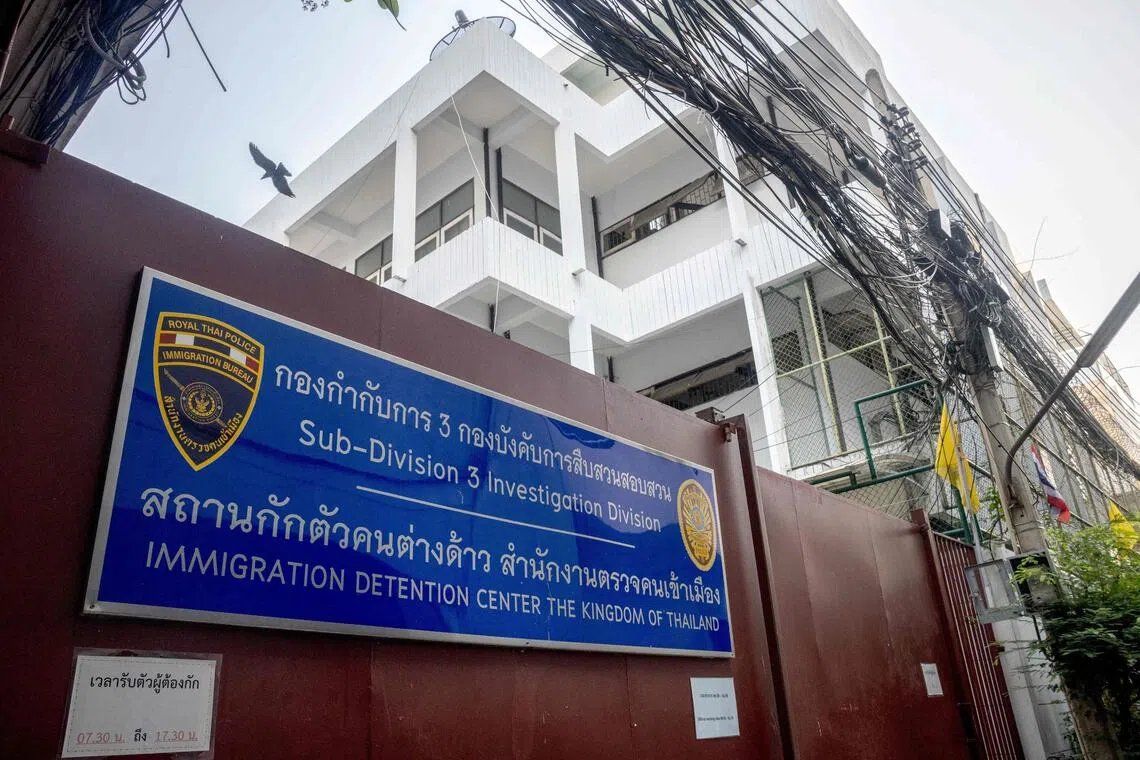
Thailand has formalized its approach to removing foreign nationals who violate domestic law or endanger public order through regulations signed by Prime Minister Anutin Charnvirakul and published in the Royal Gazette on August 27. The Prime Minister's Office Regulation on Deportation B.E. 2569 took effect on August 28, establishing a comprehensive procedural framework designed to expedite deportation decisions while maintaining consistency with Thailand's legal obligations and international commitments.
The regulatory initiative reflects Thailand's effort to balance its welcoming stance toward legitimate visitors and long-term foreign residents with firm measures against those who abuse their presence in the kingdom. Thailand has long positioned itself as a major tourist and business destination in Southeast Asia, with millions of international arrivals annually. The new regulations acknowledge this duality by explicitly stating that the country remains open to foreigners entering lawfully for tourism, residence, employment or commercial purposes, while simultaneously addressing concerns about those who enter illegally or engage in criminal conduct that threatens national security, public order or social cohesion.
Under the new framework, the Interior Minister assumes the pivotal role in deportation decisions, with the permanent secretary of the Interior Ministry or an authorized representative responsible for initiating cases when foreign nationals' conduct is deemed contrary to public order, morals or public welfare. This centralized authority streamlines the decision-making process, which previously may have involved multiple agencies with overlapping jurisdictions. The regulation covers six specific categories of offences that trigger mandatory deportation consideration: unlawful entry or overstaying in Thailand, unauthorized employment, illegal business operations under the Foreign Business Act, forging or using forged official documents, committing offences carrying prison sentences of at least five years, and serving as a principal offender, instigator or accomplice in any of these categories.
The timing of deportation consideration represents a significant procedural innovation. The regulation requires the Department of Corrections to provide the Interior Ministry with detailed information about foreign prisoners—including names, nationalities and case records—at least fifteen days before their scheduled release. This advance notice allows officials to assess whether deportation is warranted before the individual completes their sentence, potentially reducing delays. Similarly, when courts suspend sentences or impose fines rather than imprisonment, the Office of the Judiciary must immediately notify the Interior Ministry permanent secretary, ensuring no cases slip through administrative cracks.
For Malaysian readers and businesses operating in Thailand, these regulations carry practical implications. Malaysian nationals working or residing in Thailand should ensure strict compliance with employment regulations, visa requirements and business licensing provisions, as the new framework provides clear pathways for rapid deportation. Companies employing foreign workers must verify that all employment arrangements conform to Thai labor law, as unauthorized employment now falls within the six priority deportation categories. The regulations also establish that deportation orders may include prohibition periods preventing re-entry into Thailand for specified durations, potentially affecting business continuity for those with interests in the Thai market.
The regulations address humanitarian concerns through provisions allowing alternative placements when deportees face credible risks of torture, cruel treatment, enforced disappearance or other severe human rights violations. Other countries or international organizations may request within seven days of a deportation order that the individual be transferred to their jurisdiction instead of being returned to the person's nationality country. Such requests must include written consent from the deportee and an agreement to cover all associated costs. This provision reflects international human rights law principles and Thailand's treaty obligations, particularly regarding the principle of non-refoulement—the prohibition against returning individuals to places where they face persecution or severe harm.
Transfer arrangements under these provisions must be completed within thirty days, with the Interior Minister authorized to grant up to two extensions of thirty days each. If transfer cannot be arranged within the permitted timeframe, standard deportation procedures apply. This time-bound approach prevents indefinite detention while accommodating legitimate humanitarian and diplomatic considerations. The regulations specify that deportees will normally be returned to their country of nationality, but if nationality cannot be established, they may be sent to the country where they last resided before entering Thailand—a practical solution for stateless individuals or those with unclear documentation.
Financial responsibility for deportation and detention costs falls under Interior Ministry regulations to be approved by the Finance Ministry, ensuring transparent and standardized cost allocation. This approach prevents arbitrary financial burdens on individual departments and establishes predictable budgeting for Thailand's immigration enforcement apparatus. The emphasis on cost responsibility also creates incentives for efficient processing and discourages unnecessary administrative delays that would accumulate expenses.
The regulatory framework demonstrates Thailand's determination to strengthen immigration enforcement while maintaining legitimacy and legal coherence. By establishing clear procedural requirements, time-bound processes and safeguards for vulnerable individuals, Thailand seeks to project an image of principled governance rather than arbitrary enforcement. This approach should appeal to legitimate foreign investors and residents while making clear that those who exploit Thailand's openness face swift and certain consequences. For regional observers, the regulations signal that Thailand is modernizing its immigration administration to match international best practices, potentially serving as a model for other Southeast Asian nations grappling with similar challenges of managing large foreign populations while protecting national interests.
Disputes concerning the regulation's implementation will be resolved by the Interior Minister, whose decisions are final and not subject to appeal through other channels. This concentration of authority, while promoting administrative efficiency, underscores the paramount role of the Interior Ministry in Thailand's immigration system. Foreign nationals facing deportation should ensure they understand these regulatory provisions and the timeline within which cases are processed, as the regulations explicitly prioritize speed and coordination between agencies to accelerate outcomes.

