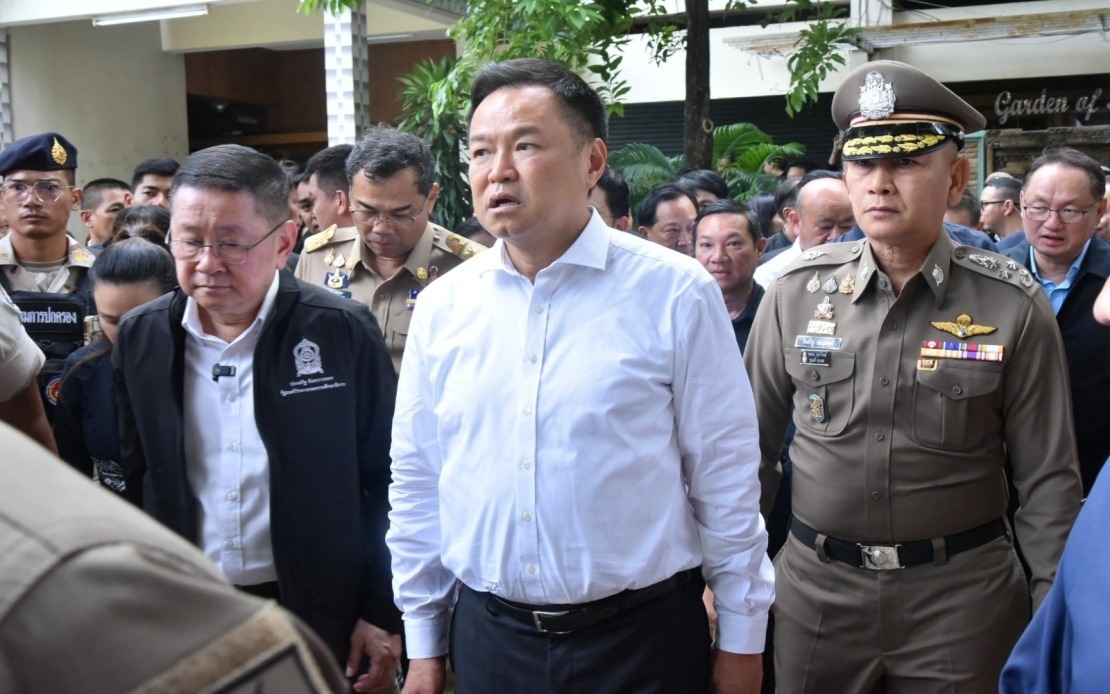
Thailand's Prime Minister Anutin Charnvirakul moved swiftly to propose comprehensive firearm restrictions following a tragic shooting at Debsirin Nonthaburi School on Friday that resulted in seven deaths. As both PM and interior minister, Anutin indicated his government would pursue legislative action to substantially limit public access to firearms and implement stricter enforcement mechanisms at police checkpoints across the country.
The incident, which unfolded at approximately 10 am, involved a 14-year-old student opening fire within the school premises. The attack claimed the lives of three teachers and three other students before the suspect was found dead at the location. The rampage also wounded twenty-one additional individuals, with eight requiring critical medical care, underscoring the severity of the violence. Police investigations into the shooter's background and motivations were immediately launched following the incident.
Anutin's response outlined a multi-layered approach to firearm regulation that would fundamentally reshape Thailand's existing gun ownership framework. He emphasized that new legislation would restrict civilian firearm possession to government officials performing official duties only, effectively banning ordinary citizens from carrying weapons in public spaces or outside their residences. This represents a significant departure from current regulations and signals the administration's determination to prevent similar incidents through legislative means.
The prime minister acknowledged that detailed provisions of the proposed legislation remained under discussion with the national police chief and had not yet been finalized. However, he indicated that existing laws already technically prohibit non-official members of the public from bearing arms in public, suggesting the new measures would strengthen enforcement and close potential loopholes rather than introduce entirely novel restrictions. His comments suggest confusion currently exists regarding the clarity and enforcement of current regulations.
Immediate enforcement actions were also announced as part of a broader security enhancement strategy. Anutin instructed police to routinely inspect individuals at checkpoint stations throughout the country, with authorization to take legal action against anyone discovered carrying firearms in violation of regulations. This directive aims to create a deterrent effect by increasing the likelihood of detection and prosecution for firearms violations across Thailand's road network and public spaces.
Following his initial briefing from Royal Thai Police officials at the school, Anutin visited Debsirin Nonthaburi School to assess conditions firsthand and demonstrate government responsiveness. This direct engagement with the affected institution sent a message of governmental concern while gathering information about security vulnerabilities that may have contributed to the tragedy.
The prime minister directly addressed security measures in educational settings, particularly rejecting the implementation of airport-style X-ray screening systems for students entering schools. While acknowledging the need for protective steps, Anutin expressed reservations about introducing screening technology into educational environments, characterizing such measures as abnormal and potentially disruptive to the learning atmosphere. Instead, he indicated the Education Ministry would develop alternative approaches to reassure parents regarding student safety.
Thailand's experience mirrors broader challenges facing Southeast Asian nations grappling with school violence and civilian firearm access. While the region has generally maintained stricter gun ownership standards compared to Western countries, the Debsirin incident demonstrates that determined individuals can still obtain weapons and inflict mass casualties in institutional settings. Malaysia and other ASEAN nations closely monitor Thailand's policy responses for potential lessons regarding school security and firearm regulation effectiveness.
The timing of this policy push reflects Thailand's ongoing efforts to strengthen internal security mechanisms following various security incidents in recent years. The combination of stricter ownership criteria, enhanced checkpoint enforcement, and education ministry protocols represents a comprehensive governance response aimed at preventing similar tragedies. However, implementation challenges and potential resistance from firearm owners may complicate the legislative process.
For Malaysian observers, Thailand's response raises questions about how regional governments balance public safety imperatives with civil liberties considerations. Malaysia's own firearm regulations remain among the world's strictest, yet incidents within schools and public spaces continue to concern policymakers. The Thai government's proposed approach of restricting civilian possession while enhancing enforcement at police checkpoints represents a model that other Southeast Asian democracies may evaluate.
The incident and subsequent policy response highlight the vulnerability of institutions perceived as safe spaces and the cascading trauma experienced by communities when such violence occurs. Educational administrators across Southeast Asia may reassess their security protocols in light of the Debsirin shooting, potentially leading to broader regional discussions about balancing institutional accessibility with protective measures.
Thailand's commitment to legislative action on firearms control will require parliamentary scrutiny and collaboration among multiple government agencies. The Interior Ministry's coordination with police and Education Ministry signals an attempt at integrated policy development rather than fragmented sectoral responses. Success will depend on sustained political will and the practical effectiveness of checkpoint enforcement mechanisms in reducing unauthorized firearm circulation.

