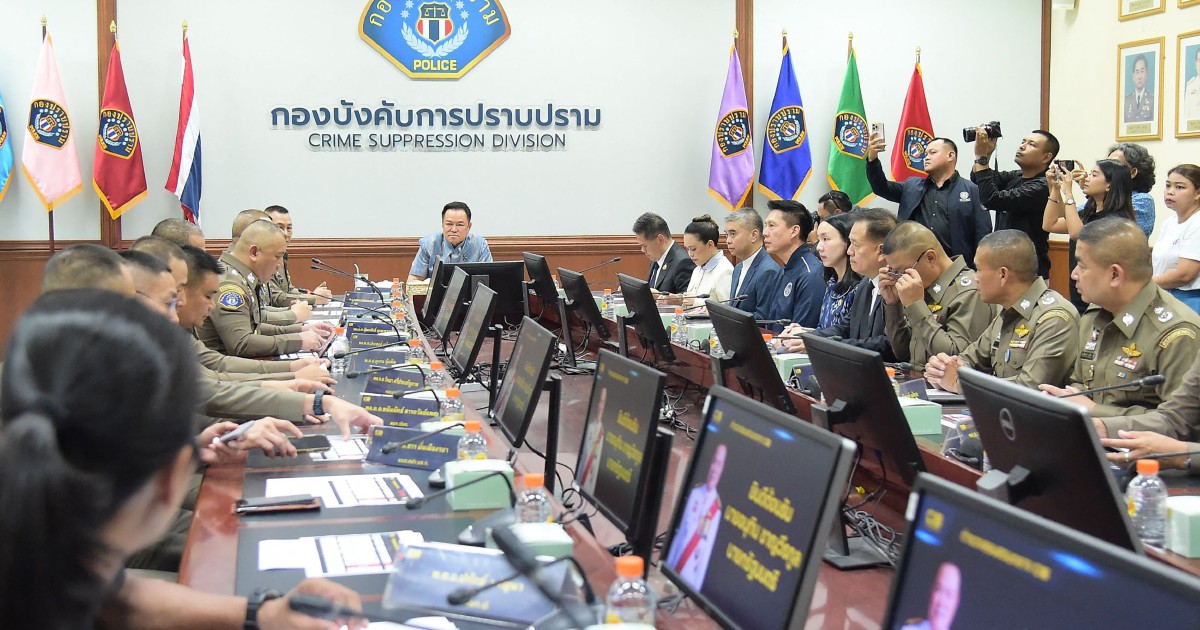
The Thai government has announced sweeping disciplinary action against thousands of public officials caught up in an escalating examination fraud controversy, marking one of the most significant integrity scandals to grip the nation's civil service in recent years. Authorities revealed Thursday that approximately 6,000 officials face suspension following revelations of systematic cheating during recruitment and promotional examinations. The scale of the probe reflects growing concerns about the quality and reliability of Thailand's merit-based civil service system, which has long been considered crucial to administrative efficiency and public trust.
The investigation commenced after irregularities were detected during routine audits of examination procedures across multiple government agencies. Preliminary findings suggested that candidates had been offered advance access to test questions, received unauthorised assistance during examinations, or obtained answers through coordinated networks. The discovery prompted authorities to launch a comprehensive review of testing protocols spanning several years, uncovering evidence of what investigators describe as institutionalised malpractice rather than isolated incidents.
Three individuals have already been arrested in connection with the scheme, though authorities have withheld their identities pending further investigation. These detentions suggest that the scandal extends beyond merely cheating civil servants to potentially encompassing officials involved in administering the examinations themselves—a troubling indicator that corruption may have been embedded within supervisory structures. The expansion of the investigation signals that prosecutors are pursuing accountability at multiple levels within the bureaucratic hierarchy.
For Malaysia and other Southeast Asian nations, Thailand's predicament offers cautionary lessons about maintaining institutional safeguards within civil service recruitment systems. A compromised merit-based examination framework undermines meritocracy itself, potentially elevating incompetent or ethically questionable individuals into positions wielding public authority. Similar vulnerabilities may exist in regional bureaucracies, prompting neighbouring governments to strengthen their own examination security and oversight mechanisms. The scandal underscores how unchecked procedural weaknesses can corrode public confidence in government institutions over extended periods.
The suspension of 6,000 officials represents an unprecedented administrative response that will inevitably create significant operational challenges for Thai government departments relying on those personnel. Many agencies will face temporary staffing shortages as suspended officials are removed pending formal disciplinary hearings. The Thai Civil Service Commission, which oversees recruitment and professional standards for public employees, faces intense pressure to demonstrate that it can rapidly conduct fair investigations while maintaining core governmental functions. This balancing act will test the institution's capacity to enforce accountability without paralyzing the state apparatus.
Thailand's civil service has historically grappled with corruption and patronage concerns, making this examination fraud scandal particularly damaging to perceptions of reform progress. Previous governments have launched anti-corruption initiatives and civil service modernisation programmes, yet structural weaknesses persist in enforcement mechanisms and institutional culture. The sheer magnitude of discovered cheating suggests that previous oversight systems failed comprehensively, raising questions about whether superficial administrative reforms have adequately addressed systemic vulnerabilities underlying Thai bureaucratic governance.
The investigation's expansion also indicates that prosecutors are examining whether cheating networks extended beyond individual candidates to involve organised groups potentially operating across multiple government agencies and examination cycles. Such coordination would suggest deliberate, calculated fraud rather than spontaneous malpractice. The existence of organised cheating syndicates within the civil service would be particularly alarming, as it implies that corruptive networks capable of subverting core administrative processes remain entrenched within government structures.
Institutional implications for Thailand include accelerated implementation of digital examination systems incorporating enhanced security features, increased internal auditing of examination administration, and potentially criminal prosecution of officials involved in enabling fraud. The scale of suspensions will likely trigger scrutiny from international observers assessing Thailand's governance quality and commitment to institutional reform. Bilateral partners may express concerns about the reliability and integrity of Thai government operations, particularly in areas involving regulatory authority, licensing decisions, or service delivery touching foreign commercial interests.
For Thai citizens and civil society organisations, the scandal perpetuates a demoralising cycle wherein institutional corruption repeatedly surfaces despite official commitments to transparency and accountability. Public confidence in government meritocracy—already fragile across much of Southeast Asia—further erodes when systems designed to identify capable administrators demonstrably reward cheaters instead. The suspension of thousands serves as a public acknowledgement of institutional failure, yet may be insufficient to reverse underlying cultural tolerances toward shortcuts and rule circumvention embedded in certain bureaucratic environments.
Moving forward, Thai authorities must navigate complex procedural questions regarding due process protections for suspended officials while expediting investigations to reach final disciplinary decisions. The government has signalled that formal hearings will determine whether suspended officials face permanent removal, demotion, or reinstatement following internal investigations. This process will consume significant administrative resources over months or years, potentially becoming a contentious political issue if opposition parties exploit concerns about fairness or selective enforcement.
The scandal also prompts reflection on examination integrity across Southeast Asia's broader development trajectory. As governments throughout the region increasingly emphasise meritocratic principles and institutional modernisation, the Thailand case demonstrates that good-faith policy commitments require complementary investments in enforcement capacity, technological safeguards, and cultural shifts toward valuing integrity. Regional peer learning mechanisms may prove valuable in identifying best practices for securing examination systems and preventing coordinated fraud schemes from taking root in civil service recruitment frameworks.

