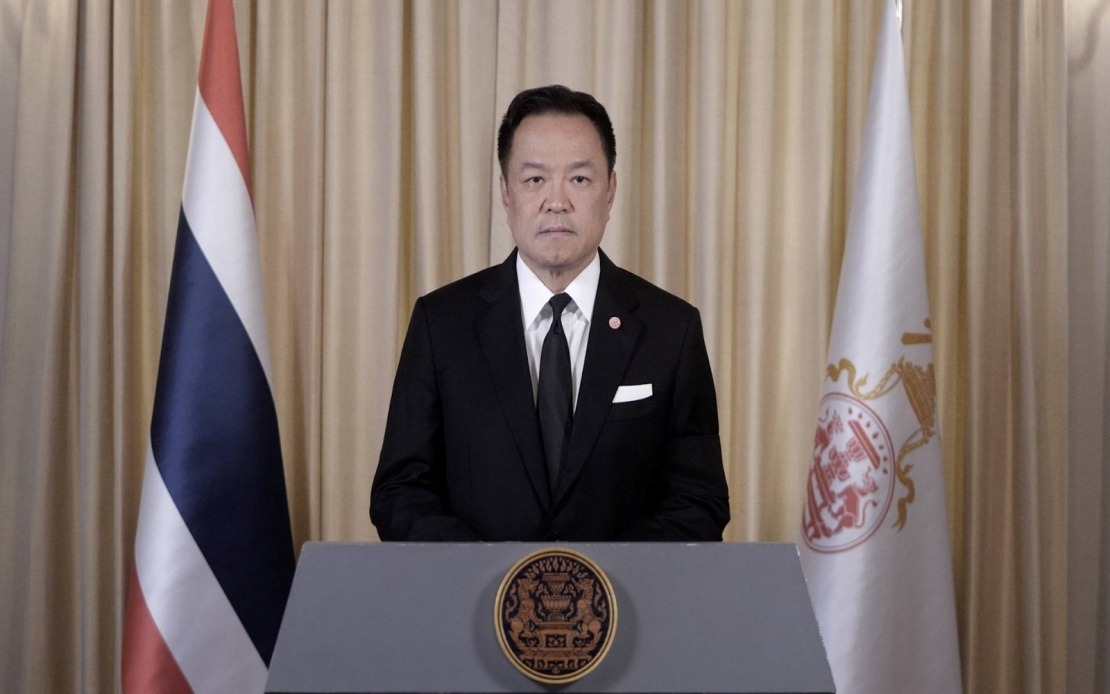
Thailand's government believes a ceasefire between the United States and Iran would provide meaningful relief to the global economy and strengthen prospects for regional growth, Prime Minister Anutin Charnvirakul said on Monday. Speaking at the Government House, Anutin expressed optimism that any resolution to tensions in West Asia could help stabilize energy markets, reduce supply chain disruptions, and create a more predictable environment for business across Southeast Asia.
The Thai premier's comments came after US President Donald Trump announced on Sunday that an agreement with Iran had been reached, with plans to reopen the Strait of Hormuz and lift the American naval blockade. Anutin framed this development as a significant turning point that could alleviate cascading economic pressures currently affecting nations throughout the region. While Thailand has demonstrated resilience in managing external shocks, officials acknowledge that persistent geopolitical uncertainty creates headwinds for investment and growth.
Thailand's positioning as a trade hub and manufacturing center means that disruptions to global supply chains and energy markets carry particular weight for the national economy. The country imports substantial quantities of oil and natural gas, making energy price stability a crucial factor in controlling inflation and maintaining competitiveness. A reduction in Middle Eastern tensions would likely translate into lower shipping costs, more stable crude prices, and reduced insurance premiums for vessels traversing regional waters—benefits that would cascade through Thailand's export-dependent economy.
Deputy Prime Minister and Finance Minister Ekniti Nitithanprapas reinforced this perspective, characterizing a successful ceasefire as a positive catalyst for both global and domestic economic conditions. Ekniti emphasized that ending the conflict would reduce inflationary pressures that have squeezed household purchasing power and burdened small and medium enterprises. The finance ministry sees potential for stronger economic growth than previously forecast if global conditions stabilize, though officials remain cautious about the timeline for such improvements to materialize.
The government's approach reflects a broader strategic shift toward long-term planning rather than reactive crisis management. Anutin stressed that Thailand has developed sufficient institutional capacity and policy flexibility to absorb external shocks without derailing fundamental economic objectives. This confidence stems partly from successful navigation of recent supply chain disruptions and currency volatility, which demonstrated the effectiveness of the government's forward-looking economic framework. Officials believe that further improvements in the external environment would validate this strategic patience.
Thailand's commitment to its 200-billion-baht energy transition programme illustrates this longer-term perspective. Even if oil prices fall due to improved geopolitical conditions, the government intends to proceed with renewable energy infrastructure, energy efficiency upgrades, and diversification away from fossil fuels. This reflects recognition that energy security and sustainability require sustained investment regardless of commodity price cycles. The programme addresses Thailand's structural vulnerability to global energy markets while positioning the nation for a lower-carbon economic model.
For Malaysian readers, Thailand's cautious optimism carries important regional implications. Many Southeast Asian nations share Thailand's dependence on Middle Eastern oil and exposure to global supply chain volatility. If a US-Iran ceasefire holds, the entire region could benefit from reduced energy costs and more stable shipping corridors through the Strait of Hormuz, one of the world's most critical maritime chokepoints. Malaysia's own economy, as another trade-dependent nation with significant energy import requirements, would similarly gain from any sustained improvement in geopolitical conditions.
The finance ministry's intention to monitor inflationary pressures suggests that Bangkok remains wary of premature optimism. Central bank officials and government economists recognize that geopolitical agreements often face implementation challenges and that energy markets respond gradually to political developments. By maintaining vigilance over domestic price pressures even as external risks ease, Thailand aims to ensure that any economic gains from improved global conditions are not undermined by domestic policy missteps or delayed market adjustments.
Ekniti's statement that the government remains optimistic about supporting stronger economic growth than currently projected reflects confidence in underlying Thai fundamentals, provided external conditions cooperate. Current growth forecasts for Thailand have incorporated assumptions about continued geopolitical friction and elevated energy costs. A genuine shift toward stability in West Asia could unlock upside potential in sectors ranging from tourism to manufacturing, as both consumer and business confidence improve. The timing of such improvements would be crucial, as they could complement planned government stimulus measures and private sector investment cycles.
The broader context for Thailand's welcome of a potential ceasefire involves recognition of how deeply modern Asian economies are intertwined with global energy markets and shipping corridors. Any prolonged military conflict in the Persian Gulf creates ripple effects across Southeast Asia's manufacturing hubs, port cities, and financial centers. A sustained ceasefire would not only reduce immediate economic risks but could also shift investor sentiment toward greater confidence in long-term Asian growth prospects, potentially attracting capital that has been sidelined due to geopolitical uncertainty.
Thailand's public positioning on this issue also reflects diplomatic pragmatism. As a nation with significant regional influence but not a direct party to US-Iran tensions, Thailand can credibly welcome any development that eases global uncertainty without appearing to take sides in American Middle Eastern policy disputes. This allows Bangkok to support a positive development while maintaining its traditional non-aligned foreign policy stance, an approach that has served Thailand well in navigating complex regional dynamics. For ASEAN more broadly, such measured optimism provides a framework for regional consensus around shared economic interests.