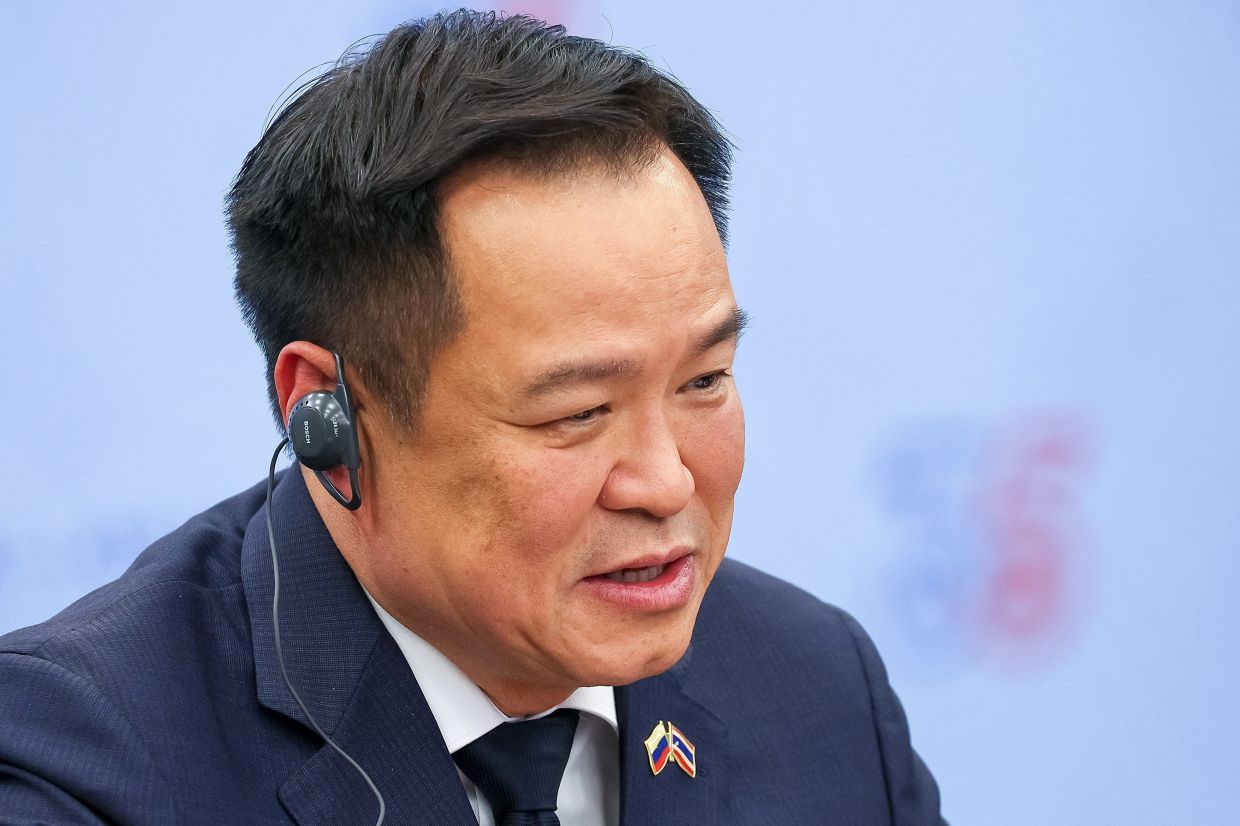
A hundred days into his tenure as Thailand's 32nd prime minister, Anutin Charnvirakul has demonstrated a clear priority: steering the kingdom through immediate turbulence rather than pursuing transformative change. Since being sworn in on June 27 following his re-election victory in February 2026, the 59-year-old leader has consolidated political stability and navigated an energy crisis, yet observers increasingly question whether his administration will ever move beyond crisis management to tackle the country's fundamental economic challenges.
Anutin's ascent to the top job occurred amid unusual circumstances. He first became prime minister in September 2025 after the Paetongtarn Shinawatra government collapsed, then secured a fresh mandate just months later when his Bhumjaithai Party won the most seats in the February general election. This rapid sequence consolidated his position and gave him a genuine electoral endorsement, distinguishing his government from the precarious arrangements that have plagued Thai politics over recent decades. Political scientists acknowledge that maintaining stability in this context represents a genuine achievement, given Thailand's turbulent history of military interventions and short-lived administrations.
The government faced its first major examination almost immediately. The February 28 US-Israel attacks on Iran triggered immediate energy shocks that reverberated across Southeast Asia and beyond. Thailand experienced panic buying at petrol stations as supplies tightened and prices climbed sharply, while the subsequent maritime disruptions in the Strait of Hormuz sent oil prices soaring above US$100 per barrel for an extended period. The crisis exposed the region's vulnerability to geopolitical events in distant theatres, a reminder that Southeast Asian economies remain dependent on stable global supply chains and energy markets beyond their control. For Thailand, heavily reliant on imported oil, the implications were particularly acute.
To counter the energy emergency, the Thai government deployed several tools from its policy arsenal. The national Oil Fuel Fund was tapped to subsidise fuel prices, borrowing costs for farmers and industrial operators were reduced, and coal-fired power plants were ordered to operate at maximum capacity. Simultaneously, Anutin's administration diversified import sources by increasing energy purchases from the United States, Malaysia, and Brunei. These measures proved sufficient to prevent the kind of social upheaval that energy crises have triggered elsewhere. Despite ongoing complaints about fuel prices, no mass street protests materialized. According to Mathis Lohatepanont, a political science doctoral candidate at the University of Michigan, the government successfully "weathered the initial storm and managed to avoid further instability," a qualification that speaks to both the severity of the challenge and the administration's modest but effective response.
Beyond energy management, Anutin has solidified his political position by delivering on nationalist promises that resonated with voters. His party's electoral victory was built substantially on appeals to nationalism and a hardline stance on the long-running Cambodia border dispute. As prime minister, he has maintained this posture by ensuring military primacy in border protection activities and by unilaterally terminating a 2001 bilateral maritime boundary agreement with Cambodia. The dispute has now been elevated to the United Nations for arbitration, a move that satisfied his political base while demonstrating resolve on a sensitive issue. For a government seeking to establish its legitimacy quickly, such symbolically potent gestures carry outsized importance.
Anutin also moved rapidly to implement the "Thais Help Thais Plus" subsidy scheme, a programme that exemplifies his administration's approach to governance. Launched on June 1, the initiative allows approximately 30 million eligible Thai citizens aged 18 and above to purchase designated goods from participating merchants at just 40 per cent of the retail price, with the government bearing the remaining cost. With a budget allocation of 176 billion baht, approximately US$5.27 billion, the programme represents a substantial fiscal commitment aimed at easing household expenses and boosting consumer spending. The scheme proved enormously popular, delivering tangible relief to millions of Thais struggling with cost-of-living pressures. Yet herein lies the analytical paradox that concerns observers: such programmes address symptoms rather than causes.
Chulalongkorn University's Puangthong Pawakapan notes that while Thais recognise the subsidy scheme's value in providing temporary relief, it "does absolutely nothing to solve the underlying economic crisis." This observation captures a central tension in evaluating the Anutin government's performance. Crisis management and popular short-term measures generate political goodwill and public approval, but they do not address the structural weaknesses that constrain Thailand's economic potential. The country confronts daunting long-term challenges: economic growth has failed to exceed three per cent annually over the past five years, the population is ageing rapidly, household debt remains dangerously elevated, and regional competitors are pulling ahead. The International Monetary Fund projects Thailand's economy will expand by merely 1.5 per cent this year, making it the slowest-growing economy in Southeast Asia—a stark contrast to Vietnam's expected 7.1 per cent growth and Cambodia's four per cent expansion.
While Anutin has articulated ambitions to develop new economic engines centred on digital technology, artificial intelligence, and clean energy, analysts detect no coherent roadmap for translating such rhetoric into policy reality. According to Stithorn Thananithichot from Chulalongkorn University's Political Science Faculty, the government's energies have been absorbed by "routine administration and day-to-day management rather than into any initiative aimed at meaningful economic or political change." This diagnosis suggests that the administration, whatever its stated aspirations, lacks either the vision, political capital, or bureaucratic capacity to pursue transformative reform.
The constitutional question exemplifies this pattern most starkly. Nearly 60 per cent of Thai voters, approximately 20 million citizens, indicated in a referendum held alongside the February general election that they desire substantial changes to the 2017 Constitution. Many view that charter as fundamentally undemocratic, having been crafted under former Prime Minister Prayut Chan-o-cha after the 2014 military coup and remaining in force throughout his administration until 2023. The referendum result provided a clear mandate for reform, yet the Anutin government has made minimal progress on this front. Stithorn argues pointedly that "a government that intended to reform would have signalled at least one substantive structural commitment at the outset; this one did not, and that absence is by design rather than a matter of time." This assessment suggests that the apparent inaction reflects deliberate choice rather than mere bureaucratic inertia or shortage of time.
The pattern extends to cabinet selections and broader personnel decisions, raising further questions about the administration's reform commitment. When a government fills its senior ranks, the choices signal priorities and chart direction. The Anutin government's appointments have not suggested a break with previous patterns or a commitment to systemic change. Instead, they reflect continuity with existing power structures and constituencies. This matters because Thailand's past two decades have been marked by military coups and ephemeral governments that disrupted policy continuity and long-term planning, allowing structural economic problems to metastasize. Breaking that cycle requires not merely managing crises competently but building institutions and implementing policies capable of generating sustained growth and shared prosperity.
For Malaysian and broader Southeast Asian observers, the Thai situation carries important lessons. Thailand remains a significant regional economy and a neighbour whose stability affects the wider region's security architecture and economic interdependence. Yet Thailand's inability or unwillingness to address structural economic weaknesses while competitors like Vietnam accelerate their development trajectories suggests that political stability alone, divorced from purposeful economic transformation, may prove insufficient for long-term competitiveness. The Anutin government has demonstrated competence in managing crises and delivering popular short-term measures—genuine achievements in a country accustomed to turmoil. However, analysts increasingly assess that without substantive reforms addressing productivity, innovation, and demographic challenges, Thailand risks falling further behind dynamically growing neighbours while its citizens continue paying inflated prices for temporary relief schemes.
As Thailand's political calendar advances and international conditions evolve, the pressure to move beyond crisis management toward genuine structural reform will intensify. The government's response to that pressure—or continued evasion of it—will determine whether Anutin's tenure becomes remembered as merely a stable interlude or as a genuine turning point in Thailand's development trajectory. For now, a hundred days in, the verdict remains decidedly mixed: crisis management has succeeded, reform has barely begun.

