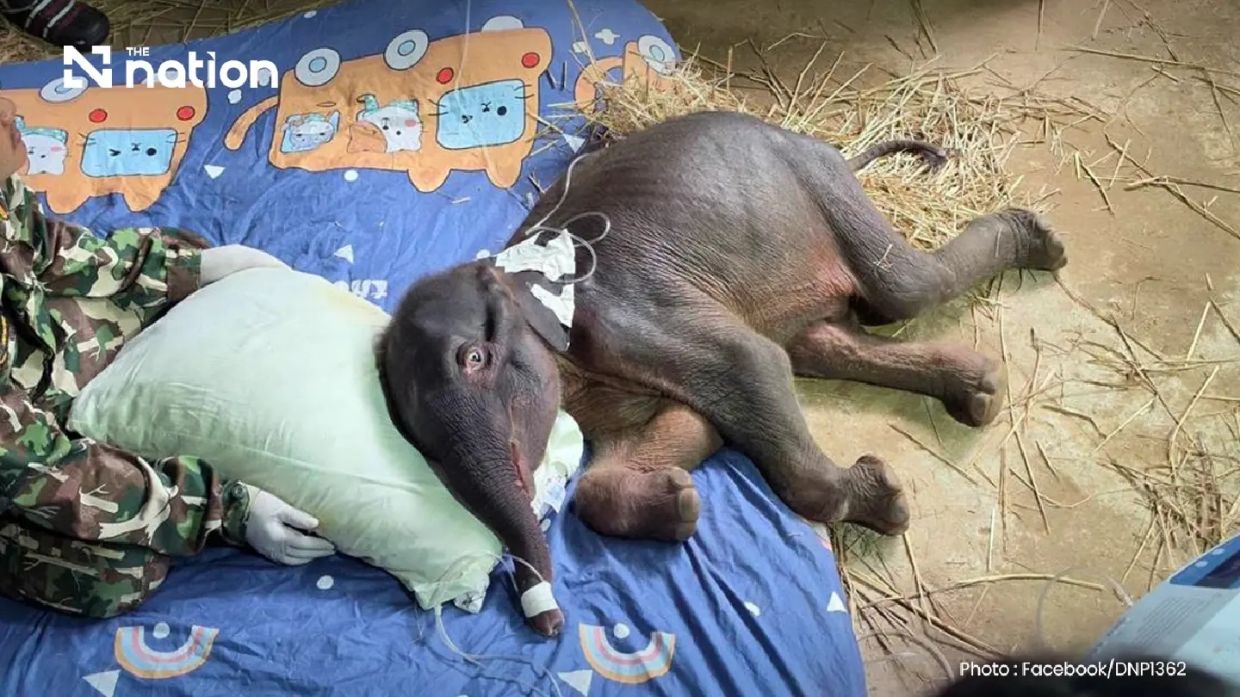
A young wild elephant separated from its herd in Thailand has died after a week of intensive care at Sai Yok National Park in Kanchanaburi province. The calf, named Jiew Sai Yok, succumbed in the early morning hours of Tuesday, August 4, with veterinarians identifying acute kidney failure as the probable cause of death. The incident highlights the precarious situation faced by young elephants separated from their mothers in Southeast Asia's increasingly fragmented habitats, and raises questions about the long-term viability of rescue operations for orphaned wildlife.
The animal was first discovered by local villagers on July 30 near the banks of Huai Mae Nam Noi, a remote and difficult-to-access location within the national park. The surrounding terrain required rescue teams to navigate by boat, with the water access taking approximately one to two hours to reach the site where the distressed calf was found alone. Park officials who arrived at the scene determined that the young elephant had likely been separated from its mother for about two days, rendering it vulnerable to dehydration, malnutrition, and secondary infections.
The calf's physical condition upon rescue was severely compromised. Initial veterinary assessments revealed extensive injuries including mouth ulcers approximately the size of a 10-baht coin, abrasions and blisters covering its body, and a particularly concerning wound at the navel. The animal displayed signs of severe dehydration, with dark yellow-red urine suggesting either infection or fluid loss, and exhibited conjunctivitis from insect infestation around its eyes. Additionally, the calf was consuming very little milk—only 350 to 500 millilitres every two to three hours—which proved insufficient for its metabolic needs during recovery.
Transporting Jiew Sai Yok to the national park headquarters presented logistical challenges compounded by seasonal weather patterns. Continuous rainfall had swollen waterways throughout the region, complicating the journey and increasing risks associated with forest runoff. Once relocated to the park facility, the calf received intensive 24-hour veterinary attention, including intravenous fluid therapy and supplemental oxygen support. The medical team worked methodically to address the multiple complications facing the young animal, treating dehydration, mouth infections, and gastrointestinal distress simultaneously.
Despite these interventions, the calf's underlying condition deteriorated progressively. Throughout its week of treatment, Jiew Sai Yok displayed intermittent weakness, continuing diarrhoea with a sour odour, and persistent dark urine discoloration indicating renal dysfunction. The animal occasionally struggled to maintain its footing and showed diminishing responsiveness to medical stimuli. During the final night, veterinary staff administered continuous oxygen while monitoring vital functions, but the physiological damage had progressed beyond reversible intervention. At approximately 2 a.m. on August 4, the calf fell into sleep and ceased responding to external stimuli. Despite immediate full resuscitation efforts by the medical team, no recovery was achieved.
Laboratory blood tests conducted during the treatment period supported a diagnosis of acute kidney failure, though veterinarians have not excluded the possibility of congenital abnormalities affecting the calf's internal organs. The Department of National Parks, Wildlife and Plant Conservation announced plans to conduct a comprehensive necropsy and collect tissue samples for further laboratory analysis to establish the definitive cause of death. This investigation reflects standard wildlife veterinary protocol, particularly important given the increasing frequency of elephant calf rescues across Thailand and neighbouring countries.
The loss of Jiew Sai Yok underscores the vulnerability of young elephants in fragmented forest ecosystems across Southeast Asia. Separation from the maternal herd leaves calves exposed to predation, starvation, and disease, with limited capacity for independent survival. In this case, despite the calf's desperate calls for its mother throughout the first night of observation, the herd did not return, suggesting either permanent separation or the herd's relocation to safer territory away from human settlements and park boundaries. The incident raises broader questions about habitat connectivity and wildlife corridor preservation in the region.
Thailand has established itself as a leader in elephant rescue and rehabilitation operations, with Sai Yok National Park serving as one of the nation's critical conservation sites. The Department of National Parks expressed formal appreciation for the veterinarians and rescue personnel who dedicated their efforts to the calf's care, acknowledging the emotional and professional toll of unsuccessful rescue attempts. Such operations represent significant resource investments, involving specialist expertise, extended facility care, and continuous monitoring—commitments that occasionally end in mortality despite optimal conditions.
The economic and conservation implications of individual elephant rescues extend throughout the region. Malaysia, Indonesia, and other Southeast Asian nations face similar challenges with forest fragmentation and wildlife displacement. Each rescue operation generates valuable clinical data that informs future interventions and helps veterinary teams refine treatment protocols for traumatised and malnourished animals. The detailed medical records from Jiew Sai Yok's case will contribute to the broader understanding of acute kidney failure in young elephants and may improve outcomes in subsequent rescue scenarios.
The death also reflects the broader crisis facing wild elephant populations throughout Thailand, where human-wildlife conflict has intensified as national parks and forest reserves shrink. Young elephants separated from herds often find themselves trapped between conservation areas and agricultural zones, vulnerable to orphaning through various causes. As Southeast Asian countries balance economic development with wildlife protection, cases like Jiew Sai Yok's serve as poignant reminders of the costs imposed by habitat degradation.
Looking forward, wildlife officials across Thailand and the wider region must grapple with the limitations of rescue-based conservation approaches. While individual success stories capture public attention and generate support for park funding, preventing separation in the first instance through habitat preservation and corridor protection offers more sustainable long-term solutions. The loss of this young elephant, despite extraordinary medical effort, demonstrates that rescue operations, though necessary and compassionate, cannot fully substitute for maintaining intact ecosystems where wild populations can sustain themselves naturally.

