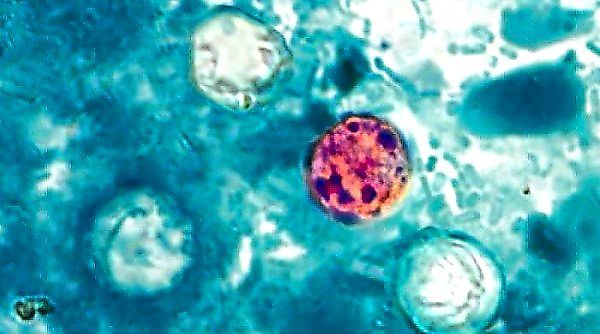
A multistate outbreak of cyclosporiasis across the American Midwest has exposed critical limitations in how public health authorities track and contain parasitic foodborne illnesses. The investigation into this outbreak, which has affected thousands of people across Michigan, Indiana, Kentucky, Ohio and West Virginia, reveals why Cyclospora—the microscopic parasite responsible for the disease—represents such an intractable challenge for food safety investigators compared to more commonly tracked bacterial contaminants.
The core problem lies in the biological nature of Cyclospora itself. Unlike bacterial pathogens such as Salmonella or Escherichia coli, this parasite cannot be cultivated or grown in laboratory settings, eliminating a fundamental tool that scientists use to amplify genetic material and create diagnostic fingerprints. Consequently, investigators cannot employ whole genome sequencing—the gold-standard technique that allows public health officials to match specific pathogen strains to particular outbreaks and trace them back to their source. This absence of genetic fingerprinting severely hampers the FDA's ability to conclusively link contaminated food products to illness clusters with scientific precision, forcing the agency into a far more labour-intensive investigative process.
Instead of relying on laboratory confirmation, the FDA and Centers for Disease Control and Prevention must painstakingly reconstruct what infected individuals consumed, where they ate, and precisely when they consumed it. Epidemiologists conduct detailed interviews with patients, building a circumstantial case based on dietary recall rather than definitive microbial evidence. In the current outbreak, this approach eventually led investigators to identify shredded iceberg lettuce from Taco Bell outlets supplied by Taylor Farms' Mexican operations as the likely culprit. However, this method demands substantial resources, considerable time, and near-perfect patient cooperation—all of which become increasingly difficult as the outbreak expands geographically and temporally.
The incubation period of cyclosporiasis further complicates the investigation. While other common foodborne pathogens typically manifest symptoms within 24 to 72 hours, allowing patients to recall their meals with reasonable accuracy, Cyclospora takes up to two weeks to produce noticeable illness. This extended delay means that by the time individuals recognise they are unwell and seek medical attention, the contaminated fresh produce—inherently perishable—has typically already cycled through distribution networks and disappeared from retail shelves. Patients struggle to remember what they ate fourteen days earlier, introducing significant uncertainty into epidemiological investigations and allowing tainted products to circulate before they can be identified and removed.
When the FDA attempted to apply its standard testing protocols to Taylor Farms' products at the US-Mexican border, hoping to intercept contaminated shipments before they entered American commerce, the investigation encountered a telling setback. Initial testing indicated the presence of Cyclospora, but subsequent quality-control verification revealed the result to be a false positive. This outcome illustrates a fundamental limitation of current parasitic detection methodology: scientists must extract genetic material directly from the organism in environmental samples and then synthetically amplify that DNA to create detectable quantities. This amplification process, while necessary because laboratory cultivation is impossible, generates a higher false-positive rate than the genome-sequencing methods available for bacterial pathogens.
Despite the false-positive test result, the FDA's broader investigative findings and outbreak epidemiology continued pointing toward shredded lettuce from a specific Taylor Farms facility in central Mexico. Consequently, the company issued a comprehensive recall covering all iceberg lettuce products sourced from that region. Yet even this decisive action cannot fully resolve the outbreak puzzle: according to former FDA Commissioner Scott Gottlieb, Taco Bell restaurants account for only approximately 60 percent of all documented cases in the multistate outbreak. This discrepancy suggests additional, possibly unrelated contamination sources remain unidentified, with the CDC continuing investigations into separate potential clusters.
The absence of advanced diagnostic capabilities creates profound challenges for public health response strategies. FDA Deputy Commissioner for Food Donald Prater acknowledged during a briefing that Cyclospora remains extraordinarily difficult to detect in food products, even when scientists employ the most sensitive methodologies available. This technological constraint means that investigators often cannot definitively confirm whether a particular food item is truly contaminated or whether positive findings represent testing artifacts. The uncertainty inherent in the detection process extends outbreak investigations well beyond typical timeframes and may leave residual contamination undetected within supply chains.
Recognising these diagnostic limitations, the CDC recently urged medical practitioners to increase testing for cyclosporiasis among symptomatic patients, reasoning that enhanced case identification would ensure infected individuals receive appropriate antibiotic treatment. This public health recommendation, while medically sound, introduces a secondary complication. Craig Hedberg, a food safety researcher at the University of Minnesota, cautions that the heightened public awareness and media attention surrounding this outbreak will likely motivate substantially more people to seek testing, potentially creating a false impression of accelerating disease transmission. Since the contaminated produce has already moved through commercial distribution channels, newly identified cases may represent delayed recognition of earlier exposures rather than evidence of ongoing outbreak spread.
For Malaysian and Southeast Asian readers, this outbreak underscores vulnerabilities in regional food safety systems. Much of Asia's fresh produce, particularly leafy vegetables, originates from Mexico and other distant sources, passing through complex international supply chains before reaching consumers. The difficulty in tracing Cyclospora—a parasite endemic to tropical and subtropical regions—means that similar outbreaks could emerge here with equally limited investigative tools. The region's reliance on imported fresh produce, combined with limited genomic sequencing capacity in many countries, mirrors the challenges confronting American health authorities. Regional food safety frameworks may require significant upgrades to detection technologies and information-sharing protocols.
The broader implications extend beyond immediate public health response. This outbreak highlights how parasitic pathogens, which differ fundamentally from bacteria in their biology and epidemiology, expose gaps in food safety infrastructure designed primarily around bacterial threats. Investment in parasitic pathogen detection technologies remains comparatively limited, despite their global health significance. Countries across Southeast Asia, where parasitic foodborne illnesses affect millions annually, should view this American outbreak as a cautionary case study demonstrating the inadequacy of current scientific capabilities. Enhanced research funding, development of novel diagnostic approaches, and international collaboration on parasitic pathogen tracking could substantially improve food safety outcomes across the region.
Ultimately, the Cyclospora outbreak reveals uncomfortable truths about the limits of modern food safety science when confronting parasitic rather than bacterial threats. While genomic sequencing has revolutionised the investigation of bacterial outbreaks, parasites remain scientifically resistant to these powerful techniques. Public health authorities must therefore rely on older, less efficient investigative methods—epidemiological interviews, temporal analysis, and statistical probability—rather than the definitive microbial fingerprinting that has become standard for other pathogens. As global food trade continues expanding and fresh produce travels increasingly long distances before reaching consumers' tables, developing better tools for parasitic pathogen detection and tracing has become an urgent priority for food safety systems worldwide.

