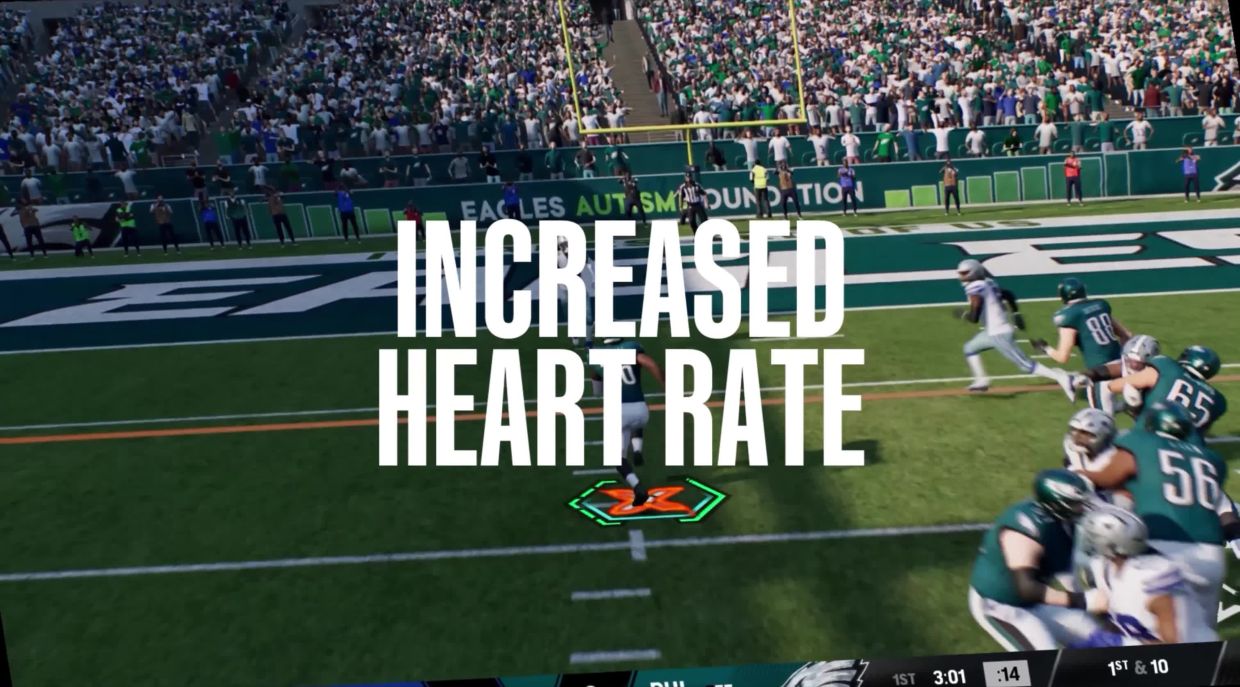
The irony is striking. Electronic Arts spent years developing Madden NFL to simulate professional football with surgical precision—players limp after ankle injuries, fatigue affects performance, and realistic physics govern every tackle. Yet the game conspicuously excludes one of football's most prevalent and serious injuries: concussions. A grassroots community response has emerged to fill this gap, with independent developers creating a modification that inserts the neurological consequences of head trauma directly into player experience.
The modification functions as a hidden layer of realism that transforms how gamers interact with the sport. When their virtual players suffer impacts to the head, those with the mod installed encounter a cascade of symptoms: blurred vision distorts the screen, sensitivity to light creates visual discomfort, nausea and dizziness disorient the player, while a persistent tinnitus sound and screen shake simulate auditory disruption and spatial instability. This 9,000-line code alteration aims to bridge a chasm between the sanitised digital representation of professional football and the actual neurological consequences athletes endure on the field. For millions who engage with the franchise annually, the mod represents the first time their gaming experience acknowledges an injury so commonplace in real NFL competition.
The decision to exclude concussions entirely from modern Madden games reflects a deliberate corporate strategy shaped by the NFL's turbulent recent history with brain injury litigation. Through the 1990s and into the early 2010s, Madden acknowledged head injuries through visual cues—injured players were carted away in ambulances, and those suspected of concussions underwent sideline evaluations onscreen. This began changing as the league faced mounting public scrutiny and legal reckoning. The watershed moment came with revelations about chronic traumatic encephalopathy (CTE) in deceased players, particularly Hall of Famer Junior Seau, whose suicide prompted postmortem diagnosis of severe degenerative brain disease. When the NFL settled a lawsuit brought by former players claiming the league systematically concealed the dangers of repeated head trauma, ultimately paying over US$1.5 billion in claims, the commercial calculation shifted dramatically.
Legislators, advocates, and former players began framing the issue as one of institutional accountability. The sport's popularity rests partly on inspiring youth participation, and acknowledging concussions too prominently threatened that pipeline. Ben Utecht, who retired from professional football specifically because of concussion-related concerns, articulated the tension plainly: the NFL deliberately avoided elevating head injuries in public discourse because the league required continued parental and youth investment in the sport. Yet Utecht also identified the logical inconsistency in Madden's approach—if the game includes various injuries, removing concussions entirely creates a false representation that trivialises a uniquely serious threat.
EA Sports' involvement in this editorial decision remains opaque. The company declined to comment when approached, but former NFL executives revealed that the league's licensing department conducts annual quality control reviews of Madden and maintains ongoing discussions with Electronic Arts about game features. These conversations have explicitly addressed concussion mechanics, with league representatives emphasizing that if head injuries appeared in the game, they should be incorporated realistically. The challenge, as one negotiator recalled, lies in clinical unpredictability—two players might experience nearly identical impacts to the skull, yet only one would suffer a concussion in reality, making game design mechanically awkward.
The recent epidemiology of the sport underscores why this matters. Last season the NFL recorded 168 reported concussions, a sharp increase from 129 the previous year, attributed partly to rule changes that increased kick return opportunities. The league implemented its blue tent protocol, requiring sideline evaluation for any player exhibiting concussion symptoms, yet the broader culture of professional football has historically minimised head injuries or pressured players to continue participating despite neurological compromise. This cascades through youth and college sports, where coaching staff sometimes lack proper training and financial incentives push injured athletes back onto the field prematurely.
Chris Borland, a linebacker who famously abandoned his NFL career during his rookie season due to brain injury concerns, acknowledged the concussion mod's value in raising awareness while remaining sceptical about the limitations of virtual simulation. The authentic experience of concussion extends far beyond acute symptoms—it encompasses cognitive dysfunction, personality changes, emotional instability, and long-term neurological consequences that no video game can meaningfully replicate. Borland pointedly asked whether Madden would depict the domestic turbulence that can follow, the irritability and cognitive struggles that damage relationships and careers. True realism, he suggested, would require depicting concussion's full psychological and social aftermath, not merely the immediate sensory disturbances.
The human stories behind the mod project reveal why some believe this representation matters despite its limitations. Kristen Thomson Sheely, executive director of the Derek Sheely Foundation, developed the concussion modification to memorialise her son. Derek Sheely died at twenty-two after sustaining a brain injury during college football practice at Frostburg State University in 2011. According to court documents, after initially complaining of a headache—itself a sign of previous head trauma—a coach dismissed his concern and sent him back into a 7-on-7 drill. During that drill, Sheely collided with a defensive back, walked to the sideline, and then collapsed into unconsciousness from which he never recovered. The family eventually settled with the NCAA and the university for US$1.2 million, and Frostburg State retired his jersey number.
Thomson Sheely recognised that Madden's massive cultural penetration reaches audiences who would never voluntarily consume concussion awareness materials. Millions of Malaysian and Southeast Asian players engage with the franchise annually, many of them youth who will form attitudes about football, injury risk, and appropriate medical response based partly on how the game portrays these scenarios. The mod, which displays Derek Sheely's retired jersey number 40 when games conclude, leverages this popularity toward genuine educational impact. The foundation's theory holds that brief but visceral exposure to concussion symptoms during gameplay might reshape how young people understand the injury's seriousness.
The broader question extends beyond a single video game or modification. Sports entertainment globally faces increasing pressure to address head injury realism as research accumulates on the long-term neurological consequences of repetitive impacts. Malaysian audiences consuming NFL content, whether through Madden or broadcast viewing, deserve representations that honestly reflect the medical reality their favourite athletes endure. When a major entertainment product deliberately omits a leading cause of player injury and retirement, it shapes cultural perception about acceptable risk and normalises the minimisation of neurological harm.
The modification community's intervention, while reaching relatively small numbers compared to the full Madden player base, establishes a precedent that alternative narratives are possible and desirable. Gaming mods have proven their capacity to educate and influence discourse—they enabled college football fans to continue playing with accurate rosters years after EA Sports discontinued the official franchise, and they regularly enhance realism in ways corporate developers deem commercially risky. The concussion mod represents this tradition applied to injury awareness, creating a version of America's most popular sports game that treats head trauma with the seriousness it demands.
What remains unclear is whether mainstream adoption might follow. Electronic Arts faces competing pressures: regulatory bodies increasingly questioning whether sports games should minimise injury consequences, research institutions documenting long-term neurological effects that demand representation, and youth protection advocates arguing that entertainment media should reflect medical reality rather than obscure it. The company's silence suggests uncertainty about how to balance commercial interests against ethical representation. Yet as concussion rates climb and the consequences of delayed diagnosis become increasingly evident, the commercial calculus may shift. A game that truthfully depicts professional football's risks might ultimately better serve both player safety and the sport's long-term integrity than one that maintains a convenient fiction.

