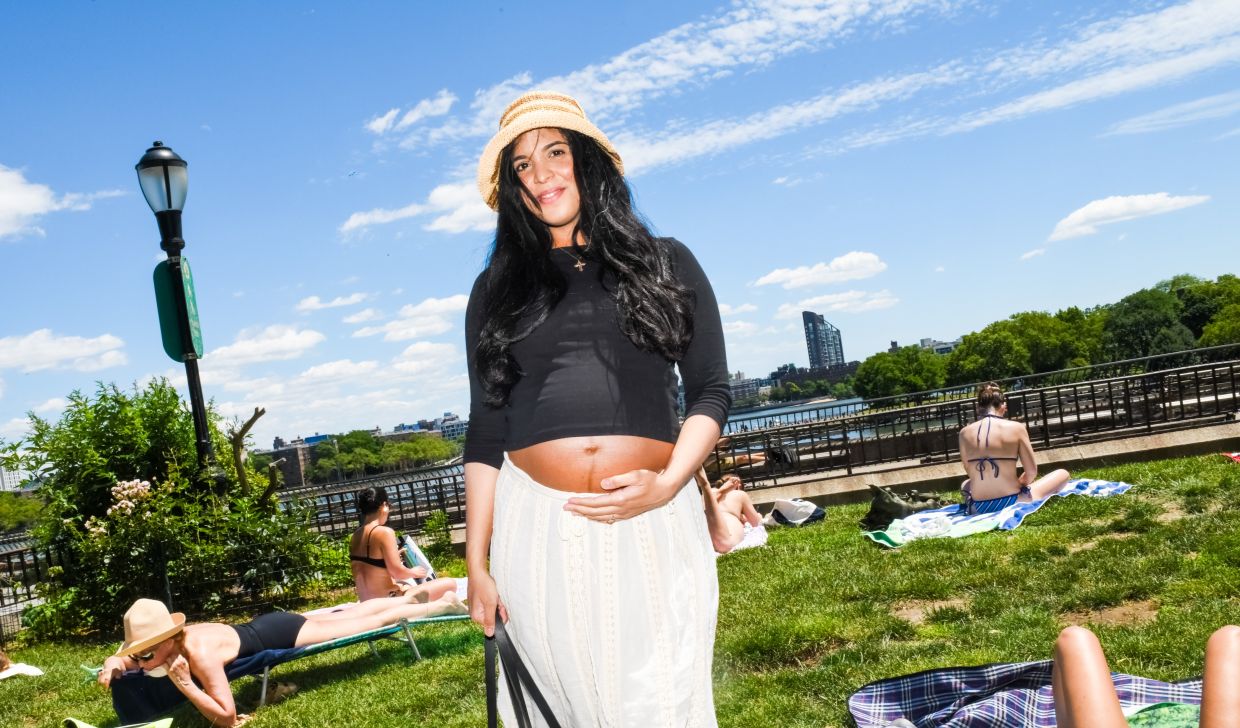
The maternity fashion landscape is undergoing a fundamental transformation, with expectant mothers increasingly choosing to display rather than disguise their changing bodies—a marked departure from the conservative approach that dominated previous generations. This shift reflects broader cultural attitudes toward pregnancy, body image and the celebration of female physicality during one of life's most transformative periods. What was once considered inappropriate or immodest is now viewed as empowering, with pregnant women unapologetically styling their growing bellies as a visual statement rather than something to be hidden beneath oversized garments.
The change is particularly pronounced among younger women who have grown up immersed in messaging around body positivity and self-acceptance. Sarah Brown, a 36-year-old handbag designer and stylist, exemplifies this approach. When she reached 22 weeks of pregnancy, she began posting photographs of her exposed midriff on social media—combining a grey T-shirt worn high to reveal her belly with a beige blazer and low-slung APC jeans. Her mother's well-intentioned suggestion to purchase a maternity jumpsuit missed the point entirely. Brown was not accidentally displaying her stomach; she was deliberately styling her appearance to accentuate and celebrate her pregnant silhouette.
Laura McAndrews, an associate professor at Kent State University's fashion school who specialises in generational attitudes toward maternity wear, attributes this transformation to distinctly Gen Z values. The younger generation has been consistently exposed to messaging emphasizing body positivity and self-acceptance across all life stages. This ideological foundation creates an entirely different framework for understanding pregnancy—not as a condition requiring concealment, but as a temporary and remarkable transformation worthy of celebration. The contrast with previous eras is striking. In the 1990s and earlier, the prevailing approach dictated that pregnant women should envelop their bodies in oversized, tent-like garments that obliterated the silhouette entirely.
Celebrity influence has played an outsized role in normalizing and glamorizing visible pregnancy. The iconic 1991 Vanity Fair cover featuring Demi Moore, seven months pregnant and unclothed, represented a watershed moment in how pregnancy could be visually represented in mainstream media. For millennials and Gen Z audiences, iconic pregnancy announcements have become seared into collective memory. Beyoncé's 2017 baby shower photographs, showcasing her bare belly during her second pregnancy, sparked widespread conversation online. Even more transformative was Rihanna's 2022 pregnancy announcement, in which the singer appeared in a partially unbuttoned bright pink Chanel puffer jacket, her exposed belly prominently displayed. These high-profile moments have reframed pregnancy as a fashion statement rather than a medical condition to be discretely managed.
The ripple effects from Rihanna's approach have been particularly pronounced. Her deliberate choice to centre her pregnant body within a fashion-forward aesthetic created a template that other celebrities have eagerly adopted. In June, Anne Hathaway announced her pregnancy wearing a white crop top paired with a white skirt, directly echoing Rihanna's unapologetic visibility. Even performers have embraced this aesthetic during public appearances. Singer and author Michelle Zauner performed at the Governors Ball music festival in New York while visibly pregnant, wearing an unbuttoned cardigan that revealed a lacy black bra and her bare belly. She explicitly credited Rihanna as her inspiration, noting that the choice reflected both personal taste and a deliberate rejection of maternity clothing that she found aesthetically objectionable—describing such garments dismissively as oversized muumuu sacks.
Historically, the concealment of pregnant bodies was rooted in deep-seated social and moral anxieties. Isabel Davis, author of works examining pregnancy representation, notes that for most of history, pregnancy was regarded as socially inappropriate—essentially visible evidence of sexual activity in a context where such topics were shrouded in shame and silence. This moral dimension shaped the entire maternity fashion industry, which developed primarily as a concealment technology rather than a celebration mechanism. Women were encouraged to obscure their changing bodies not merely for comfort or practical reasons, but to maintain a veneer of propriety and modesty during a period when pregnancy itself was considered vaguely transgressive.
The maternity clothing industry has watched this cultural shift with a mixture of curiosity and strategic concern. Ariane Goldman, who founded the maternity fashion company Hatch in 2011, entered the market during an era when discussing pregnancy openly remained somewhat taboo. She recalls that many women were actively hiding their pregnancies from employers, fearing job loss or professional discrimination. The intervening decade, however, has witnessed remarkable transformation. Goldman characterises the change as a wholesale shift toward celebrating and owning the power of pregnancy—a fundamental reorientation of how women view their bodies during this period. The company regularly discusses internally how these generational changes affect their business model and product strategy.
Interestingly, the embrace of visible pregnancy has not uniformly destroyed demand for dedicated maternity clothing. While some expectant mothers have adopted the strategy of styling their existing wardrobe—borrowing oversized pieces from partners, wearing their own clothes in unconventional ways, and strategically layering to create the desired aesthetic—many eventually find themselves seeking specialized garments. Functionality becomes the decisive factor. Maternity-specific pieces are valued not primarily for their concealment properties, but for their practical features: accommodating waistbands, nursing-friendly designs, and cuts engineered to support a changing body throughout the pregnancy journey. Brown herself relied on just two pairs of Los Angeles Apparel elastic waist pants and two Paloma Wool tops featuring side buttons to carry her through her entire pregnancy—pieces that offered function without sacrificing style or requiring her to purchase traditional maternity lines.
The implications of this shift extend beyond fashion into broader conversations about women's autonomy, body image and cultural representation. By choosing visibility over concealment, expectant mothers are fundamentally challenging historical narratives that positioned pregnancy as something requiring apology or discretion. This represents a generational assertion of the right to inhabit public space without shame or self-consciousness. For Malaysian and Southeast Asian women watching these global trends, the transformation offers an alternative framework for understanding pregnancy—not as a temporary setback requiring strategic dressing, but as a season of life worth celebrating visually and aesthetically. The conversation has shifted from hiding to styling, from concealment to curation, fundamentally reshaping how the fashion industry, media and society understand pregnancy.

