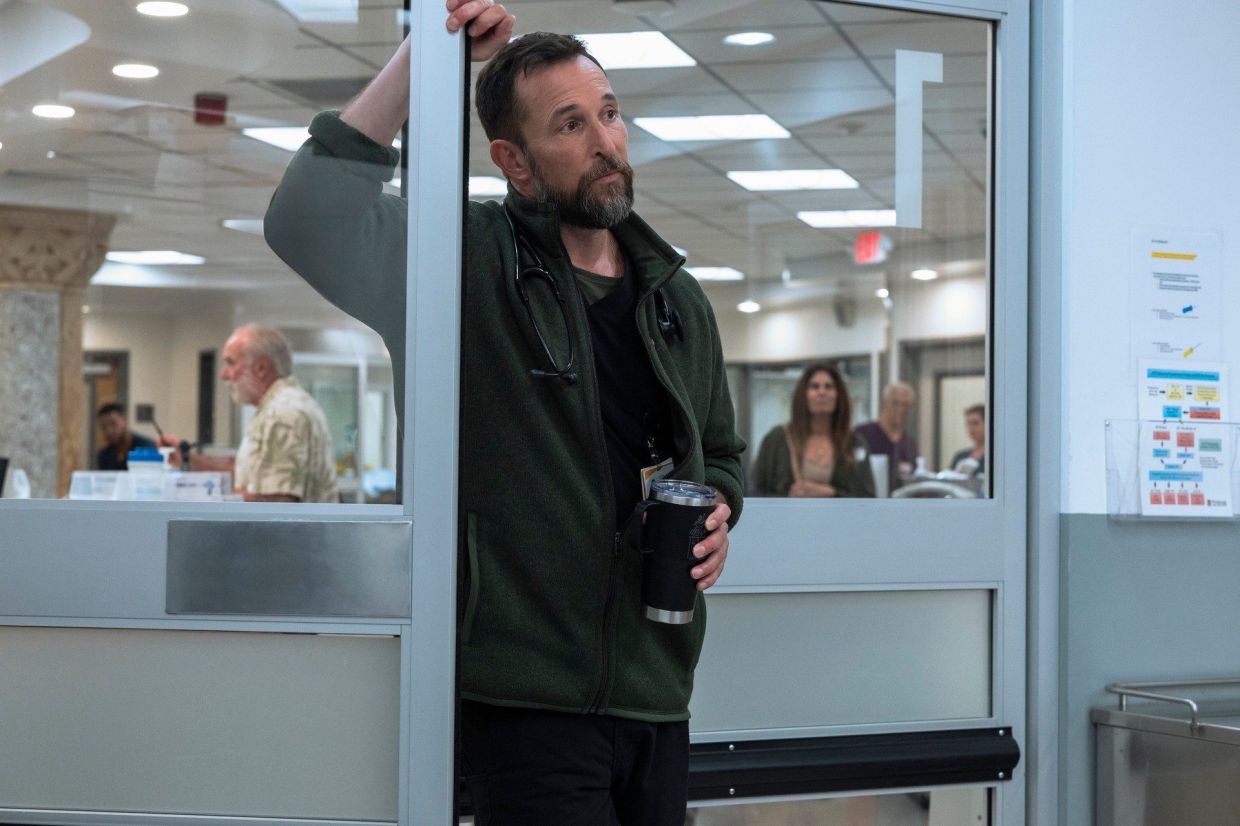
Television's most coveted awards season is shaping up to be a battle royale between streaming giants, with HBO Max establishing early dominance through two powerhouse programmes that garnered 49 combined nominations on July 8. The Pitt, a gritty medical drama that has captivated audiences through its real-time narrative structure, leads the pack with 25 nominations including the crucial best drama category, while the fifth and final season of Hacks—an intergenerational comedy about a fading stand-up performer and her millennial assistant—follows closely with 24 nominations and a bid for best comedy series.
The Pitt represents a notable shift in how American television approaches dramatic storytelling, blending the high-pressure intensity of ER with the real-time urgency of 24. The series unfolds each episode in a single continuous take within Pittsburgh's emergency department, creating a suffocating sense of immediacy that resonates with contemporary audiences grappling with real-world crises. Despite a slow start, the programme developed into a cultural phenomenon through word-of-mouth momentum, proving that prestige television can still find traction in an increasingly fragmented media landscape. The show's willingness to wade into charged contemporary issues—from reproductive rights to immigration enforcement to mass casualty events—has positioned it as more than mere entertainment, elevating it to commentary on the American condition.
Noah Wyle's leading performance has become synonymous with the programme's success. The actor, who originally built his career on ER, has already claimed an Emmy for his portrayal of the show's protagonist and enters this year's competition as a frontrunner in the best drama actor category. His presence creates a fascinating generational through-line in television history, as he represents the bridge between prestige broadcast drama's golden age and the current streaming era where serialized storytelling dominates the landscape.
The drama field presents formidable competition beyond The Pitt's reach. Vince Gilligan, the architect of Breaking Bad's cultural phenomenon, has returned with Pluribus on Apple TV, a 18-nomination contender set in a post-apocalyptic landscape where an alien virus has pacified humanity through a collective consciousness, leaving only 13 immune individuals as outliers. Rhea Seehorn, who anchors the production, has already accumulated significant hardware from Golden Globe and Critics Choice competitions this year and represents a substantial threat to The Pitt's presumed dominance. The Diplomat, featuring Keri Russell as she navigates political machinations, along with espionage thriller Slow Horses and the Game of Thrones prequel A Knight of the Seven Kingdoms, round out a particularly robust dramatic field.
On the comedy landscape, Hacks has emerged as the clear frontrunner despite stiff competition from both established and emerging programmes. Jean Smart, who already commands four Emmy awards for her role as the acerbic Deborah Vance, is nominated once more, while her scene partner Hannah Einbinder, who secured her first Emmy in the previous year, similarly competes. The show's focus on the unlikely mentorship between a veteran performer desperate to remain relevant and a struggling young woman navigating career instability has struck a chord with audiences and critics alike, particularly as it explores themes of ageism, ambition, and redemption.
Apple TV has staked substantial claims across multiple categories, with Widow's Bay, a horror-comedy entry featuring Matthew Rhys as an eccentric New England mayor attempting to establish his supposedly haunted island as a tourist destination, capturing 19 nominations. This newcomer has proven itself as a legitimate challenger to Hacks' perceived supremacy, demonstrating that the streaming ecosystem remains fertile ground for fresh creative voices and unconventional narrative approaches.
The remaining contenders demonstrate the depth of quality offerings across platforms. Shrinking, pairing Jason Segel and Harrison Ford as therapists navigating personal and professional turbulence, competes alongside The Bear's final season, which anchors itself in the fractious, high-pressure world of Chicago's restaurant industry. Notably, The Bear has accumulated 21 Emmy wins across its historical run, with star Jeremy Allen White previously claiming two individual accolades, yet this cycle has surprisingly excluded him from nomination consideration—a potential upset that could reshape expectations for the ceremony itself.
Within the limited series category, Netflix's Beef has emerged as the category leader with 16 nominations, establishing the streaming service's continued relevance in prestige television conversations despite recent competitive pressures. The anthology series, featuring Oscar Isaac and Carey Mulligan in its second iteration, explores the volatile intersection of two couples whose chance encounter spirals into escalating conflict, examining themes of rage, class, and modern American alienation. Love Story: John F. Kennedy Jr And Carolyn Bessette, despite generating significant cultural controversy through its examination of the iconic couple's romance and tragic deaths, earned only six nominations despite generating substantial viewership through its revisionist approach to American celebrity tragedy.
The September 14 ceremony in Los Angeles will be hosted by Mariska Hargitay, the veteran Law and Order: SVU star whose presence underscores television's institutional continuity even as production methodologies and distribution mechanisms fundamentally transform. Her stewardship of the proceedings represents a symbolic gesture toward the genre that trained generations of American viewers while simultaneously acknowledging the expanding universe of storytelling possibilities that streaming platforms have enabled across the industry.
For Malaysian audiences and Southeast Asian viewers broadly, this year's Emmy landscape reflects broader patterns about where global television production is increasingly concentrated and which narratives achieve international resonance. The dominance of streaming platforms signals an ongoing restructuring of entertainment hierarchies, with implications for international talent recruitment, production financing, and the kinds of stories that achieve awards recognition and cultural prestige globally.

