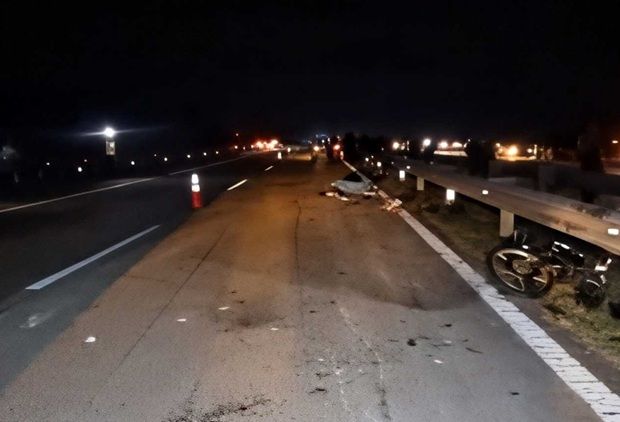
A routine journey along the East Coast Expressway transformed into devastating tragedy in the early hours of last Saturday when a motorcycle collision claimed four lives and left thirteen others injured. The immediate aftermath saw scattered debris across the carriageway and bereaved families facing an unimaginable void. Yet amid the predictable wave of social media commentary assigning blame and debating rider negligence, a more profound question remained largely unexamined: how would the eight children orphaned by this single incident navigate their futures without their fathers' income and presence?
The public discourse surrounding road tragedies in Malaysia typically fixates on accountability and fault-finding. Cybernetic observers eagerly assign culpability, legal experts debate consequences, and transportation officials promise infrastructure improvements. These conversations matter, certainly, but they often overshadow an equally vital consideration that surfaces only when tragedy strikes families with particular force. Beyond the immediate shock and grief lies the grinding reality of single mothers suddenly shouldering complete financial responsibility for young dependents, some barely old enough to comprehend why their father did not come home.
The three families who lost fathers to this tragedy face concrete challenges that extend far beyond emotional recovery. Immediate expenses pile relentlessly: monthly grocery bills, rent payments, kindergarten fees for the youngest children, replacement clothing as growing bodies quickly outgrow their wardrobes, and most critically, adequate nutrition to support healthy development during crucial formative years. These baseline costs consume resources that single-income households simply do not possess. As the children progress through their schooling, educational expenses will only accelerate, compounding the financial strain on mothers already stretched to breaking point.
Herein lies the often-misunderstood purpose of social security systems. The Social Security Organisation (PERKESO) operates not as charity or reward, but on a fundamental principle of societal solidarity. The concept rests on a profound recognition that risk and misfortune are shared human experiences. Those currently healthy contribute to support the sick; those spared by tragedy assist those who suffer loss; those still capable of full employment help those whose ability to work has been permanently diminished. This framework represents society's collective acknowledgment that individual catastrophe can strike any person, and that civilized communities do not permit families to descend into poverty merely because one member encountered unforeseen disaster.
When understood through this lens, PERKESO's response to this particular tragedy demonstrates tangible substance behind otherwise abstract principles. Three of the four deceased men had sufficient contribution records to qualify their surviving families for monthly Survivors' Pensions. The family of Che Mohd Suffian Che Gani receives RM2,207.63 monthly, while Muhammad Hafiz Al Hakim Mazlan's family receives RM1,258.33, and Mohd Aizat Husni's family receives RM708.33. The widows themselves benefit from carefully prescribed apportionments providing lifetime monthly income: RM1,325, RM755, and RM425 respectively. Calculated across a thirty-year span, these widow's benefits accumulate to RM477,000, RM271,800, and RM153,000 individually.
The support extends equally to the eight orphaned children now entirely dependent on their mothers. PERKESO has allocated RM1,670 monthly for their collective benefit, calibrated to assist with the extraordinary expenses of raising young dependents. Over the typical fifteen-year period before the oldest children reach adulthood and financial independence, this monthly support totals RM300,600. Aggregating all long-term benefits across both widow pensions and children's allowances, PERKESO's commitment to the families affected by this single tragedy exceeds RM1.2 million over the coming decades.
Yet these figures, substantial as they appear, represent something far more significant than mere numerical abstractions. Each rupiah flowing back to these families embodies a profound social contract. During their working lives, when income seemed steady and tragedy felt remote, these men made regular contributions to PERKESO—small deductions from paychecks that perhaps seemed inconsequential at the time. Those accumulated contributions now return as a steady stream of protection precisely when the need becomes most acute and the family's vulnerability most complete. Social security functions not as temporary emergency relief but as a continuing responsibility to ensure that loss does not automatically cascade into poverty.
The tragedy gains further significance through the introduction of the Lindung 24 Jam scheme, a relatively recent expansion of PERKESO's coverage that fundamentally altered the calculus of protection for road accident victims. Five of the thirteen injured individuals in this crash qualified for benefits under the scheme, a development that would have been impossible prior to June 1st. Before this legislative change, victims of accidents occurring outside traditional workplace environments faced severe restrictions on their eligibility for PERKESO support, regardless of their contribution history or genuine need. Many simply became statistical casualties of a system that, while well-intentioned, operated within narrow categorical boundaries.
Lindung 24 Jam represents recognition that modern employment patterns and traffic patterns intersect in complex ways deserving of protection. Workers commuting to jobs, traveling between work sites, or engaged in employment-related activities encounter genuine occupational risks on Malaysian roads. The scheme extends coverage to these vulnerable populations, acknowledging that the line separating "workplace accidents" from "traffic accidents" increasingly blurs in contemporary economic life. For the injured survivors of this East Coast Expressway incident, this expanded coverage translates into genuine financial assistance during their recovery periods—support that would have been entirely unavailable under the previous, more restrictive framework.
The broader implications warrant consideration by policymakers and the general public alike. Social security literacy remains problematically low across Malaysia, a situation that undermines public support for strengthening these essential systems. Many citizens regard PERKESO contributions as abstract deductions, failing to recognize how these modest regular payments create a comprehensive safety net that catches families when life's unexpected shocks strike hardest. The gap between public perception and actual protective capacity suggests an urgent need for better communication about how social security functions and why its continuous expansion remains economically and morally defensible.
This particular tragedy illuminates why dismissing social security as merely money paid after death or treatment provided after injury fundamentally misses the point. Such reductive framing ignores the reality that these payments sustain entire families through the darkest periods of their lives. Eight children now depend on PERKESO benefits to avoid poverty. Three widows now rely on monthly pensions to maintain household stability. Without these protections, the ripple effects of a single accident would extend far beyond the immediate victims, potentially damaging multiple young lives with poverty, educational disruption, and psychological trauma stemming from parental loss combined with material deprivation.
The East Coast Expressway tragedy represents simultaneously a moment of individual suffering and a vindication of collective social protection mechanisms. While preventing such accidents must remain a paramount priority through improved road safety measures and enforcement, the simultaneous reality is that accidents will continue to occur. When they do, the families affected deserve more than sympathy—they deserve functional, adequately funded systems that honor the principle that no Malaysian family should plunge into poverty because of tragedy. PERKESO's response to this incident, particularly through the expanded Lindung 24 Jam coverage, demonstrates that such protection is neither aspirational nor impossible. Rather, it is immediate, substantial, and absolutely essential.

