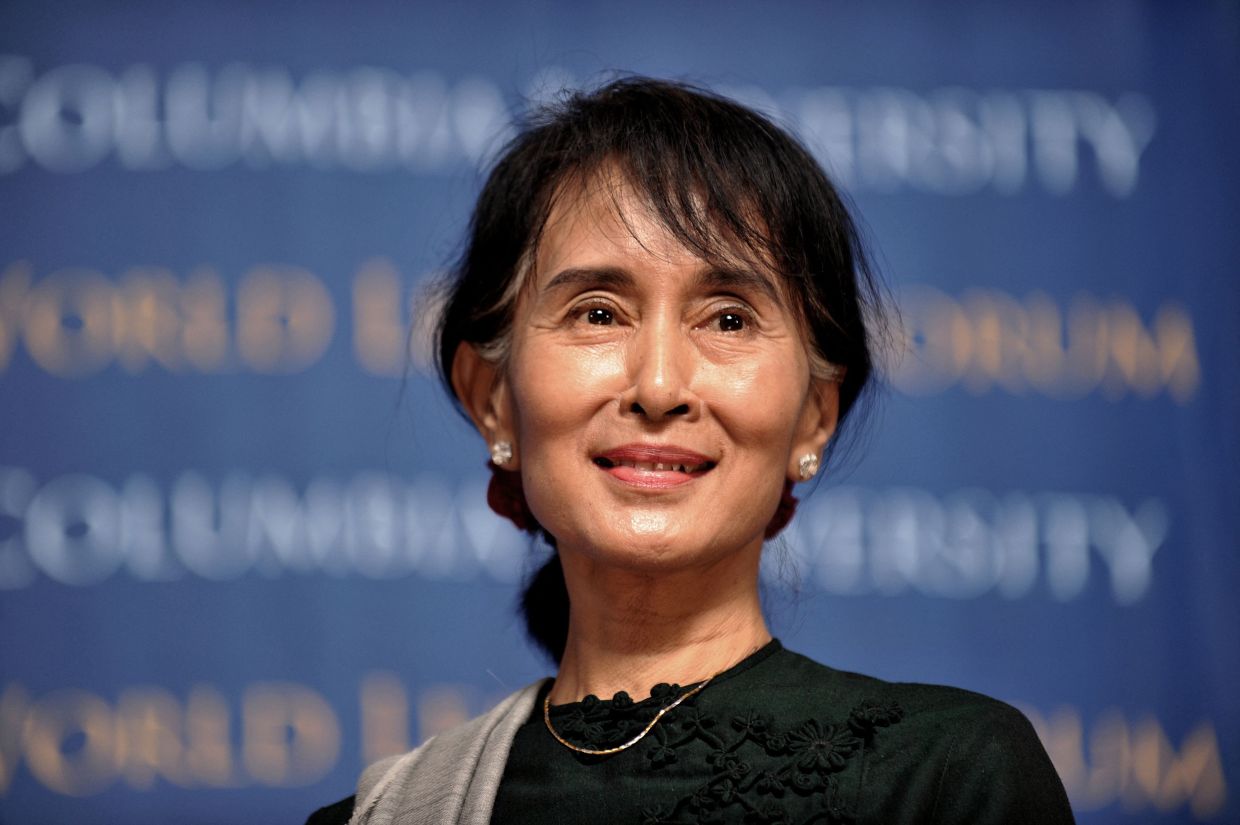
The question of where Myanmar's deposed leader Aung San Suu Kyi is being held has become a metaphor for the opacity of military rule in Southeast Asia's most troubled nation. General Min Aung Hlaing, who orchestrated the February 2021 coup that removed her from power, announced in April that Suu Kyi had been transferred from Naypyidaw prison to house arrest. Yet pinpointing her exact location within the capital has proved virtually impossible—a situation that reflects both the deliberate design of the city itself and the authoritarian structures that control it.
Naypyidaw presents an unusual challenge for those seeking transparency about official detention. Constructed as Myanmar's capital in 2005 under the previous junta leader Than Shwe, the city was engineered with an explicit political purpose: to insulate the ruling elite from popular pressure and external scrutiny. Spread across an area nine times larger than New York City but housing merely one million people, Naypyidaw exists as a vast, largely empty expanse punctuated by massive compounds and connected by wide highways that often carry virtually no traffic. The urban landscape itself functions as a tool of control, fragmenting space in ways that confuse residents and render official activities invisible to public view.
The architectural philosophy underpinning Naypyidaw reflects the military's deep-seated anxieties about popular uprising and foreign interference. By relocating the capital from Yangon, the bustling port city long associated with civil society activism, and distancing it from Mandalay, the culturally significant second metropolis, the junta sought to create distance—both literal and psychological—between those in power and potential challengers. The name itself, meaning "The Abode of Kings," captures the grandiose vision of a capital designed exclusively for rulers rather than for citizens. This paranoia is written into every aspect of the city's design, from mobile internet jammers that render navigation apps unreliable to the overwhelming presence of security forces amid the eerie emptiness.
The physical infrastructure itself becomes a barrier to accountability. Even government officials admit they cannot locate Suu Kyi within this labyrinth. When asked directly about the opposition leader's whereabouts, Thein Tun Oo, a spokesperson for the pro-military Union Solidarity and Development Party (USDP) and a parliamentarian, was candid: "I don't know. Because I am one of the people." This remarkable admission underscores how Naypyidaw's design serves to compartmentalize information even within the government structure. Police special branch officers from multiple jurisdictions reported that she had been moved to areas off-limits even to them—a situation so extreme that at least one source claimed "Even generals do not have her information."
Columnist Galen Pardee, an architect who teaches at Columbia University, has analyzed Naypyidaw as the antithesis of functional urban planning. What makes a city work, he explains, involves connectivity, accessibility, and human activity. Naypyidaw deliberately inverts these principles. The 800-acre parliament campus, one of the world's largest despite Myanmar's history of authoritarian governance, sits largely unused. Legions of groundskeepers outnumber pedestrians and vehicles on highways stretching toward the horizon. The city exists, Pardee observes, as "its own kind of house arrest," with the architecture itself functioning as a instrument of political control. "That's very much on purpose, with a political agenda in mind," he said, highlighting how urban design becomes weaponised in service of authoritarianism.
For ordinary residents of Naypyidaw, the city's deliberately confusing layout creates genuine disorientation. A 25-year-old female resident, speaking anonymously due to security concerns, articulated the bewilderment that many experience: "Everything looks the same to us. We are still confused by some roads." This design-induced confusion affects not just citizens seeking information about Suu Kyi but even those attempting to navigate daily life. Streets that appear identical, landmarks that repeat endlessly, and hierarchical access zones create an environment where even knowing one's own location becomes uncertain. The system works precisely because it ensures that ignorance becomes a universal condition, making it impossible for anyone outside the security apparatus to verify facts about official actions.
Suu Kyi's detention, whether in prison or under house arrest, must be understood within the context of her entire arc in Myanmar politics. The daughter of independence hero Aung San, she spent much of her adult life in exile before returning in 1988 to champion democratic reform. Her early activism resulted in fifteen years of house arrest in her family's Yangon mansion—a residence that paradoxically became a pilgrimage destination for pro-democracy supporters. Her Nobel Peace Prize in 1991 granted her international stature, yet the military eventually allowed her to lead during a decade of gradual democratisation before reversing course with the 2021 coup. The announcement of house arrest, therefore, cannot be divorced from this history; what Min Aung Hlaing presented as an act of mercy appears to critics as merely a variation on an old pattern of confinement.
The transition from imprisonment to house arrest, as presented by the junta, also served a domestic political purpose. In January 2024, Min Aung Hlaing staged heavily restricted elections from which Suu Kyi's National League for Democracy (NLD) was excluded. The USDP, backing the general, secured a predictable victory in these controlled polls. The announcement of Suu Kyi's house arrest coincided with Min Aung Hlaing's attempted rebranding as a civilian president rather than military dictator. This timing suggests the measure was calculated to improve the junta's international image by appearing more magnanimous while simultaneously ensuring that the opposition leader remained completely neutralised and invisible.
Suu Kyi's son Kim Aris, speaking from London, rejected the framing of house arrest as humanitarian. He argued that confining his mother to an undisclosed residence in a deliberately opaque capital city represents no meaningful improvement over imprisonment. "I don't see really how different it is to what she's been subjected to over the past number of years," he said, highlighting that the conditions of her confinement, whatever the official designation, amount to continued deprivation of freedom. The villa where she previously stayed before taking office has been demolished, erasing even the possibility of her returning to a familiar place. The absence of transparency about her current location, the isolation from family contact, and the regime's absolute control over information constitute a modern form of enforced disappearance dressed in bureaucratic language.
The broader implications of this situation extend well beyond Myanmar's borders. Naypyidaw represents an extreme expression of a trend visible across Southeast Asia: the use of urban design, technology, and administrative opacity as instruments of political control. When governments can literally render the locations of prisoners unknowable even to official enquirers, accountability mechanisms fail fundamentally. The international community's limited leverage compounds this challenge—diplomatic pressure has proven ineffective, and the junta operates largely isolated from economic consequences. For Malaysian policymakers and Southeast Asian observers, Suu Kyi's invisible detention in Myanmar's phantom capital serves as a cautionary tale about what happens when authoritarianism is allowed to calcify without external pressure or internal resistance.
The existence of Naypyidaw itself represents a distinctive form of authoritarianism unique to Myanmar. Unlike more conventional dictatorships that hide their operations through secrecy overlaid on recognisable cities, Myanmar's junta built an entire city designed to be inherently secretive. Every aspect—the massive distances, the redundant highways, the compartmentalised compounds, the population spread thinly across vast space—functions to prevent the accumulation of the knowledge necessary for accountability. Suu Kyi's whereabouts remain unknown not through dramatic concealment but through the banal architecture of confusion. As USDP parliamentarian Aye Chan declared this week, "her era is over." Yet her invisible presence in Naypyidaw haunts Myanmar's political future, a living symbol of how thoroughly the junta has succeeded in making its opponents vanish from public view while maintaining plausible deniability about their very existence.

