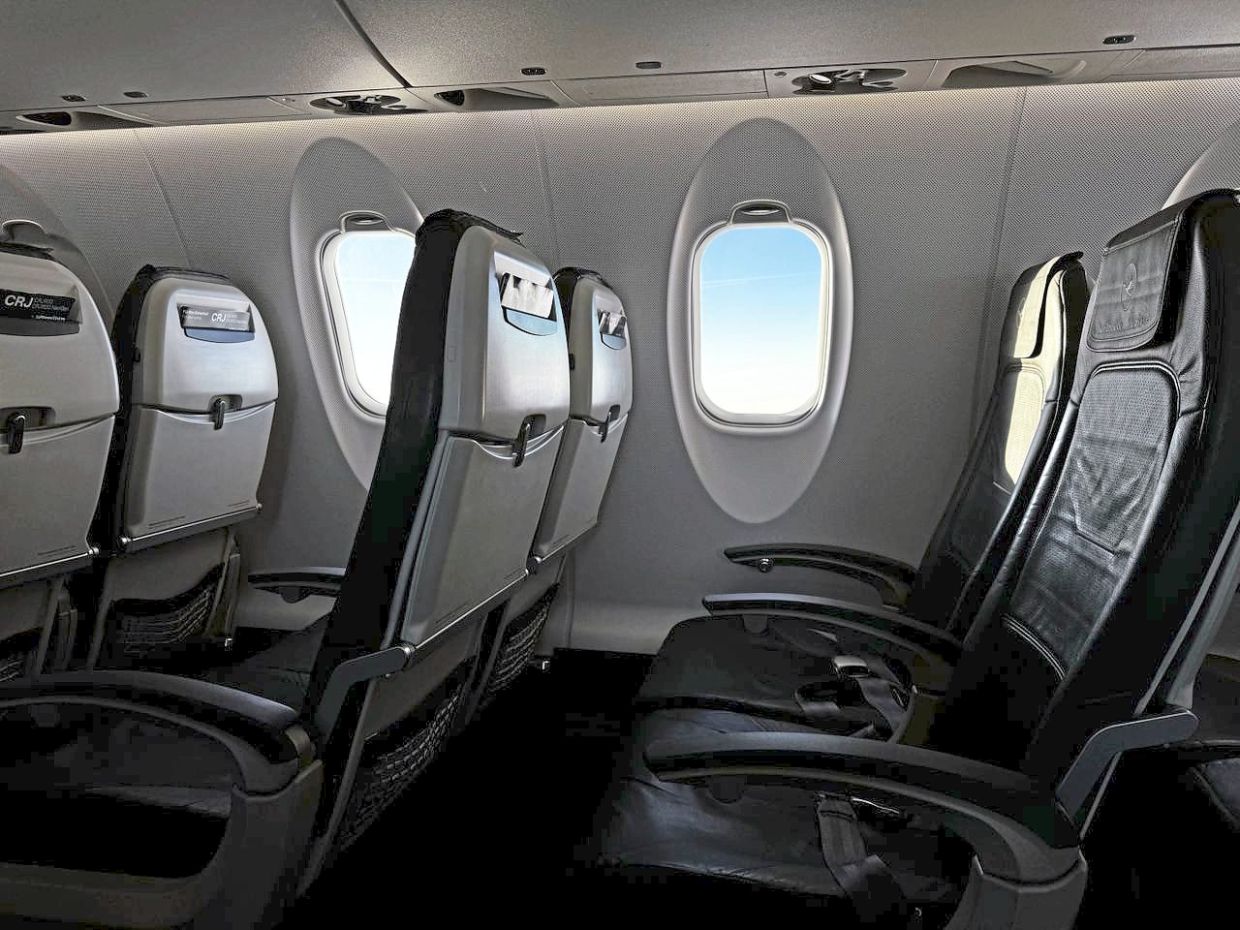
The passenger boarding experience has become a study in contrasts on major US carriers. One traveller glides through expedited security screening, settles into an exclusive lounge with craft cocktails and chef-prepared meals, then boards early into a spacious front-cabin seat where a flight attendant offers champagne and warm towels. A few rows back, another passenger navigates security queues, purchases a US$16 (RM65) cafe sandwich, waits at a crowded gate, and finally squeezes into a middle seat in economy, with diminishing hope that overhead bin space remains available. These diverging journeys are not random occurrences but the result of a deliberate strategy pursued by America's largest airlines since the Covid-19 pandemic reshaped travel patterns.
Delta Air Lines, American Airlines and United Airlines have fundamentally reoriented their business models around extracting maximum revenue from passengers willing to pay premium prices for comfort and convenience. Rather than compete on affordability—the historical driver of commercial aviation—these carriers have embraced what industry observers call "premiumisation." Delta CEO Ed Bastian crystallised the strategic shift in a recent Fortune podcast interview, stating bluntly: "We can't win by trying to provide the cheapest. We have to be able to win by providing the best." This declaration represents a stark departure from the industry's post-deregulation ethos, which centred on democratising air travel by making it accessible to middle-class passengers.
The transformation did not occur suddenly. During the early 2010s, Delta pioneered a revenue management approach that sophisticatedly priced available first-class seats to leisure travellers willing to pay modest premiums above economy fares. According to Henry Harteveldt, president of travel advisory firm Atmosphere Research Group, this strategy revealed latent demand that airlines had underestimated. Travellers demonstrated willingness to pay modestly more for noticeably improved comfort, superior service and tangible amenities. What began as marginal seat-selling evolved into a comprehensive business philosophy.
The pandemic accelerated this trajectory dramatically. When business travel collapsed and videoconferencing replaced countless corporate trips, industry analysts anticipated a return to deep discounting. Instead, leisure travellers—freed from reliance on employer-subsidised business class travel—proved surprisingly eager to purchase premium cabin seats and ancillary services themselves. This revelation permanently altered airline revenue expectations. Premium products, which historically functioned as loss leaders designed to reward frequent flyers, have become the industry's highest-margin offerings. During investor presentations, airline executives now routinely highlight premium revenue growth as a measure of business momentum.
The financial scale of this shift is substantial. Consulting firm McKinsey & Company analysis of transatlantic routes demonstrates that business-class tickets alone can generate nearly equivalent revenue to the substantially larger economy cabin. On major trunk routes, premium cabins occupy perhaps 15-20% of seat inventory yet contribute disproportionately to total revenue. Recognising this reality, airlines are physically reconfiguring aircraft to prioritise premium space. Delta's forthcoming Airbus A350-1000 aircraft, arriving in 2027, will devote nearly half its cabin to premium seating. American Airlines has committed to expanding premium cabin capacity by 50% by decade's end—a radical restructuring of aircraft layouts that reduces overall passenger carrying capacity while increasing revenue per flight.
The amenity competition among carriers has become increasingly elaborate. Delta's newest airport lounges replicate upscale fine-dining establishments, featuring open kitchens, craft cocktail bars, soundproof relaxation pods and outdoor observation decks. American Airlines partnered with the James Beard Foundation to redesign lounge menus. For international long-haul service, American reconfigured Boeing 787-9 Dreamliners with business-class compartments featuring sliding privacy doors, lie-flat seats exceeding standard twin mattress dimensions, and luxury skincare products from celebrity facialists. United's renovated business-class cabins include 27-inch entertainment screens, caviar service, and multi-course menus "featuring flavours and dishes" inspired by cities throughout its network. William J. McGee, senior fellow for aviation at the American Economic Liberties Project, observed sardonically that modern premium cabins offer Marie Antoinette-level opulence, except that economy passengers receive complimentary biscuits instead of cake.
Not all airline leadership presents the premium expansion as exclusively targeting wealthy passengers. United CEO Scott Kirby reframed the strategy as benefiting all travellers, highlighting seatback entertainment systems and mobile app improvements. Yet this framing obscures a fundamental reality: airline capacity is finite, and adding premium seats necessarily reduces economy inventory on each aircraft. The mathematical result is fewer available discounted fares and rising base economy prices. When an airline removes 40 economy seats to accommodate 15 business-class seats, the remaining economy passengers effectively subsidise the premium experience through higher prices.
The premium strategy's implementation has grown increasingly sophisticated. Delta recently introduced "basic" premium fares offering lower-priced access to front-cabin seating but requiring passengers to forgo seat selection and lounge access. United deployed comparable tiered pricing in premium cabins earlier this year. These initiatives create internal stratification within premium cabins themselves, effectively introducing premium-lite products that capture price-sensitive customers who might otherwise avoid premium entirely. The strategy simultaneously captures additional revenue from customers who prefer comprehensive premium treatment, willing to pay full premium prices for unrestricted perks.
For Malaysian and Southeast Asian readers, this American airline transformation carries important implications. Many regional carriers aspire to international competitiveness, and some have adopted similar premium-focused strategies on long-haul routes to Europe and North America. The expansion of premium cabins represents a structural shift in how airlines allocate limited aircraft capacity. Budget-conscious leisure travellers, particularly in developing markets, face an increasingly compressed pool of discounted economy seats as carriers prioritise premium revenue. Additionally, US carriers' premium cabin investments influence aircraft manufacturer design priorities—Boeing and Airbus increasingly develop new widebody aircraft with expandable premium cabin configurations, reflecting this market preference.
The timing of airline premiumisation warrants examination against broader economic conditions. As inflationary pressures strain household budgets across the United States and globally, premium cabins expand into increasingly luxurious territory. The wealth disparity visualised through airport terminals—where premium passengers enjoy five-star lounge experiences whilst economy travellers queue at fast-food counters—becomes a tangible representation of economic inequality. This contrast is particularly pronounced on transcontinental and transpacific routes where premium cabins can accommodate fewer than 100 passengers whilst economy sections contain 300 or more.
Some industry participants defend premium expansion as economically rational and customer-driven. Airlines maintain that they offer competitive choices across price points, from basic economy through premium economy to business class. The market, they argue, has voted by supporting premium demand. However, this perspective assumes market competition remains robust. Consolidation has reduced major US carriers from numerous competitors to three dominant carriers (Delta, American, United) controlling approximately 80% of domestic market share. In such concentrated markets, unilateral decisions by all three major carriers to expand premium cabins limit consumer options rather than reflecting competitive choice.
Looking forward, the premium trajectory shows no indication of reversal. Airline capital investment strategies assume sustained premium demand, with multi-billion-dollar aircraft acquisition programs designed around enlarged premium cabins. New aircraft entering service in the late 2020s will structurally embed these premium-first design choices for two decades of operation. For economy travellers seeking value, the message is clear: the golden age of accessible air travel has surrendered to an era when airlines maximise revenue from wealthy passengers willing to purchase distinction alongside transportation.

