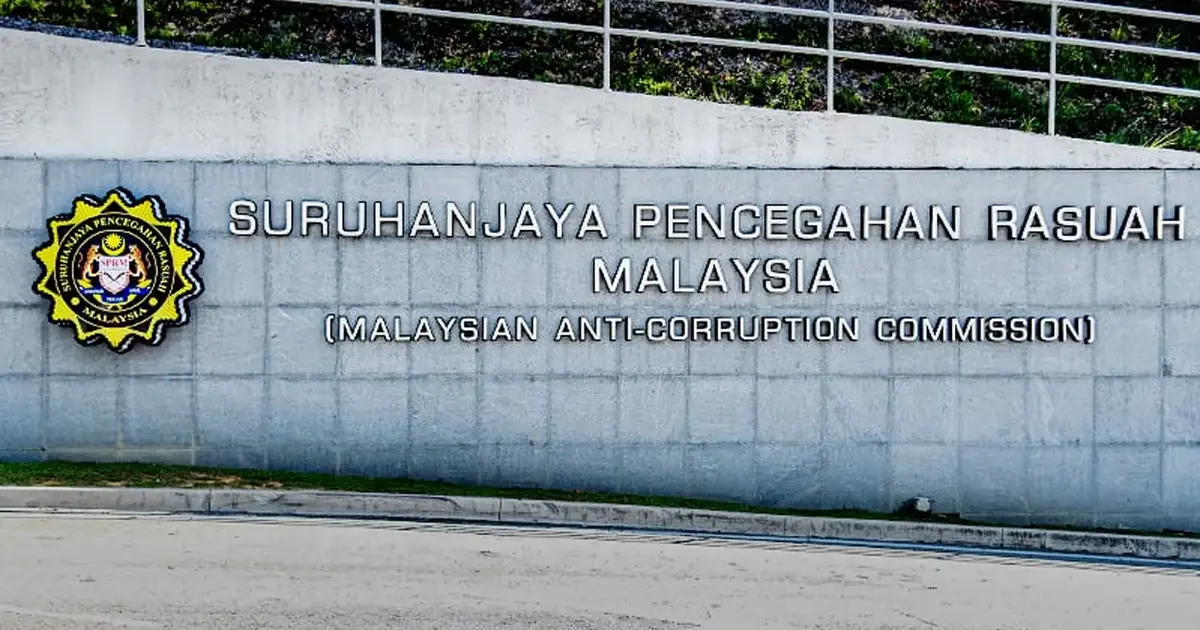
The Malaysian Anti-Corruption Commission will commence legal proceedings against 13 company owners tomorrow, marking a significant enforcement action against individuals implicated in governance breaches tied to a major government employment initiative. The charges stem from systematic irregularities that emerged during the agency's investigation into the Daya Kerjaya 2.0 programme, a national scheme designed to support workforce development and job creation across Malaysia.
Daya Kerjaya 2.0 represents a cornerstone of Malaysia's labour market interventions, providing funding and support to facilitate skills training and employment opportunities for Malaysian workers. The programme operates through corporate partnerships, where participating businesses receive government backing to expand their workforce whilst contributing to national employment objectives. The discovery of irregularities within this framework raises significant questions about oversight mechanisms and accountability in how government resources are deployed through such initiatives.
The allegations against the 13 company owners indicate patterns of misconduct that diverged substantially from the programme's intended purpose and conditions. Such breaches could encompass financial impropriety, misrepresentation of employment figures, misuse of allocated funds, or failure to comply with contractual obligations to the government. The specifics of individual charges remain subject to judicial disclosure during court proceedings, but the breadth of enforcement action suggests systemic rather than isolated problems.
MACC's decision to pursue simultaneous cases against multiple operators within the same programme demonstrates the agency's commitment to addressing corruption comprehensively rather than pursuing isolated prosecutions. This coordinated approach typically indicates investigation teams uncovered connected networks of non-compliance or shared methodologies of abuse, which warrants parallel legal action to establish broader patterns of misconduct.
The timing of these prosecutions carries implications for public sector confidence and programme credibility. Government initiatives that attract fraudulent participants undermine the confidence of legitimate businesses participating in equivalent schemes and create negative perceptions about state investment in labour market development. For Malaysia, which emphasises its standing as a functional market economy, visible enforcement against white-collar misconduct in government programmes strengthens institutional credibility and demonstrates that regulatory frameworks possess functional teeth.
For business owners and employers throughout Malaysia, the case signals that participation in government-backed employment schemes demands rigorous compliance with stated terms and conditions. Companies must maintain accurate records, honest reporting of employment figures, and transparent use of allocated resources. The legal consequences now being tested in court serve as a practical deterrent against cutting corners or interpreting programme requirements loosely.
The investigation underlying these prosecutions required considerable investigative resources and coordination between MACC analysts, programme administrators, and potentially other regulatory bodies. The complexity of tracking financial flows, verifying employment claims, and establishing intent makes such investigations time-intensive, yet the resulting enforcement action demonstrates that government agencies possess capacity to detect and prosecute misconduct within large-scale initiatives even when schemes operate across multiple jurisdictions and involve numerous participants.
South-east Asia broadly has witnessed growing investment in employment support programmes as governments seek to manage labour market transitions and skills mismatches. The Malaysian experience with irregularities in Daya Kerjaya 2.0 reflects challenges that many regional governments encounter when distributing substantial resources through corporate intermediaries. The visibility of Malaysian enforcement action may prompt peer governments to strengthen their own oversight frameworks and audit procedures for equivalent initiatives.
Future programme design and administration could benefit from lessons evident in the MACC investigation. Stronger initial vetting of participating companies, more frequent compliance audits during programme implementation, and tighter financial controls could reduce opportunities for misconduct. The prosecutions emerging tomorrow should prompt government agencies responsible for similar schemes to review their own monitoring protocols and consider whether existing safeguards are sufficiently robust.
The broader context involves Malaysia's stated priorities around corruption mitigation and good governance. Successive administrations have positioned anti-corruption efforts as fundamental to institutional legitimacy and economic confidence. High-profile enforcement against business owners abusing government programmes aligns with this messaging and demonstrates regulatory action extending beyond political circles into the private sector.
Stakeholders including other employers participating in Daya Kerjaya 2.0 and prospective programme beneficiaries will observe these court proceedings closely. Legitimate participants may feel vindicated that competitors engaging in misconduct face consequences, whilst workers and job-seekers supported through the programme will monitor whether enforcement protects the integrity of opportunity distribution.
The legal outcomes from tomorrow's court actions will establish precedent for how similar cases are handled going forward. Conviction rates, penalties imposed, and judicial reasoning about culpability will shape both deterrence effects and expectations around enforcement intensity for comparable programmes. Malaysia's courts will effectively determine not only individual accountability but also the wider signalling effect regarding acceptable conduct for businesses engaging with government support mechanisms.
As these prosecutions proceed, attention will focus on whether underlying programme weaknesses are simultaneously being addressed through administrative reform. Enforcement without concurrent system improvement creates cycles where detected misconduct faces prosecution but structural vulnerabilities enabling similar future breaches persist unaddressed. Comprehensive institutional response would pair legal accountability with procedural strengthening.

