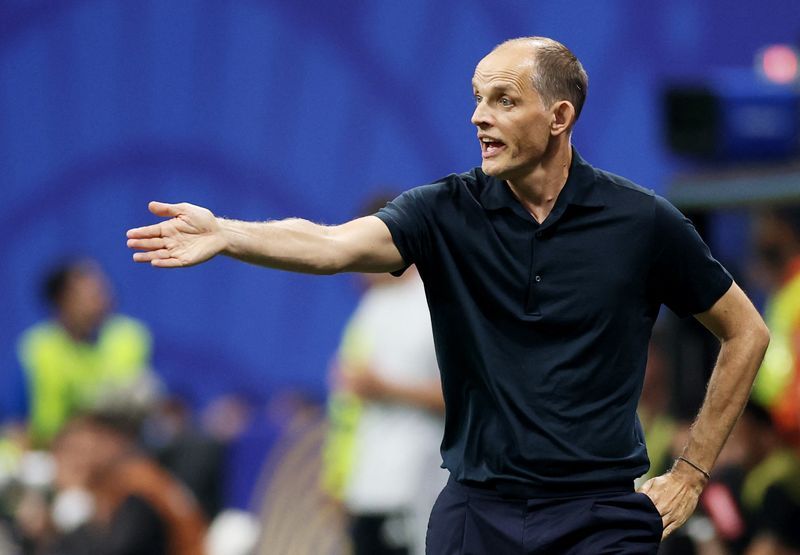
Thomas Tuchel arrived at the England job with an enviable résumé and high expectations. The German tactician, brought in as Gareth Southgate's successor, was positioned as the architect of England's first World Cup triumph since 1966. Yet after England's semi-final loss to Argentina, Tuchel found himself under intense scrutiny, with many observers pointing to his defensive adjustments late in the match as the critical error. This narrative, however, obscures a more complex reality: England faced an opponent of extraordinary quality and experience, captained by a player operating at the very peak of his powers.
FA Chief Executive Mark Bullingham's confidence in Tuchel seemed well-placed at the time of his October 2024 appointment. The manager had won the Champions League with Chelsea and compiled an impressive track record across European elite clubs. When he assumed the role in January, Tuchel openly declared his ambition to "get a second star on our shirt," invoking the weight of England's 1966 legacy. Such bold declarations reflected the genuine optimism surrounding his arrival—this was a proven winner stepping into international football at the highest level.
What unfolded on the pitch against Argentina, particularly in the dying moments, seemed to validate the criticism. Tuchel's decision to shift England's shape defensively, following Anthony Gordon's opener, appeared to signal a retreat that invited Argentina's comeback. Pundits like Alan Pardew offered measured but damning analysis, suggesting the manager had fostered a negative mentality that undermined the team's ability to control the match. The narrative became simple: poor tactical judgment cost England the World Cup.
Yet Tuchel's own assessment pointed toward something deeper than tactical miscalculation. He acknowledged that structural changes alone could not have addressed the fundamental challenge his team faced. His reflection on England's relationship with possession football—suggesting it sits less naturally in English DNA compared to Spanish or Argentine footballing cultures—hints at a philosophical difficulty that transcends any single manager's blueprint. This observation deserves serious consideration. England's historical preference for direct, athletic football contrasts sharply with the patient, possession-dominant approach that has defined Argentina's golden era.
The context of Tuchel's first major international tournament deserves acknowledgment. Despite his considerable experience at club level, the unique pressures and rhythms of World Cup football represent uncharted territory. His progression to the semi-finals at least matched Southgate's 2018 achievement, suggesting the team's performance was not a catastrophic failure. When examining the development of successful international managers, the pattern is instructive: Didier Deschamps required six years before winning the World Cup with France, while Aime Jacquet needed five years to build his 1998 champions. Tuchel's learning curve, by this standard, is only beginning.
Argentina, by contrast, arrived as defending champions with the tournament's greatest player still performing at an elite level. Lionel Scaloni's side had navigated a chaotic knockout phase that demanded resilience and adaptability. Cape Verde nearly ambushed them in the group stage, Egypt required three late goals in the last 16, and Switzerland pushed them to extra time in the quarter-finals. These narrow escapes revealed a team that refused to surrender, that possessed the mental fortitude to respond when danger emerged. This is the mentality of champions—the confidence born from previous success at the world's biggest stage.
At the heart of Argentina's potency was Messi himself, a 39-year-old still capable of transcendent performances. Against England's retreating defense, the statistics told a damning story: from the 72nd to 92nd minute, England managed only two passes in Argentina's half while Argentina completed 111. This disparity reflected Argentina's dominance and England's desperate attempt to preserve their lead through defensive solidity. Yet defending against Messi demands more than numerical superiority; it requires the ability to deny him space and time on the ball—a task that becomes exponentially harder when the opponent controls possession.
Thierry Henry's vivid description of Messi's mentality—how he "switches" when challenged, how he becomes "unstoppable" when his team needs him most—encapsulates the difficulty England faced. Messi, having played 120 minutes in the previous match against Switzerland, still possessed the energy and hunger to dribble past defenders, to shift play to favorable positions, and to create opportunities in the match's most decisive moments. His assists for late goals from Enzo Fernandez and Lautaro Martinez showcased his ability to orchestrate victory when the stakes were highest. This is not a failure that tactical adjustments can readily address; it reflects facing an opponent of incomparable quality.
The broader lesson extends beyond blame allocation to Tuchel. England's loss reveals the competitive gulf between tournament veterans and relative newcomers to the international stage. Argentina's experience of sustained excellence—reaching two consecutive World Cup finals, maintaining a squad built on familiarity and shared understanding—creates advantages that transcend tactical systems. Scaloni's players had developed the intuitive understanding that comes from competing together across multiple tournaments. England, by contrast, represents a younger project still seeking the collective cohesion that international success demands.
Tuchel's two-year contract extension, signed in February, suggests the FA retains faith in the long-term project despite this setback. The European precedent suggests such patience is warranted. The manager must now process the lessons from his first major tournament exposure, analyze how England can develop greater comfort with possession-based football, and begin building toward the next World Cup cycle. Whether he can bridge the philosophical gap between English footballing traditions and the possession-dominant approach that successful modern international teams employ remains the central question.
Ultimately, England's semi-final exit represented a confluence of factors. Tuchel's tactical choices merit scrutiny, but they operated within a context of facing the world's best player in peak form, an opponent with championship experience, and a team culture that has consistently prioritized direct, counterattacking football. The criticism should be nuanced: Tuchel bears responsibility for his decisions, yet he also inherited structural limitations that no manager could overcome in a single tournament cycle. Argentina's victory was forged not merely by superior tactics but by superior experience, mentality, and the magnetic force of Messi's brilliance—factors that define World Cup football at its highest level.

