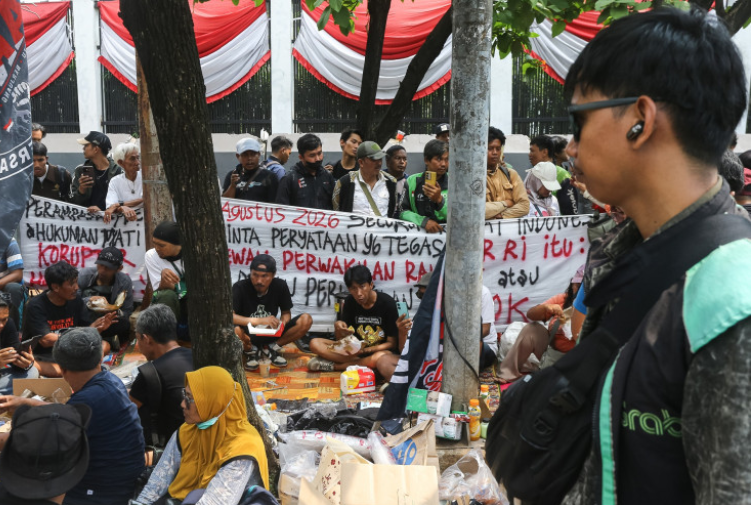
Hundreds of demonstrators converged on Indonesia's parliament building in the Senayan Legislative Complex on Thursday morning, mounting pressure on lawmakers to advance anti-corruption measures that have languished in drafting for over a decade. The protest reflected growing public frustration with endemic corruption in government and a demand for more powerful enforcement tools against graft, even as civil rights experts caution that such legislation could be weaponised against political opponents.
The United Pati People's Alliance, an activist coalition from the Central Java city of Pati, orchestrated the rally after months of groundwork mobilising supporters across the region. The group transported multiple contingents to the capital specifically to demonstrate outside parliament, demonstrating sustained commitment to pushing the legislative agenda despite significant obstacles placed in their path. Additional protest groups from across the country were expected to converge on the venue, potentially swelling the crowd well beyond the 500 individuals Jakarta Police initially anticipated would participate.
The journey to parliament proved challenging for many demonstrators. Police reportedly intercepted several buses carrying Pati residents headed to Jakarta, attempting to prevent or impede their arrival. More dramatically, Bank Mandiri, a state-owned institution, froze the bank account of AMPB coordinator Supriyono, a move that triggered immediate public backlash and calls for customers to withdraw funds from the bank. Despite these official hindrances, Supriyono announced that additional buses would nonetheless arrive through public donations, suggesting the movement maintained sufficient grassroots support to overcome government interference.
Parliament's security apparatus geared up substantially for the demonstration. Traffic flow across central Jakarta was disrupted as police cordoned off access routes to the legislative complex, including closing both lanes of Jalan Gatot Subroto from Senayan Park to parliament's entrance. Dozens of security personnel maintained positions throughout the affected areas. Jakarta Police spokesperson Senior Commissioner Budi Hermanto framed the preparations as balancing security concerns with maintaining normal commercial and educational activities, urging demonstrators to avoid property damage and remain cognisant of other Jakartans' daily routines.
The protesters articulated multiple demands beyond the asset forfeiture legislation. Demonstrators called for capital punishment for corrupt government officials, reflecting deep public anger at corruption scandals that have enriched officials while ordinary citizens struggle with inflation and rising costs of living. The rally thus encompassed both structural institutional demands and broader economic grievances, with placards also emphasising calls for lower prices on basic necessities, indicating protesters viewed corruption and economic hardship as interconnected failures of governance.
The asset forfeiture bill represents the centrepiece of anti-corruption efforts currently before parliament. Originally drafted in 2008 but shelved repeatedly over the intervening years, the legislation would grant authorities power to seize assets believed to represent criminal proceeds without awaiting criminal conviction. Such pre-conviction asset seizure represents a significant expansion of state enforcement powers, allowing law enforcement to act decisively against suspected corruption networks. However, legal scholars have repeatedly warned that similar legislation in other jurisdictions has been exploited to target political adversaries or enable extortion by officials claiming assets were proceeds of crime.
Parliament moved with unusual dispatch after Pati residents visited the Senayan complex on Monday. Gerindra Party lawmaker Habiburokhman, who chairs the House Commission on legal affairs, pledged that deliberations would conclude within eight weeks, with final passage targeted for December. This accelerated timeline reflects political calculation that swift action on such visible anti-corruption legislation could boost parliamentary approval ratings amid public dissatisfaction with governance and the economy.
President Prabowo Subianto's newly inaugurated administration has signalled its backing for rapid passage, effectively positioning the executive behind the legislative momentum. Government Communications Agency head Muhammad Qodari underscored that responsibility for action now rested with parliament, suggesting the presidency had done its part by endorsing the measure. This alignment between executive and legislative branches removes a potential impediment to passage, though differences between chambers or competing amendments could still delay final enactment.
The legislation's advancement reflects a genuine policy response to endemic corruption that Indonesia has struggled to combat effectively. Existing frameworks have produced high-profile prosecutions but critics contend they often target lower-level officials while powerful figures escape accountability. Advocates argue that asset forfeiture would enable more aggressive disruption of corruption networks by striking at the financial incentives driving official misconduct. Yet the demonstrated public appetite for even harsher measures, including capital punishment, underscores the depth of frustration with governance failures and the potential for such power to be misused if adequate judicial safeguards prove inadequate.
For Malaysia and other Southeast Asian nations watching Indonesia's anti-corruption trajectory, the asset forfeiture debate carries particular relevance. The region broadly grapples with similar corruption challenges, and legislative solutions adopted in Indonesia's substantial democracy often influence policy discussions elsewhere. The tension between requiring effective enforcement tools and protecting against state abuse of authority reflects dilemmas that plague anti-corruption efforts across the region, making Indonesia's approach instructive for neighbouring governments considering comparable measures.

