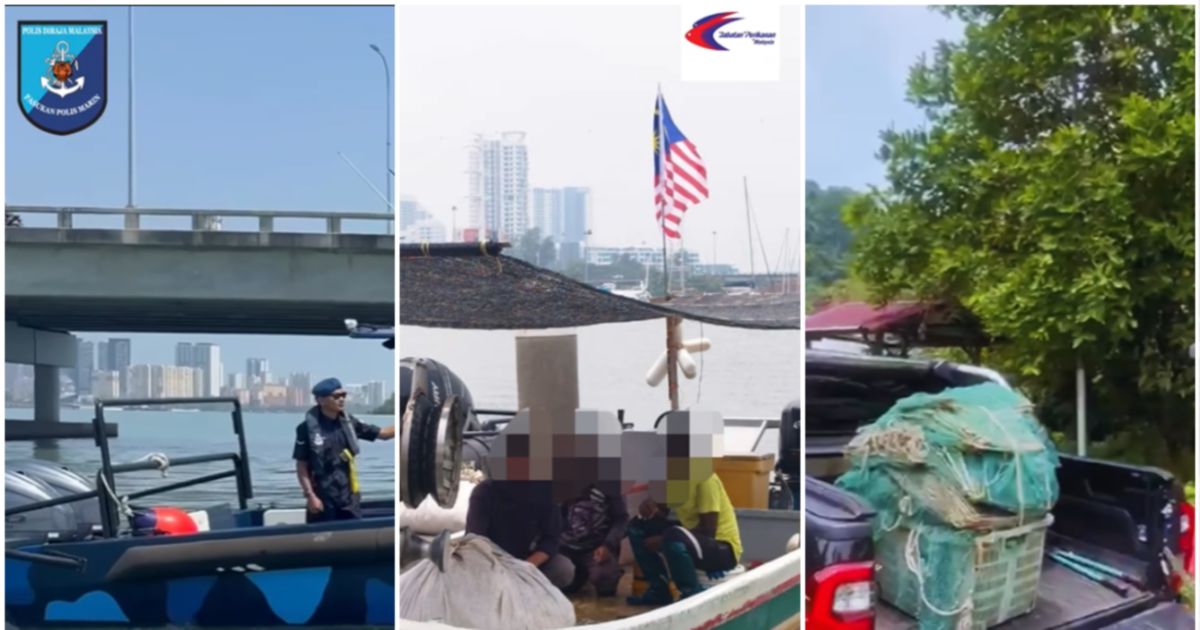
A coordinated enforcement sweep across Penang waters has culminated in the arrest of three individuals and the seizure of valuable fishing equipment and a vessel, underscoring regional authorities' determination to combat unauthorised maritime operations. The joint operation, conducted yesterday, recovered fishing gear and a boat with a combined estimated value of RM75,360, marking a significant disruption to what authorities characterise as illegal fishing activities.
The arrests represent the latest chapter in an ongoing crackdown against fishing violations in Malaysian waters, a persistent challenge that extends far beyond Penang's coastline. Illegal and unregulated fishing operations have long plagued Southeast Asian maritime zones, draining fish stocks and undermining legitimate commercial fisheries that support thousands of livelihoods across the region. The Penang operation demonstrates the commitment of local law enforcement to intercept such activities before they proliferate, though enforcement officials acknowledge that coordinated cross-border operations remain essential given the transnational nature of many maritime violations.
The confiscated equipment seized during the operation provides insight into the scale and sophistication of illicit fishing enterprises operating in Malaysian territorial waters. Beyond the three detained individuals, the recovery of both fishing gear and the vessel itself suggests authorities disrupted an organised operation rather than apprehending isolated offenders. The valuation of RM75,360 reflects not merely consumer goods but productive capital deployed to circumvent regulatory frameworks designed to protect marine ecosystems and ensure equitable resource allocation among licensed operators.
Penang waters, strategically positioned along one of the world's busiest maritime corridors, present unique enforcement challenges. The state's geography—encompassing Penang Island and the mainland coastline along the Strait of Malacca—creates multiple access points for vessels attempting to evade detection. Furthermore, the high volume of legitimate commercial and recreational maritime traffic complicates surveillance efforts, requiring authorities to develop sophisticated targeting methodologies to distinguish lawful activity from prohibited operations.
The operation's timing reflects broader policy objectives articulated by Malaysian maritime agencies, which have intensified patrols and intelligence-gathering in recent years. These efforts aim not only to prosecute individual offenders but to establish deterrents sufficiently potent to discourage participation in illegal schemes. The visible consequence imposed on the three arrested individuals and the public nature of asset seizures serve dual purposes: removing dangerous actors from the maritime domain while signalling to potential offenders that Malaysia takes enforcement seriously.
For the Malaysian fishing industry, such operations carry substantial significance. Licensed operators across Penang and neighbouring states face perpetual economic pressure from unregulated competitors who ignore catch quotas, marine protection zones, and sustainable harvesting practices. By removing illegal vessels and equipment from circulation, enforcement agencies reduce the competitive disadvantage borne by legitimate fishermen who invest in compliance and environmental stewardship. This dynamic particularly affects small-scale and artisanal fishers, whose economic viability depends on access to healthy fish populations and level competitive conditions.
The seizure also addresses environmental conservation imperatives increasingly central to Southeast Asian maritime policy. Illegal fishing operations often employ indiscriminate catching methods—including destructive trawling and poison fishing—that devastate ecosystems far beyond their immediate target species. Mangrove habitats, coral reefs, and spawning grounds suffer collateral damage, reducing long-term productivity and biodiversity. The three-year-old impetus to strengthen marine protected areas across Malaysian waters reflects recognition that sustainable fisheries demand environmental preservation as a foundational prerequisite.
Beyond immediate deterrent effects, yesterday's operation contributes to the intelligence architecture supporting expanded maritime governance. Each enforcement action generates data on operational patterns, equipment preferences, and criminal methodologies that enhance future targeting capability. Joint operations involving multiple agencies similarly establish coordination mechanisms and information-sharing protocols beneficial for addressing other maritime security concerns, from trafficking to unauthorised resource extraction.
The involvement of multiple agencies in the Penang operation reflects institutional approaches to maritime enforcement that have evolved substantially over the past decade. Rather than siloed departmental efforts, contemporary Malaysian practice emphasises coordinated operations leveraging distinct organisational capabilities. This integrated model improves effectiveness while demonstrating to the international community Malaysia's commitment to responsible ocean governance—an increasingly important consideration given intensifying scrutiny of Asian fishing practices from environmental organisations and trading partners.
Authorities indicated that investigations into the arrested individuals remain ongoing, with additional charges likely as examination of seized equipment and vessel documentation proceeds. The RM75,360 valuation represents preliminary assessment and may change as forensic analysis determines equipment specifications and operational history. Prosecutions arising from the operation will follow established maritime law frameworks, though the complexity of enforcement in international waters occasionally generates jurisdictional nuances requiring specialised legal expertise.
Moving forward, the Penang operation exemplifies enforcement strategies that Malaysian maritime agencies intend to sustain and expand. Planned acquisitions of advanced surveillance systems and operational funding increases signal ministerial commitment to intensifying patrols throughout 2024 and beyond. For regional observers, the operation demonstrates that despite capacity constraints affecting developing maritime nations, Malaysia pursues meaningful enforcement capable of generating measurable impacts on illegal operations.

