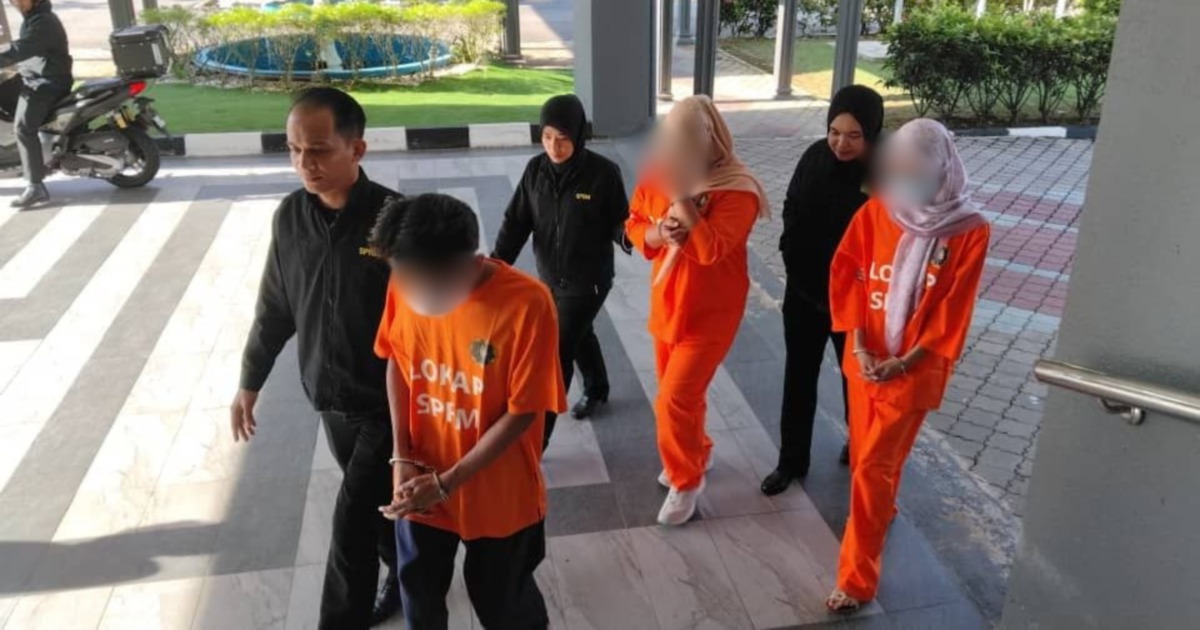
The Terengganu office of the Malaysian Anti-Corruption Commission has detained three individuals as part of an investigation into a scheme involving fraudulent claims for wedding catering services. Among those held is a former manager from a frozen food company, whose involvement signals potential complicity between private sector personnel and others in orchestrating the deception. The total value of the suspect claims has been pegged at RM51,000, representing a significant financial loss in what authorities believe to be a coordinated operation.
The remand of the three suspects marks an escalation in the MACC's efforts to combat corruption and financial fraud across Terengganu. The agency continues to broaden its investigation to determine the full scope of the alleged scheme and whether additional parties were involved in facilitating or benefiting from the false claims. Such cases, while seemingly localised, often reveal broader patterns of fraud that can extend across multiple sectors and jurisdictions, making thorough investigation essential.
The involvement of a former manager from a frozen food enterprise is particularly noteworthy, as it suggests insider knowledge and industry connections may have been exploited to lend credibility to fraudulent claims. In Malaysia's service industry, wedding catering represents a substantial business segment with significant government and corporate contracts. The infiltration of such legitimate operations by corrupt actors poses risks to both honest traders and the integrity of procurement processes.
Wedding catering claims, when processed through official or semi-official channels, often require documentation such as quotations, invoices, and proof of service delivery. The alleged false claims in this case suggest that forged or misleading documentation may have been submitted to justify payments. This modus operandi is increasingly common in white-collar fraud, where perpetrators exploit procedural gaps and the assumption of good faith in business transactions.
For Malaysian readers, this case underscores the importance of institutional vigilance in preventing financial malfeasance. The MACC's intervention demonstrates that such schemes do not escape scrutiny indefinitely, though the detection lag between commission of the fraud and investigation commencement remains a critical issue. Government agencies and private sector bodies must strengthen internal controls, particularly around vendor verification and claim substantiation.
Terengganu, like other states in Malaysia, has experienced various fraud cases across decades. This latest incident contributes to a growing body of evidence that corruption transcends economic sectors and affects service industries that many citizens engage with directly. Wedding arrangements, being personal and culturally significant, often involve substantial financial commitments, making victims potentially numerous if the fraud extended beyond official claims to individual consumers.
The investigation's progress will likely illuminate how the alleged perpetrators coordinated their activities and whether existing regulatory frameworks adequately prevent such deception. For instance, if claims were submitted to government bodies, the case may prompt reviews of procurement procedures. If they involved private sector clients, corporate governance practices may come under scrutiny. The circumstances surrounding how the fraud was detected will also offer lessons for other agencies.
From a sectoral perspective, the frozen food industry in Malaysia is integral to food supply chains and restaurant operations. That a former manager from this sector was implicated suggests familiarity with supply, distribution, and cost structures that could be exploited to create seemingly plausible false claims. This intersection of industries—frozen foods and wedding catering—reveals how value chains can become conduits for fraud when oversight weakens.
The RM51,000 sum, while not extraordinarily large in absolute terms, represents a breach of public or private trust depending on who issued the fraudulent claims. Across many incidents of similar magnitude, aggregate losses can become substantial. Moreover, each successful fraud case emboldens potential perpetrators elsewhere, making swift investigation and prosecution a deterrent mechanism within communities.
Looking forward, this case may prompt stakeholder engagement across the catering and food services industries in Terengganu and beyond. Professional associations, chambers of commerce, and regulatory bodies might collaborate to establish industry standards for documentation and claim verification. Such partnerships have proven effective in other sectors in Malaysia where collective action against fraud enhances overall business credibility.
The remand of the three suspects will proceed through established legal channels, with further developments expected as the investigation deepens. For businesses operating in Terengganu and throughout Malaysia, the case serves as a reminder that fraudulent practices, however carefully executed, eventually come to light. Maintenance of ethical standards and transparent operations remains the most reliable insurance against legal jeopardy and reputational damage in an environment where enforcement agencies are increasingly active.
As the case progresses, clarity on prosecution outcomes will be important for the wider community. Successful convictions and appropriate sentencing reinforce deterrence, while case details shared through official channels assist other agencies in identifying similar patterns. The MACC's role in addressing such matters reflects Malaysia's broader institutional commitment to combating corruption and maintaining integrity in economic transactions.

