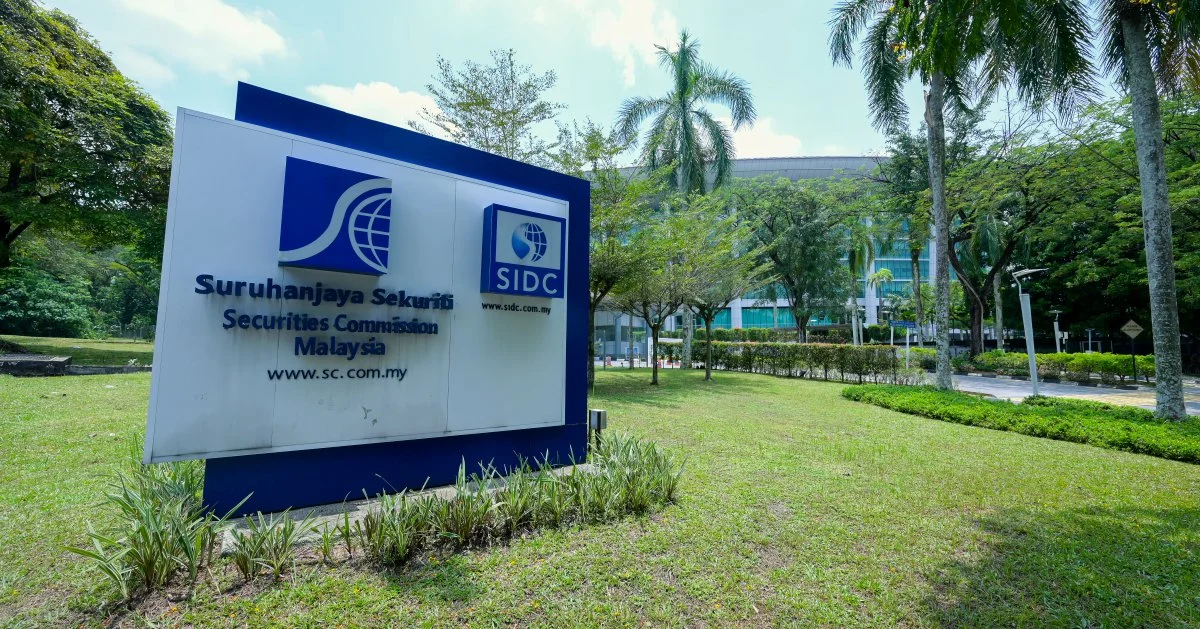
Three brothers are facing prosecution across multiple proceedings at the Kuala Lumpur Sessions Court following investigations into unlicensed capital market operations, according to an announcement from the Securities Commission. The staggered charges indicate a coordinated regulatory crackdown on what authorities determined to be unauthorised financial services, reflecting the watchdog's commitment to policing Malaysia's securities landscape against operators circumventing licensing requirements.
The Securities Commission has increasingly prioritised enforcement action against unlicensed market participants, particularly those offering services or facilitating transactions without proper regulatory approval. Unlicensed capital market activities represent a significant gap in investor protection, as operators functioning outside the regulatory perimeter are not subject to the same conduct standards, capital adequacy requirements, and conflict-of-interest safeguards that licensed intermediaries must observe. This enforcement case underscores how illicit market activity can proliferate through informal networks, particularly when family-operated schemes exploit personal trust relationships to attract retail investors.
The separation of charges across three distinct court proceedings suggests that each brother may have played specific roles within the broader scheme, or that their activities spanned different aspects of capital market operations. This prosecutorial approach allows authorities to establish distinct liability chains while potentially uncovering the organisational structure of the operation. Under Malaysian securities law, individuals engaging in market conduct without appropriate licenses face both criminal penalties and potential civil sanctions, creating multiple avenues for regulatory enforcement.
Unlicensed market schemes often operate by offering investors access to stock markets, forex trading, or derivative instruments through informal channels, frequently promising returns that exceed legitimate market benchmarks. These operations typically exploit information asymmetries among retail investors and rely on word-of-mouth recruitment, making detection challenging for regulators. The involvement of three related individuals suggests a deliberate structuring mechanism that may have enabled the expansion of their client base through family and community networks, a common practice among unregistered operators.
The Securities Commission's investigative capacity has expanded substantially in recent years, enabling the agency to identify and prosecute unlicensed operators with greater efficiency. Enhanced surveillance mechanisms, reporting obligations from licensed institutions, and public awareness campaigns have collectively improved the detection rate of irregular market activity. The prosecution of these three brothers represents the tangible output of sustained investigative effort, demonstrating that enforcement priorities extend beyond large-scale fraud to encompass systematic violations of licensing requirements.
For Malaysian investors, the proliferation of unlicensed market services poses considerable financial risk. Individuals placing capital through unregulated operators lack recourse to the Securities Industry Dispute Resolution Centre and cannot claim compensation through the Investor Protection Fund that covers failures of licensed intermediaries. Should these operators misappropriate funds or engage in market manipulation, investors would face substantial practical and legal obstacles in recovering losses, as the operators exist outside formal regulatory oversight.
The case arrives amid ongoing public concern about retail investment scams and Ponzi schemes marketed aggressively through social media platforms. Unlicensed operators frequently exploit retail investors' enthusiasm for alternative investments by positioning themselves as exclusive dealmakers offering superior returns or privileged market access. The sophistication of these schemes has increased markedly, with operators now employing professional-looking websites, testimonials from accomplice networks, and WhatsApp-based communication strategies to appear legitimate.
Prosecuting family-based schemes carries additional deterrent value, as it signals that kinship networks offer no shelter from enforcement action. Regulatory agencies across Southeast Asia have observed that family enterprises frequently dominate unlicensed market operations, partly because blood relationships facilitate trust-building among investors and partly because family members can assume complementary operational roles. By pursuing cases involving related parties, the Securities Commission aims to disrupt these structural advantages that informal networks possess over licensing-compliant competitors.
The broader implications for Malaysia's financial stability are noteworthy, as unlicensed market activity can distort price discovery and capital allocation mechanisms. When significant investment flows operate through unregistered channels, regulators lose visibility into market microstructure and investor sentiment, complicating their macroprudential assessments. Furthermore, the existence of shadow market infrastructure erodes confidence in the legitimacy of the formal financial system, potentially discouraging retail participation in properly regulated investment vehicles.
Moving forward, investors should verify any market intermediary's licensing status through the Securities Commission's official register before committing capital. The agency maintains a public list of licensed brokers, investment advisers, and other regulated entities, and any operator absent from this registry is operating illegally. Educational initiatives emphasising this verification step represent a critical first line of defence against unlicensed schemes, as investor vigilance remains the most effective barrier to informal market activity.

