A tragedy unfolded in the early hours of August 30 in Kampung Lok Buta, Numbak, when a rapidly spreading fire claimed the lives of three young children and left over 200 families without homes. The incident has prompted fresh scrutiny on residential fire safety in informal settlements across Sabah, with community leaders and government officials converging on the scene to assess the scale of the destruction and identify support measures for displaced residents.
The three victims have been identified as Nana Abdullah, aged four, her sibling Mohd Asrul Abdullah, six years old, and their cousin Nurfarahdilah Mohd Tajihah, eight. What compounds the heartbreak for their family members is the cruel circumstance that adults present in the household were unaware the children had remained inside when the blaze engulfed the structure. Had they known the youngsters were still indoors, rescue efforts might have yielded a different outcome, according to accounts from those who experienced the catastrophe firsthand.
M Nasir Jalani, 68, the grandfather of the three deceased children, recounted the harrowing sequence of events that morning. He explained that he was jolted awake when he heard a family member alerting others that the neighbouring residence was already ablaze. In the confusion and panic that typically accompanies such emergencies, M Nasir made the agonising decision to evacuate himself from the structure, believing the children had already left. He briefly re-entered the burning house hoping to locate them, but found no trace. The elderly man has since grappled with the devastating realisation that the three grandchildren he had invited to stay with him just days earlier never made it out alive.
The grandchildren had been staying at M Nasir's residence to participate in family celebrations marking the wedding of one of his offspring. What was meant to be a joyous occasion transformed into an unimaginable nightmare when the fire broke out in the predawn hours. The family only became aware that three members of their household were unaccounted for after they had already reached safety, a discovery that shattered the fragile relief of their own escape.
The fire's destructive reach extended well beyond the single dwelling where the tragedy occurred. The inferno consumed more than 200 structures across Kampung Lok Buta, displacing hundreds of people from their homes and leaving behind scenes of devastation characteristic of fires in densely populated residential areas. The scale of the destruction underscores the vulnerability of communities in informal settlements, where housing structures are often built in close proximity to one another with limited access for emergency vehicles and fire-fighting equipment.
Roslani Ladin, a 65-year-old fisherman residing in the area, demonstrated remarkable presence of mind during the crisis by marshalling the resources available to him. Recognising that his own house had not yet been threatened by the advancing flames at the initial stages of the fire, Roslani mobilised a boat to evacuate more than ten members of his immediate family to the comparative safety of a relative's home situated at some distance from the affected zone. He made multiple trips ferrying his dependents to safety before the conflagration finally reached and consumed his own residence. His swift action, though it could not prevent the ultimate loss of his home, ensured that his family members survived the ordeal physically unharmed.
Roslani's reflection on the incident reveals the somewhat unprecedented nature of such a large-scale fire in the community. He noted that whilst Kampung Lok Buta had experienced smaller fire incidents in the past, the residents had never previously witnessed a conflagration of this magnitude ravaging their settlement. His family, having established roots in the area over two decades, had seemingly settled into a rhythm of community life that carried an implicit assumption of relative safety, an assumption shattered by the events of early August 30. Roslani has temporarily relocated to one of his children's homes as he and his family navigate the immediate aftermath of losing their residence and possessions.
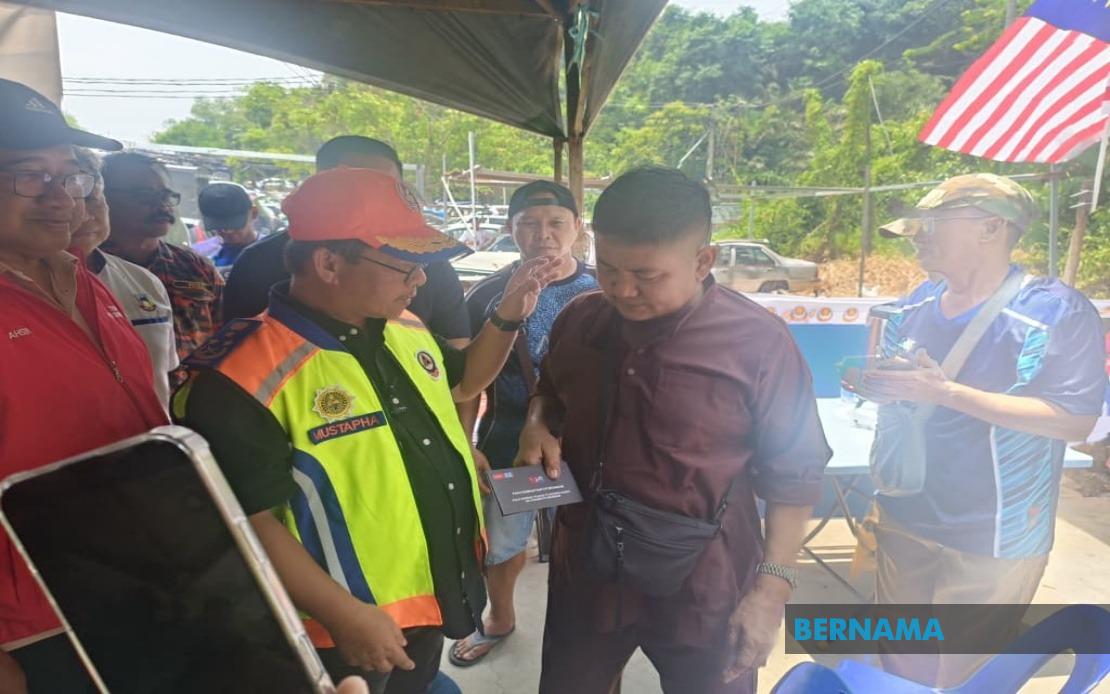
The government response to the disaster was evident on the ground, with Datuk Mustapha Sakmud, the Minister in the Prime Minister's Department overseeing Sabah and Sarawak affairs and Member of Parliament for Sepanggar, making a personal appearance at the fire scene. His presence signals the importance being attached to the incident at federal and state levels, though such visits typically form only the initial phase of a longer engagement with reconstruction and support efforts for affected communities.
The incident raises broader questions about fire prevention, building standards, and emergency preparedness in residential areas characterised by rapid informal development. Kampung Lok Buta's experience, whilst tragic and specific to its circumstances, reflects challenges common to urban and peri-urban settlements throughout Malaysia and Southeast Asia. The density of housing, the predominance of timber and other flammable materials in construction, limited infrastructure for fire suppression, and the difficulty of executing timely evacuations all converge to create conditions where a single spark can cascade into community-wide devastation.
For the families who lost everything to the flames, the path forward involves securing temporary shelter, salvaging what possessions might remain, and navigating governmental and non-governmental assistance programmes designed to aid fire victims. The three children who perished in Kampung Lok Buta have become tragic reminders of the consequences of fire risk in residential communities and the unpredictable nature of disasters that can strike even during moments of family celebration and togetherness.
The investigation into the fire's origins and the contributing factors that allowed it to spread so rapidly across the settlement will likely continue over coming weeks. Fire authorities will seek to establish whether any violations of fire safety codes or building regulations preceded the incident, information that could inform future policy and enforcement efforts aimed at reducing the incidence and severity of such disasters. In the interim, the community of Kampung Lok Buta faces the monumental task of rebuilding, grieving, and restoring a sense of security that was comprehensively shattered by the flames.

