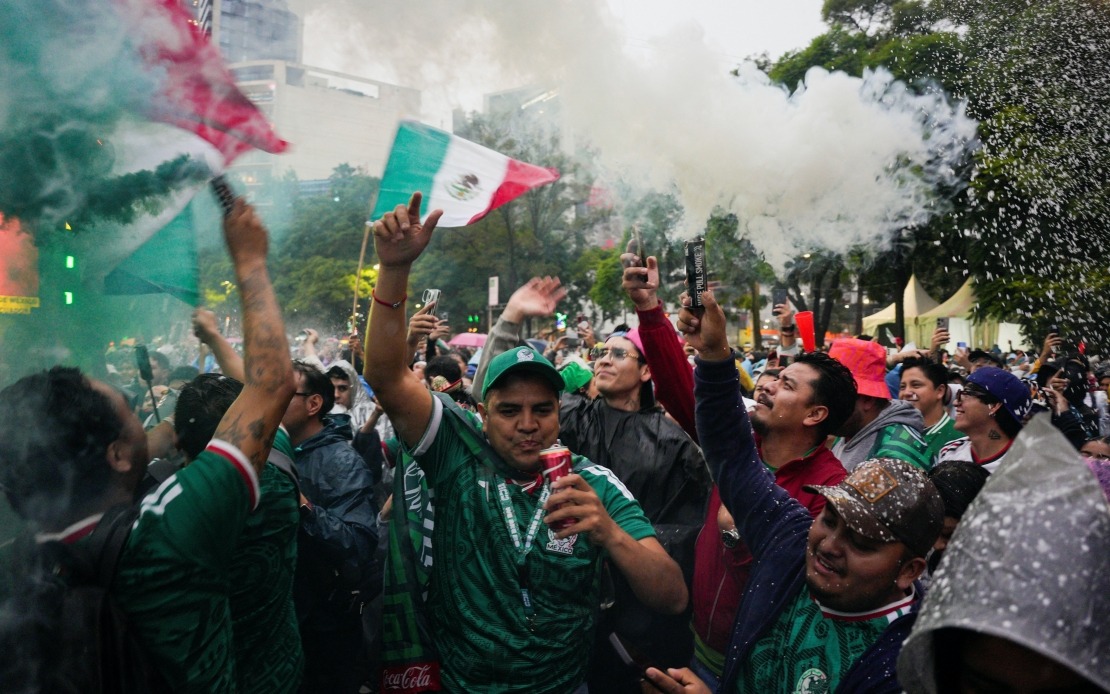
The excitement surrounding Mexico's advancement to the knockout phase of the World Cup came at a devastating human cost when three people lost their lives during street celebrations in Mexico City. Following the team's commanding 2-0 victory over Ecuador at the Estadio Azteca on Tuesday evening, jubilant supporters gathered in the capital's central districts to mark the nation's progression to the final 16. However, the festivities turned tragic as three individuals collapsed near Paseo de la Reforma, Mexico City's iconic avenue cutting through the heart of the metropolis.
According to the Mexico City Secretary of Public Health's official statement, those who died were a 44-year-old man and two women aged 19 and 48. All three perished from asphyxiation, a medical condition typically resulting from oxygen deprivation. The deaths were reported at separate locations in close proximity to one another along Paseo de la Reforma, suggesting the circumstances were likely related to the massive crowds that assembled to celebrate Mexico's qualification. Asphyxiation deaths in crowded celebration settings are often attributed to crushing injuries or suffocation caused by dangerously dense human masses.
Clara Brugada, the head of government for Mexico City, acknowledged the tragedy through a statement posted on social media platform X. She confirmed that emergency response teams had been mobilised immediately upon receiving reports of three unconscious individuals at different points near Paseo de la Reforma. Despite the activation of all available medical protocols and rapid intervention efforts, medical personnel were unable to save any of the three victims. Brugada extended formal condolences to the families affected by the loss, emphasising that city authorities were maintaining contact with grieving relatives to provide comprehensive support and assistance during this difficult period.
The incident raises serious questions about crowd management and public safety during mass celebrations in Mexico City, a metropolitan area with a population exceeding 21 million people. Large-scale gatherings in response to sporting achievements present significant logistical challenges for authorities seeking to balance public celebration with citizen safety. The concentration of celebrants in the Paseo de la Reforma area, one of the city's most congested zones during peak activity, created conditions that proved fatal for those involved. Such tragedies are not without precedent in major cities worldwide, where spontaneous public assemblies have occasionally resulted in crowd-related injuries and fatalities.
Brugada's public appeal for responsible celebration reflects the delicate position facing Mexican officials in the aftermath of the deaths. The statement emphasised the importance of celebrating future sporting achievements with care and empathy, implicitly acknowledging that the nation's enthusiasm for football can generate dangerous conditions if not properly regulated. This messaging is particularly significant given Mexico's deep cultural attachment to the World Cup, a tournament that has historically generated intense passion and national pride throughout the country.
Mexico's qualification to the knockout stage represents a significant achievement for the national team and its supporters. By defeating Ecuador, the squad secured a spot among the world's top 16 teams competing in the tournament. The victory at Estadio Azteca was particularly meaningful, as the stadium holds legendary status in Mexican football history. Should England advance past DR Congo in their Wednesday fixture—a match many analysts consider highly probable—Mexico would face the Three Lions at the same venue on Sunday, a fixture that would command enormous attention both domestically and internationally.
Thomas Tuchel's England side enters their match against DR Congo as overwhelming favourites, making a potential Mexico-England knockout encounter a realistic prospect. If realised, this matchup would pit two nations with contrasting tournament trajectories and playing philosophies against each other on Mexican soil. The Estadio Azteca's capacity and home-field advantage would factor significantly into such a contest, creating an electrifying atmosphere for Mexican supporters should the team progress further.
The deaths during Tuesday's celebrations cast a shadow over Mexico's sporting success and underscore the responsibilities authorities face in managing the public health implications of mass gatherings. Similar incidents have occurred in other countries during major sporting events, often prompting governmental reviews of crowd control procedures and public safety infrastructure. Mexico City's experience may prompt discussions among municipal authorities about implementing enhanced safety measures for anticipated celebrations if the national team continues its tournament run.
For Malaysian and Southeast Asian observers, the tragedy offers a sobering reminder of the dangers inherent in spontaneous mass assemblies, particularly in densely populated urban environments. While football fever is no less intense in the region, the incident provides relevant lessons about balancing celebratory freedoms with public safety considerations. As Southeast Asian nations continue developing their sporting infrastructure and hosting major international events, understanding crowd management best practices becomes increasingly important for preventing similar tragedies.
The broader implications extend beyond Mexico's borders. International sporting events consistently generate passionate public responses, and host nations must grapple with the challenge of channelling enthusiasm safely. Whether through designated celebration zones, improved crowd monitoring systems, or coordinated public messaging, authorities worldwide are developing strategies to minimise risks while preserving the joy and communal spirit that major sporting achievements generate. Mexico's tragedy serves as a stark reminder that such measures, though sometimes perceived as restricting spontaneity, serve a vital protective function.

