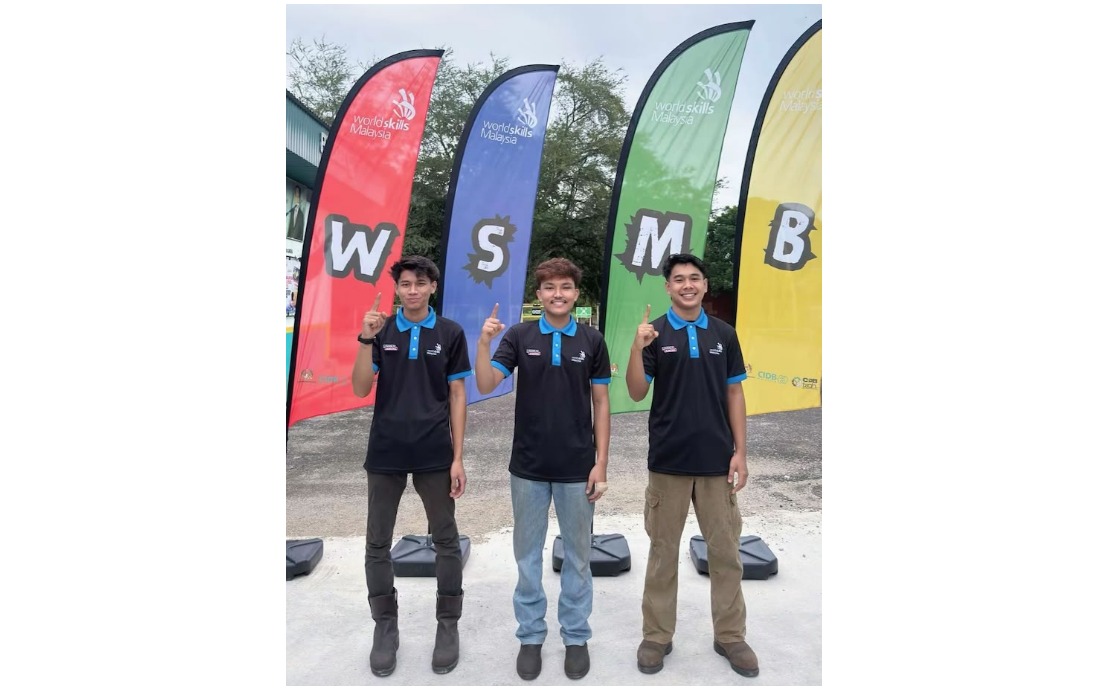
More than three decades after its establishment, WorldSkills Malaysia Belia remains instrumental in shaping the nation's construction workforce. What began as the Malaysian Skills Champion Competition in 1990 under the vision of then Prime Minister Tun Dr Mahathir Mohamad has evolved into a cornerstone of vocational excellence, undergoing multiple transformations including its stint as Anugerah Tangan Emas Perdana Menteri and MySkills before adopting its present identity in 2014.
The programme's enduring significance lies in its dual mission: identifying exceptional skills among Malaysia's youth while simultaneously preparing them to represent the country on the international stage. Competitors who achieve champion status enter a comprehensive development pipeline, accessing structured training and mentorship designed to elevate their capabilities to world-class standards before they compete in the WorldSkills international competition. This progression transforms local champions into global ambassadors, enhancing Malaysia's standing in an increasingly competitive skills economy.
Operationally, WSMB functions through a partnership between the Malaysian Construction Academy and CIDB Technologies, both accredited training institutions housing world-standard facilities and infrastructure. This alignment between educational delivery and industry requirements ensures that training remains contemporary and practically applicable. Mohd Hafiz Dasahi, chief executive of CIDB Technologies, emphasises that WSMB transcends mere competition spectacle, instead serving as a crucible for producing the next generation of construction professionals capable of driving industry transformation. His perspective reflects a strategic recognition that today's investment in human capital directly correlates with tomorrow's competitive positioning.
The assessment methodology employed in WSMB competitions demonstrates rigorous attention to comprehensive competency. When evaluating welding participants, adjudicators scrutinise measurement precision, workmanship quality, adherence to welding protocols, time discipline, analytical problem-solving and safety compliance. Beyond technical mastery, the competition cultivates softer attributes including confidence, self-discipline and resilience—qualities increasingly valued in modern workplaces where technical skills alone prove insufficient. This holistic development approach distinguishes WSMB from conventional training schemes, creating professionals equipped for both technical and interpersonal workplace demands.
For industry participants, WSMB delivers measurable value through workforce quality assurance. Construction, manufacturing, oil and gas, energy and maritime sectors depend on personnel whose competencies meet international standards and reflect contemporary technological adoption. Zarulhakim Abdul Rahim, heading welding operations at CIDB Technologies, notes that competition participation exposes participants to international technologies and processes, fundamentally preparing them for contemporary employment conditions. Equally important, WSMB strengthens coordination between training providers and industry employers, creating feedback loops that ensure curriculum remains responsive to rapidly evolving sectoral needs.
Private sector engagement amplifies the programme's impact. Companies like Lincoln Energy and Vinxus Mark demonstrate institutional commitment by supplying specialist equipment, welding machinery, consumables and technical guidance throughout competitions. This corporate involvement represents more than sponsorship; it creates authentic learning environments where participants engage with actual industry-standard equipment and conditions. Sales engineer Putra Faisal Ashraf Idris articulates this philosophy, emphasising that companies bear collective responsibility for nurturing emerging talent capable of applying contemporary technology according to real-world operational specifications.
Participant testimonies reveal transformative personal impacts. Ahmad Syafie Dasuki, at twenty years old, leveraged nearly two years of workshop experience in Kemaman before channelling his practical foundation through WSMB's structured environment. His progression illustrates how the competition bridges informal apprenticeship with formal skill validation, creating clearer advancement pathways for young technicians. Similarly positioned, Muhammad Fazran Md Rashid, currently employed at a welding facility in Kulim, identifies the competition as essential for consolidating technical expertise while cultivating discipline and professional aspiration. These participants exemplify how WSMB functions as both immediate skill-enhancement platform and longer-term career catalyst.
The psychological and professional development components deserve particular emphasis. Mohd Sahmi Irfan Sulaimi, a twenty-year-old from Terengganu, articulates how competition participation builds confidence alongside technical mastery. His perspective reflects broader research indicating that structured competitive environments foster resilience and growth mindset—attributes increasingly predictive of career longevity and advancement potential in the construction sector. He actively encourages peer participation, recognising that networking opportunities, exposure to expert practitioners and demonstrated competency credentials create tangible career advantages upon workforce entry.
For Malaysia specifically, WSMB's continued vitality addresses critical skills gaps affecting construction and allied sectors. The programme acknowledges that mere technical knowledge proves insufficient; practitioners must demonstrate safety consciousness, quality orientation and technological adaptability. By systematically developing these competencies while maintaining rigorous international benchmarks, WSMB produces professionals capable of contributing to major infrastructure projects, manufacturing expansion and energy sector development. This domestic impact extends regionally, as Malaysian representatives competing in WorldSkills international events elevate national prestige and facilitate knowledge transfer.
The competition structure also responds to contemporary industry transformation. Modern construction increasingly integrates digital technologies, advanced materials and precision engineering methodologies. WSMB's emphasis on latest technologies and processes ensures participants aren't trained in outdated practices but rather equipped for contemporary and future workplace realities. This forward-orientation proves particularly valuable given Southeast Asia's infrastructure investment momentum, where Cambodia, Vietnam, Thailand and Indonesia require substantial construction expertise. Malaysian professionals developed through WSMB are positioned to contribute to regional development while returning expertise that strengthens domestic capabilities.
Looking forward, WSMB's trajectory suggests continued refinement. As sectoral demands evolve—particularly regarding sustainability, digital integration and safety protocols—the programme must maintain its responsiveness to industry needs while preserving the rigorous standards that have established its credibility. The existing partnership model between training institutions, industry employers and government provides sufficient flexibility for such evolution. Sustained corporate engagement, as demonstrated by equipment suppliers and technical consultants, indicates that private sector stakeholders recognise WSMB's value in producing employment-ready talent.
The broader implications extend to Malaysia's positioning within the global skills economy. As developed nations increasingly emphasise vocational excellence and developing nations compete for infrastructure investment opportunities, countries demonstrating systematic talent development capacities gain strategic advantage. WSMB represents precisely such systematic commitment—institutionalised, internationally benchmarked and demonstrably producing competitive-standard professionals. This institutional maturity, accumulated over thirty-six years, constitutes a genuine competitive asset.
For young Malaysians considering vocational pathways, WSMB exemplifies how structured competition can catalyse career advancement while contributing to national development. Participants gain not merely certificates but verified competency recognition, international exposure and professional networks—assets with substantial lifetime value. As Malaysia navigates economic diversification and infrastructure expansion, programmes like WSMB that systematically develop construction and manufacturing talent assume heightened importance, ensuring the nation possesses the skilled workforce necessary for sustained prosperity and competitiveness.

