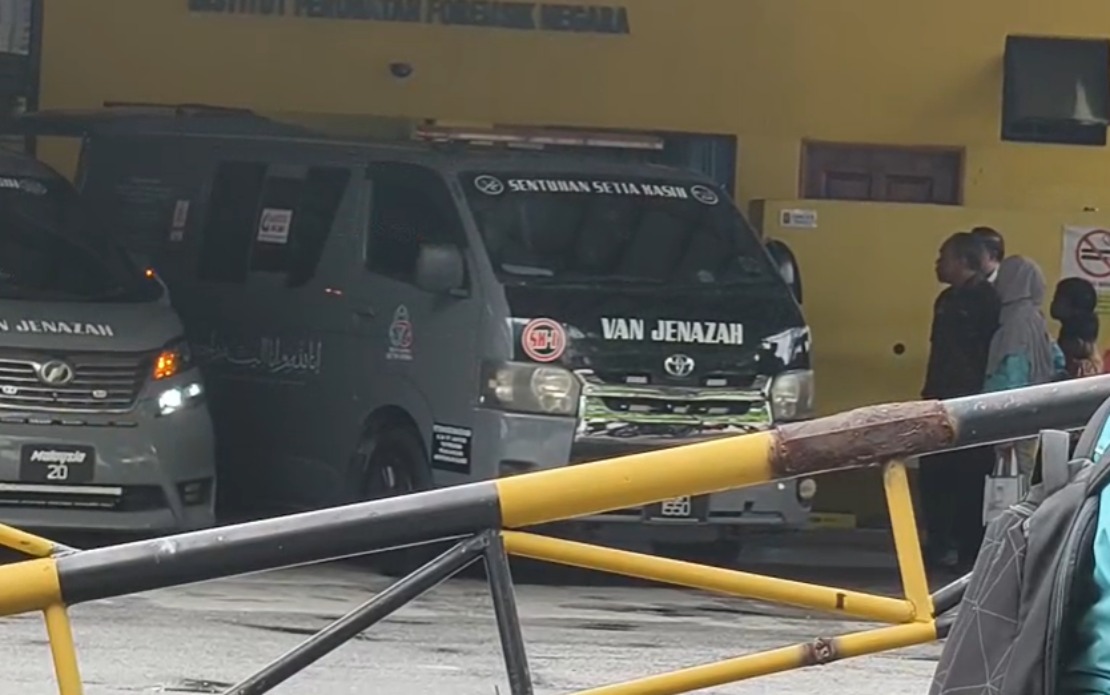
The bodies of three family members who died in a collision with a Malaysian Immigration Department lorry on Jalan Sultan Ismail in Kuala Lumpur were handed over to next of kin on Monday evening after post-mortem procedures concluded. Shaik Mohd Firdaus Shaikh Yahya, 53, along with his daughters Siti Nor Sazlin, 25, and Siti Darwisyah Auni, 12, were released from Kuala Lumpur Hospital's National Institute of Forensic Medicine at approximately 5.45 pm, transported in three separate hearses to family members for funeral preparations.
The three deceased are scheduled to undergo Islamic funeral rites at Jamiul Ehsan Mosque on Jalan Pahang, where traditional bathing, shrouding, and funeral prayers will take place before transportation to their final resting place. Subsequently, the remains will be conveyed to Kampung Air Hitam Labu Muslim Cemetery in Kampar, Perak, for interment, bringing the victims closer to their home state despite the tragedy occurring in the capital.
The fatal incident unfolded in the early morning hours of Monday at approximately 1 am when a Malaysian Immigration Department Black Maria lorry collided with multiple vehicles and pedestrians on Jalan Sultan Ismail. The lorry, which was operating without passengers at the time, was en route to conduct an enforcement operation in the Chow Kit area targeting undocumented foreign nationals, with its emergency beacon and siren activated during transit.
Investigations suggest the government vehicle breached traffic regulations by proceeding through Maju Junction against a red traffic signal, directly intersecting with a Proton Saga that was lawfully proceeding on a green light. The violent collision produced catastrophic consequences, causing the heavier lorry to lose directional control and skid uncontrollably across the roadway, striking four pedestrians who were in the vicinity and subsequently impacting a parked Inokom Matrix multipurpose vehicle.
Beyond the three fatalities, another individual sustained serious injuries requiring medical intervention. The identity and condition of this fourth victim have not been disclosed in official reports, leaving questions about the full extent of human casualties from this single collision.
The circumstances surrounding this incident raise significant questions regarding the protocols governing emergency vehicle operations within populated urban areas. The activation of warning systems does not automatically absolve drivers of responsibility to ensure road safety, and Malaysian traffic regulations remain binding upon all vehicle operators regardless of their official duties or emergency status.
This collision exemplifies the broader tensions within Malaysian law enforcement operations. Immigration enforcement activities, particularly those targeting undocumented migrants, necessitate rapid deployment and swift movement through city streets. However, these operational imperatives must be balanced against public safety considerations and the fundamental obligation of all road users to comply with traffic regulations designed to protect civilian lives.
The Road Transport Act 1987, specifically Section 41(1) under which police are investigating this matter, provides the legal framework for examining the lorry driver's conduct. This provision addresses dangerous and rash driving that results in death or injury, suggesting authorities are examining whether the driver's actions constituted culpable negligence or violation of traffic laws.
For the families affected by this tragedy, the return of their loved ones' remains marks the beginning of a profoundly difficult grieving process. The loss of a parent and two young children in a single incident represents an extraordinary family catastrophe, with ripple effects extending through their broader kinship networks and community. The upcoming funeral arrangements will provide an opportunity for collective mourning within their Perak community.
This incident will likely generate substantial discussion regarding oversight mechanisms for government vehicle operations, emergency protocol compliance, and the intersection of public safety with law enforcement duties. Authorities may face pressure to review existing guidelines governing the speed and manner of transit when emergency services operate in urban environments, particularly during hours when civilian presence remains significant despite the early morning timing.
The investigation's progression will determine whether the lorry driver faces criminal charges or disciplinary action. Regardless of the investigative outcome, this collision represents a sobering reminder of the human costs when vehicle safety protocols are not rigorously observed, even by those operating government vehicles in official capacities. The tragedy underscores that no operational objective justifies compromising fundamental traffic safety principles designed to protect innocent civilians.

