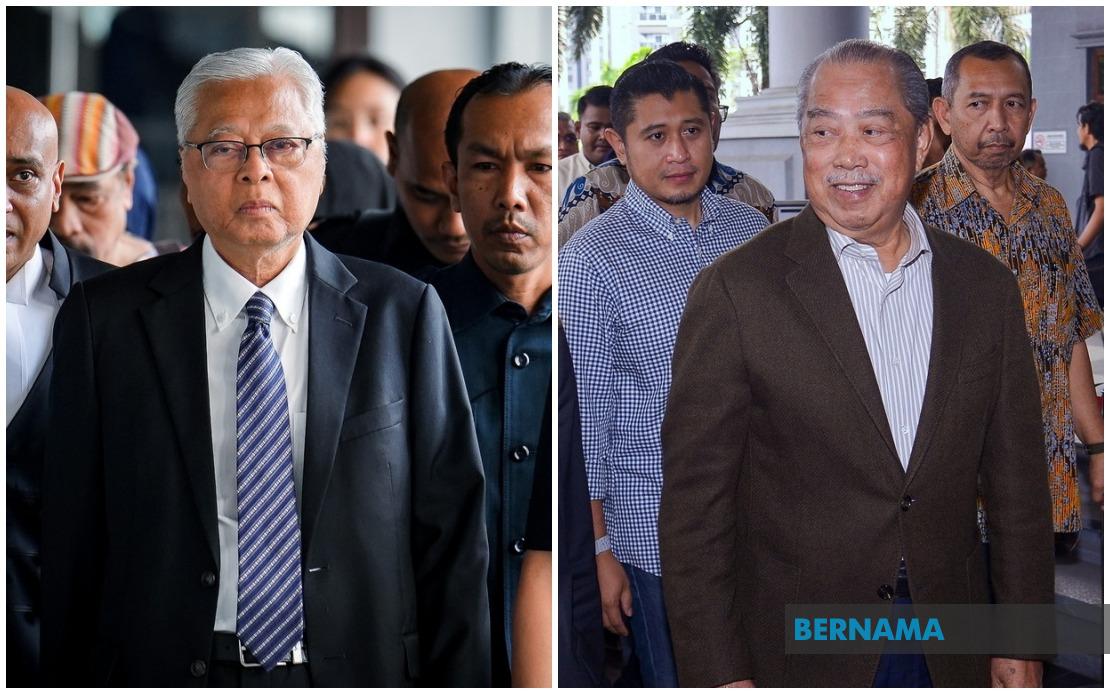
The simultaneous appearance of three former prime ministers at the Kuala Lumpur Court Complex on August 27 created an uncommon spectacle in Malaysian judicial proceedings, drawing widespread media attention and prompting security officials to implement comprehensive preparations to manage the unprecedented convergence.
The gathering of Datuk Seri Najib Tun Razak, Tan Sri Muhyiddin Yassin, and Datuk Seri Ismail Sabri Yaakob—each attending separate court hearings—represented a moment of historical significance that veteran journalists characterised as virtually unthinkable in the nation's post-independence political landscape. V. Anbalagan, a seasoned court correspondent at Free Malaysia Today with decades of coverage experience, articulated the rarity of the event with notable emphasis. He underscored that the concurrent presence of three former heads of government within a single court complex on a single day transcended normal occurrences not merely within Malaysia's judicial system but likely across Commonwealth and comparable democracies globally. Anbalagan suggested the likelihood of such an alignment recurring remained negligible, potentially representing a singular historical occurrence unlikely to be replicated.
The logistical challenges presented by simultaneous proceedings involving three high-profile former leaders necessitated deliberate planning and coordination among court administrators, security personnel, and media management officials. Bernama TV news officer Siti Zanariah Nor Zin reflected on the complexity of providing comprehensive coverage whilst managing the movements and security requirements of multiple former premiers. Her 16-year tenure in broadcast journalism had not previously exposed her to a comparable situation, underscoring the exceptional nature of the day's events. The staggered arrival schedule of the former prime ministers and their accompanying legal representatives afforded journalists sufficient opportunity to coordinate with their respective news desks and disseminate timely updates, preventing the situation from devolving into chaotic or incomplete reporting.
Journalists representing major outlets including Utusan Malaysia commenced their vigil at the Jalan Duta court complex before dawn, with reporter Amirul Aiman Osman positioning himself from 7 am to ensure comprehensive coverage of unfolding developments. The early arrival proved essential as television production crews, photographic teams, and print reporters converged on the court grounds to document proceedings, reactions, and movements throughout the day. Despite the congestion and logistical pressures, tight security protocols and coordinated law enforcement presence prevented disruption or disorder amongst media personnel and court visitors.
Authorities mobilised substantial security resources to maintain order and facilitate smooth operations despite the extraordinary circumstances. Police personnel from Sentul district police headquarters, coupled with dedicated court security officers and additional support from the Palace of Justice police division, established comprehensive coverage of the court complex. A court official, speaking on condition of anonymity, disclosed that preparations commenced the preceding afternoon to anticipate potential complications arising from the simultaneous proceedings. The security apparatus implemented tiered access protocols, issuing between three and six categories of security passes tailored to distinct groups encompassing members of the public, accredited journalists attending open proceedings, and personnel requiring access to video-link facilities.
Security officer Nik Zainab Jusoh confirmed that a comprehensive briefing conducted the previous day equipped all deployed personnel with situational awareness and contingency protocols. The briefing ensured vigilance remained heightened throughout the complex, with particular attention directed toward upper floors and courtroom environs. Ground-level operations proceeded in orderly fashion, maintaining the overall tranquility of the premises despite elevated activity levels. The controlled environment ultimately enabled media organisations to fulfil their reporting obligations whilst respecting security requirements and judicial proceedings.
Each former premier attended court for distinct legal matters reflecting Malaysia's complex contemporary political climate. Najib appeared before Judicial Commissioner Mohamad Redzuan Idrus for proceedings stemming from a USD5.64 billion civil suit initiated by 1Malaysia Development Berhad (1MDB) and subsidiary entities against him and numerous co-defendants, addressing allegations connected to the disputed development fund that dominated Malaysian political discourse throughout the previous decade. Muhyiddin faced proceedings before Judge Noor Ruwena Md Nurdin concerning seven charges encompassing allegations of abuse of governmental authority and money laundering in connection with the Jana Wibawa programme, representing serious criminal charges carrying substantial potential penalties. Ismail Sabri appeared before Judge Suzana Hussin confronting charges of failing to declare substantial assets, encompassing RM14.7 million in domestic currency alongside multiple foreign currency holdings and precious metal reserves.
The charges confronting each former leader illustrated the breadth of investigations and prosecutions spanning financial misconduct, abuse of power, and asset declaration violations that have characterised Malaysian governance scrutiny in recent years. These concurrent proceedings reflected the nation's complex transition through successive governmental administrations, each bringing renewed investigative focus on preceding regimes' activities. The simultaneous court appearances underscored the prolonged nature of Malaysia's reckoning with governance challenges and financial accountability across multiple administrations, demonstrating that judicial processes addressing high-level political figures operate across extended timeframes requiring sustained institutional attention.
Ismail Sabri's departure from the court complex at 11.43 am following the posting of RM300,000 bail with single surety concluded the immediate presence of all three former premiers, yet the day's occurrences remained emblematic of Malaysia's contemporary political trajectory. The media's capacity to document and disseminate coverage of the proceedings represented a testament to institutional resilience and professional commitment to informational accessibility during complicated circumstances. For observers monitoring Malaysian politics and governance, the day illustrated both the judiciary's ongoing engagement with accountability mechanisms and the democratic system's ability to subject former leaders to legal scrutiny through established institutional frameworks.

