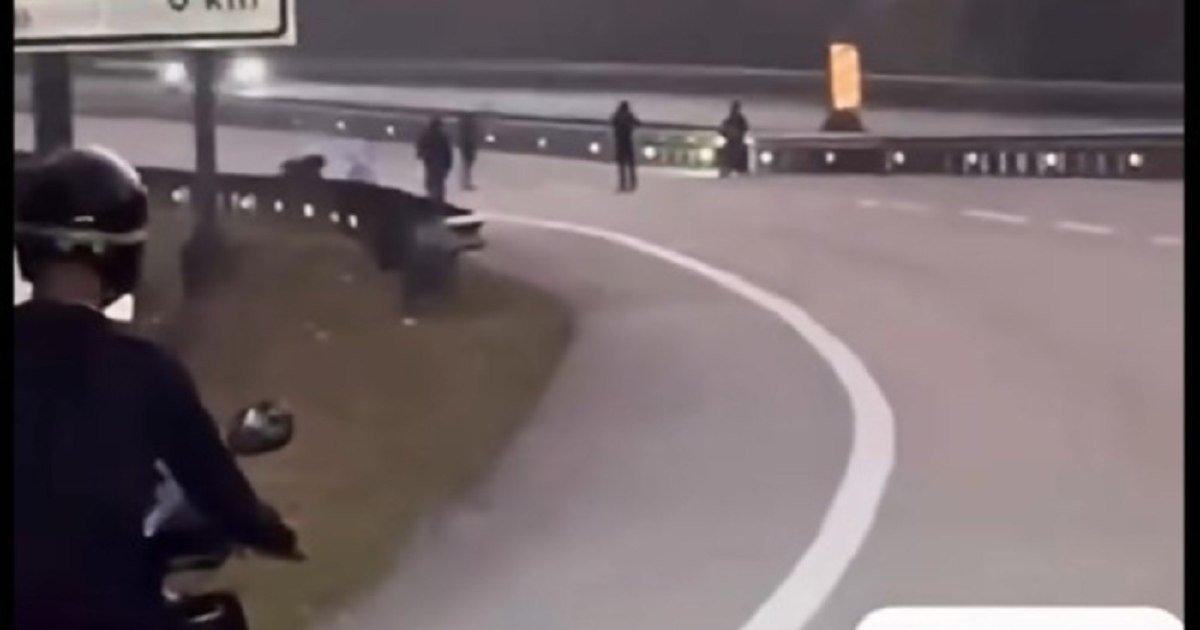
Police in Johor have expanded their investigation into an illegal highway racing incident that drew widespread public attention through social media, with the arrest of three more men from Kuala Lumpur. The men are believed to be linked to a viral video that captured the moment participants allegedly sealed off sections of the Second Link to orchestrate an unauthorized motorcycle race, reigniting concerns about public safety and reckless driving on critical transportation corridors.
The Second Link, a major highway connecting Johor to Singapore, represents one of the most crucial transport arteries in the southern region. The decision by participants to use this busy thoroughfare for racing purposes raised alarm among transport officials and the public alike, as such activities pose significant risks to ordinary commuters and disrupt vital commercial traffic between Malaysia and Singapore. The brazen nature of the incident—with participants visibly blocking a highway to stage the event—suggested a troubling disregard for traffic regulations and public welfare.
The investigation into this matter has proven broader in scope than initially anticipated, with authorities pursuing leads across state lines. The fact that suspects have been tracked down and apprehended in Kuala Lumpur indicates that the illegal racing network extended beyond Johor itself, suggesting organized participation from multiple locations. This multi-state dimension raises questions about how coordinated such activities might be, and whether they represent isolated incidents or part of a larger underground racing culture operating across the Klang Valley and southern regions.
The viral nature of the video played a crucial role in prompting swift police action. Social media amplification of the incident meant that authorities faced public pressure to respond decisively, transforming what might otherwise have remained a localized incident into a matter of national concern. The transparency afforded by digital evidence also eliminated ambiguity about what had occurred, providing law enforcement with clear documentation of the alleged offence rather than relying solely on witness accounts.
Illegal street racing and highway takeovers have become persistent headaches for Malaysian police forces across multiple states. These activities not only violate traffic laws but pose genuine dangers to innocent road users who find themselves unexpectedly caught in situations orchestrated by racing enthusiasts. The Second Link incident exemplifies how such activities can impact critical infrastructure and cross-border commerce, affecting not just individual safety but broader economic interests.
The arrests represent one component of a multifaceted enforcement approach. Beyond apprehending individual participants, authorities typically scrutinize the organizational structure behind such events to identify planners and coordinators. Understanding whether these races are spontaneous gatherings or deliberately organized spectacles informs the intensity and nature of the police response. The Kuala Lumpur arrests suggest that investigators are pursuing multiple angles simultaneously rather than treating the incident as a simple case of wayward riders.
For commuters regularly using the Second Link, the incident reinforced anxieties about roadway safety and the unpredictable behaviour of certain motorists. The closure or obstruction of major highways, even temporarily, creates cascading consequences for traffic flow and can trap hundreds of vehicles in unsafe situations. This practical dimension of the incident extends beyond the legal violations themselves to encompass the genuine disruption visited upon ordinary citizens going about their daily business.
The response from authorities also reflects broader efforts to combat illegal street racing culture in Malaysia. Police departments have invested in targeted operations, public awareness campaigns, and coordination with transport agencies to discourage such activities. However, the persistence of incidents like the Second Link closure suggests that deterrence remains incomplete, with some participants either unaware of or indifferent to the consequences of their actions.
These arrests carry implications for how Malaysian law enforcement prioritizes road safety violations during an era when dangerous driving behaviours seem to proliferate across social media platforms. The visible, documented nature of the Second Link incident meant it could not be ignored; yet questions remain about resource allocation and whether similar efforts are applied to less-publicized violations that cumulatively claim more lives and cause more disruption.
As investigations continue, the detained individuals will likely face charges related to obstructing traffic, creating public hazards, and potentially other offences depending on their specific roles in the incident. The legal outcomes will signal to would-be illegal racers the seriousness with which authorities treat highway takeovers. Beyond the immediate cases, however, the episode underscores the ongoing challenge Malaysian authorities face in maintaining road discipline and protecting the safety of ordinary citizens on major transport corridors that are vital to regional commerce and daily mobility.

