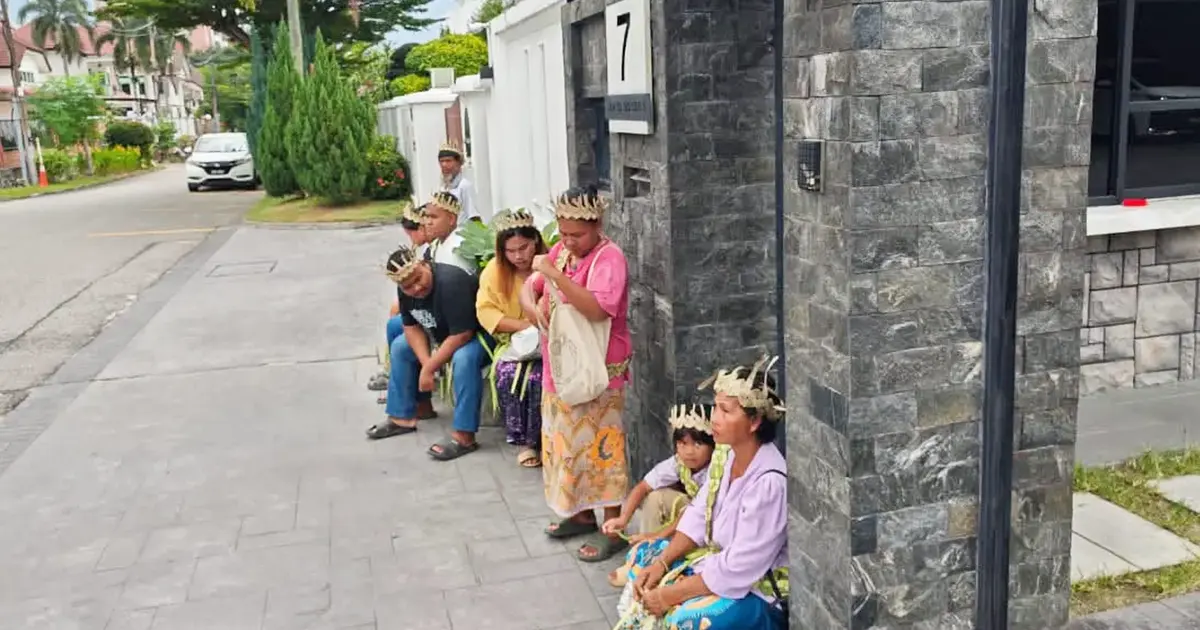
Prime Minister Anwar Ibrahim has confirmed that three Orang Asli individuals detained in connection with a land dispute have been freed, marking a potential breakthrough in a case that has drawn attention to indigenous land rights issues in Malaysia. The release comes as the government faces mounting scrutiny over how it handles disputes involving indigenous communities and land ownership claims in states where such matters fall outside federal purview.
The detention and subsequent release highlights the multifaceted challenges surrounding Orang Asli land claims, a longstanding issue in Malaysia's political landscape. Indigenous communities across the peninsula have repeatedly found themselves at odds with development projects, commercial interests, and government land classifications that fail to recognise customary usage rights. The case underscores how conflicts over territorial claims can escalate into criminal or civil proceedings that disproportionately affect vulnerable populations with limited legal resources.
Anwar's intervention in the matter reflects a broader policy direction within his administration toward Indigenous affairs. The Prime Minister has signalled willingness to engage with state governments on issues affecting Orang Asli communities, recognising that meaningful progress requires coordination across multiple governance levels. This approach acknowledges the constitutional reality that land administration remains a state responsibility, yet suggests the federal government sees room for diplomatic influence and advocacy within that framework.
Pahang, where this dispute originated, represents one of Malaysia's largest states with significant Orang Asli populations scattered across forest reserves and designated areas. The state government's administration of land matters has periodically drawn criticism from indigenous rights advocates who contend that customary land use patterns are insufficiently protected by existing legislation. Anwar's commitment to raise the matter with Pahang authorities indicates the federal government may be considering more proactive engagement with state-level decision-making on indigenous concerns.
The constitutional arrangement governing land affairs creates a complex governance landscape. States maintain exclusive jurisdiction over land allocation, registration, and disputes, meaning the federal government's leverage is primarily through persuasion and cooperative frameworks rather than direct intervention. This structural limitation has historically complicated efforts to implement comprehensive protections for Orang Asli land rights, leaving indigenous communities navigating a patchwork of state policies and federal guidelines.
Recent years have witnessed growing activism around Orang Asli land issues, with civil society organisations documenting cases where indigenous communities face displacement or legal action over land they have occupied for generations. The detention of three individuals appears to represent an escalation in how authorities address disputes involving indigenous land claims, prompting higher-level political attention. The subsequent release suggests government officials recognised either the weakness of the case or the political costs of maintaining detention.
For Malaysian indigenous communities, this development carries both symbolic and practical significance. Symbolically, it demonstrates that federal-level political attention can influence outcomes in disputes where Orang Asli interests are at stake. Practically, however, the release does not automatically resolve underlying land tenure questions or prevent future conflicts. Without substantive reforms to how states recognise and protect indigenous land rights, individual cases may continue to emerge.
The broader regional context matters here as well. Across Southeast Asia, indigenous communities face similar pressures from development and land commodification. How Malaysia handles Orang Asli disputes influences regional discourse on indigenous rights and offers lessons—positive or negative—for other nations grappling with analogous tensions between state sovereignty over land administration and indigenous peoples' territorial claims.
Anwar's indicated willingness to pursue state-level dialogue suggests the federal government may be considering incremental approaches to strengthening Orang Asli protections within the existing constitutional framework. Rather than pursuing major legislative overhauls, which would require broader political consensus, the strategy appears focused on encouraging state governments to adopt more progressive interpretations of existing laws and more accommodating land administration practices.
The case also raises questions about how detention decisions are made in land disputes involving marginalised communities. The criteria for arrests, the conduct of investigations, and the conditions of release all merit scrutiny to ensure legal processes are applied fairly. Civil society organisations monitoring indigenous affairs will likely scrutinise this case as a bellwether for whether enforcement patterns are shifting.
Moving forward, the outcome of conversations between federal and Pahang authorities will be instructive. If the state government commits to reconsidering land tenure questions affecting the three individuals and their community, it could establish a precedent for more consultative approaches. Conversely, if underlying disputes remain unresolved, the release may prove temporary relief rather than lasting redressal.
For Malaysia's indigenous peoples, sustained progress on land rights will require sustained political commitment and institutional willingness to prioritise indigenous interests in competition with other land uses and economic objectives. The Prime Minister's involvement in this case indicates such concerns have reached high levels of government attention, creating an opening for advocacy communities to press for more systematic reforms to how land disputes affecting Orang Asli are managed across all Malaysian states.

