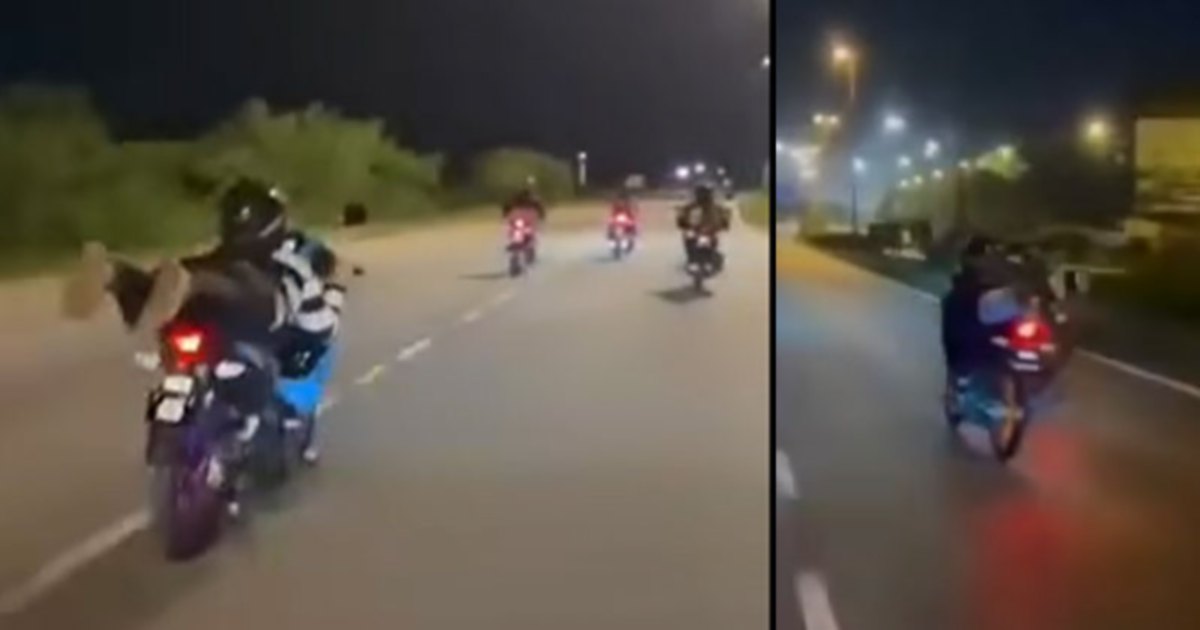
Three teenage girls have been detained by authorities following their involvement in a viral video showing them performing dangerous 'Superman' motorcycle stunts along Jalan Kuantan Bypass-Gebeng road last week. The incident has reignited concerns about the growing prevalence of risky riding behaviour among young people in Malaysia and the role social media plays in encouraging such activities.
The stunt, which involves riders standing on motorcycle seats or lying across the bike while travelling at speed, became a subject of widespread conversation online after footage circulated across various social media platforms. Videos depicting such manoeuvres have become increasingly common across Southeast Asia, with riders seeking viral attention by performing increasingly perilous acts on public roads. The Kuantan case exemplifies how younger riders are being drawn into participating in these stunts, often without fully comprehending the serious consequences of their actions.
Police action in Kuantan demonstrates authorities' commitment to cracking down on traffic violations that endanger public safety. The arrest of the three teenage girls sends a signal that such behaviour, regardless of the entertainment value it may generate online, will not be tolerated. Law enforcement agencies across the region have become increasingly proactive in identifying and pursuing individuals involved in viral dangerous driving content, recognising that inaction could lead to further copycat incidents.
The decision to target the young riders reflects broader traffic safety initiatives aimed at reducing accident rates and fatalities on Malaysian roads. The Kuantan Bypass-Gebeng road, where the stunts took place, is a significant arterial route carrying considerable daily traffic volume. Performing motorcycle acrobatics on such roads creates hazards not only for the riders themselves but also for other motorists and pedestrians who may be sharing the roadway at the time.
Social media's role in amplifying and encouraging such behaviour cannot be overlooked. When videos of dangerous stunts gain traction online through likes, shares, and comments, they create a form of social currency that incentivises others to attempt similar feats. For teenagers who are still developing judgment and risk assessment capabilities, this dynamic can be particularly influential. The viral nature of these videos effectively transforms individual acts of recklessness into trending challenges that inspire imitation.
The use of motorcycles in these stunts is especially concerning given that they provide minimal physical protection compared to enclosed vehicles. Losing balance or control while standing on a moving motorcycle travelling at highway speeds almost inevitably results in serious injury or death. The Superman position, in particular, places the rider in a completely vulnerable state with no ability to react to obstacles, other vehicles, or sudden changes in road conditions.
Parental oversight and education represent critical components in addressing this problem. Many teenagers who participate in such stunts may lack a full understanding of the consequences, including potential criminal charges, licence suspension, and long-term physical disability. The involvement of girls in these activities also reflects how such behaviour crosses demographic boundaries, suggesting that prevention messaging must reach all segments of the youth population.
The legal ramifications for those involved in dangerous driving stunts can be substantial. Beyond arrest and detention, offenders may face charges under traffic laws, fines, driving licence suspensions, and even imprisonment depending on the severity of their actions and whether accidents or injuries resulted. A conviction can have lasting impacts on employment prospects, insurance eligibility, and educational opportunities.
This incident occurs within a context of persistent traffic safety challenges across Malaysia. Road fatalities remain a significant public health concern, with motorcyclists representing a disproportionately large percentage of accident victims. Risky behaviours such as stunting contribute to this toll by taking already vulnerable road users and placing them in situations where serious injury becomes almost inevitable.
Law enforcement must balance enforcement action with public education campaigns that explain why such stunts are dangerous and illegal. Collaboration with social media platforms to reduce the visibility and discoverability of such content can also help limit its proliferation. Schools and community programmes can reinforce messages about road safety and responsible decision-making among young drivers and riders.
The arrest of the three teenagers serves as a reminder that viral moments often have real-world consequences that extend far beyond the digital realm. While the video may have entertained many online viewers, the aftermath involves legal processes, potential harm to the young people's futures, and the continued risk that similar incidents may occur as others attempt to replicate or exceed the original stunt.
Moving forward, authorities in Pahang and nationwide should maintain consistent enforcement of traffic regulations targeting dangerous riding behaviour while simultaneously working with education, technology, and community sectors to address the underlying drivers of such behaviour. Protecting young people from the worst impulses of viral culture while also protecting other road users requires sustained, multifaceted effort across multiple institutions and sectors of society.

