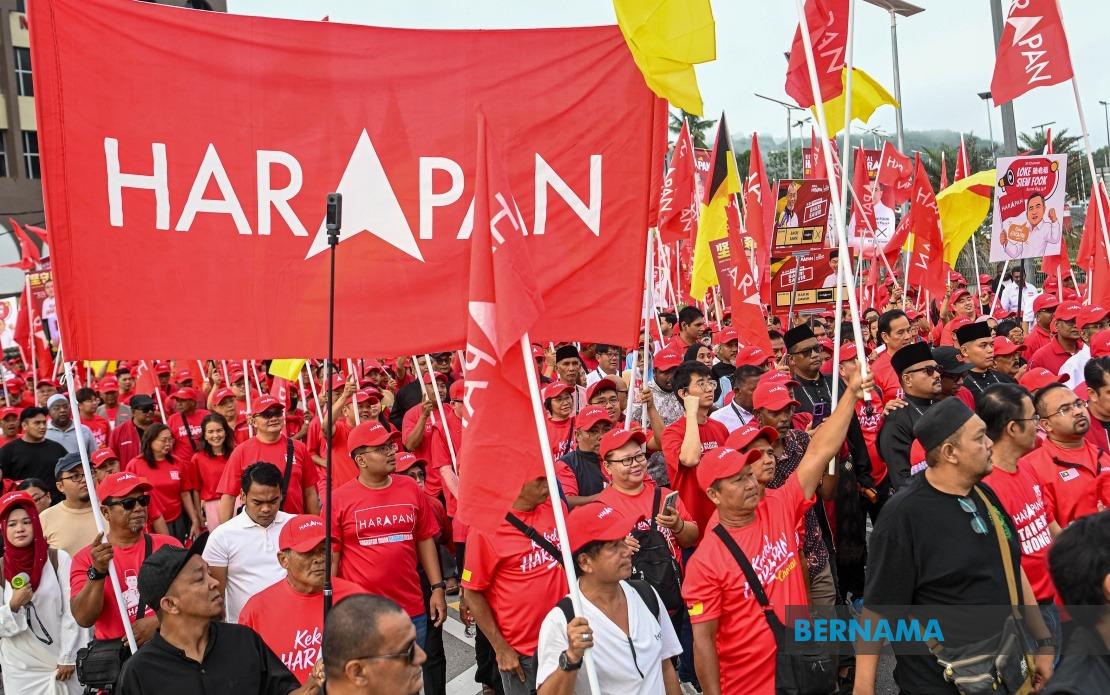
The 16th Negeri Sembilan State Election is shaping up as a competitive three-way affair in three key parliamentary districts, with the Pertang, Klawang and Sungai Lui state seats all set to see triangular contests involving Barisan Nasional, Pakatan Harapan, and Bersatu. The nominations process concluded on Thursday morning at Dewan Besar Kuala Klawang, with the Jelebu Parliamentary returning officer, Abdul Rahim A Aziz, confirming the final lineup of contenders across the constituencies.
The Pertang seat will pit incumbent Datuk Seri Jalaluddin Alias of Barisan Nasional against two challengers: Mohd Umry Abdul Khois representing Pakatan Harapan and Mohd Faizal Fadli Mohd Idrus of Bersatu. Jalaluddin holds the advantage of incumbency and demonstrated electoral strength, having secured 5,634 votes in the previous state election when he defeated Amirudin Hasan of Perikatan Nasional with a commanding majority of 2,844 votes. His performance five years ago suggests he retains considerable support in the constituency, though the entry of two challengers from opposition and splinter groups complicates the dynamics considerably.
The Sungai Lui seat presents an intriguing dimension given the personal histories of the contenders. The three-way battle involves Datuk Mohd Razi Mohd Ali fielding the Barisan Nasional colours, Zainal Fikri Abd Kadir representing Pakatan Harapan, and Mazrulhisham Abd Mansor of Bersatu. What sets this contest apart is that Razi and Zainal were former schoolmates, adding an element of personal rivalry to what is ostensibly a political competition. Such local connections often influence voting patterns in smaller state constituencies where community ties run deep and voter familiarity with candidates shapes electoral choices.
The Klawang state seat rounds out the three-cornered fights, with incumbent Datuk Bakri Sawir of Pakatan Harapan defending his position against Muhammad Adib Musa of Bersatu and Danni Rais representing Perikatan Nasional. Bakri's status as the sitting assemblyman provides organisational advantage and visibility, though facing opposition from both a splinter Malay-Muslim coalition member and a component of the PN alliance presents a fragmented opposition landscape that could work in his favour.
The appearance of Bersatu across all three constituencies highlights the party's determination to establish itself as a significant player in Negeri Sembilan politics. Since its formation from former UMNO members, Bersatu has pursued an aggressive expansion strategy in state-level contests, positioning itself as an alternative to both the traditional Barisan and the opposition Pakatan alliance. The party's consistent presence across these three seats suggests a coordinated campaign effort targeting specific voter demographics and geographic areas.
The electoral commission has structured the timeline to allow voters ample opportunity to participate, with early voting scheduled for July 28 and the main polling day set for August 1. This schedule follows standard protocols for state elections in Malaysia and gives campaign teams approximately two weeks from the nomination close to mobilise their machinery. Early voting provisions are particularly important in Negeri Sembilan given the presence of civil servants and essential workers across the state who benefit from the flexibility.
Negeri Sembilan holds particular significance within the broader Malaysian electoral context as a bellwether state. Its voting patterns often reflect broader national sentiments, and performance in this state election could signal voter mood ahead of potential federal-level contests. The presence of three-way fights rather than the traditional two-coalition competition seen in many recent Malaysian elections demonstrates evolving political fragmentation, with Bersatu's emergence as a tertiary force reshaping traditional binary political contests.
The performance dynamics in these three constituencies will be closely watched by political analysts and party strategists across Malaysia. Success or failure in holding or gaining ground here carries implications for future coalition arrangements and the credibility of various parties in claiming grassroots support. For Barisan Nasional, these seats represent opportunities to demonstrate recovery and relevance after years of electoral setbacks; for Pakatan Harapan, defending Klawang while competing in the other seats tests the coalition's strength in a state it has made inroads into; for Bersatu, the challenge is converting its presence into actual seat gains to justify its continued political existence and independence.
The three-cornered nature of these contests introduces unpredictability compared to simpler binary competitions. Vote splitting becomes a critical factor, with the potential for either coalition or an individual party to benefit depending on which candidate successfully consolidates support. Regional factors, local issues, incumbent performance, and community connections will likely prove decisive in constituencies where votes may be distributed across three options rather than concentrated between two main alternatives.
Voters in Pertang, Klawang and Sungai Lui will ultimately determine not just representation in the state assembly but also send signals about the state of Malaysian politics more broadly. The nomination of three candidates across each of these constituencies indicates no faction is willing to cede ground without contest, setting the stage for campaigns that test the strength of various political messages and organisational capabilities across Negeri Sembilan.

