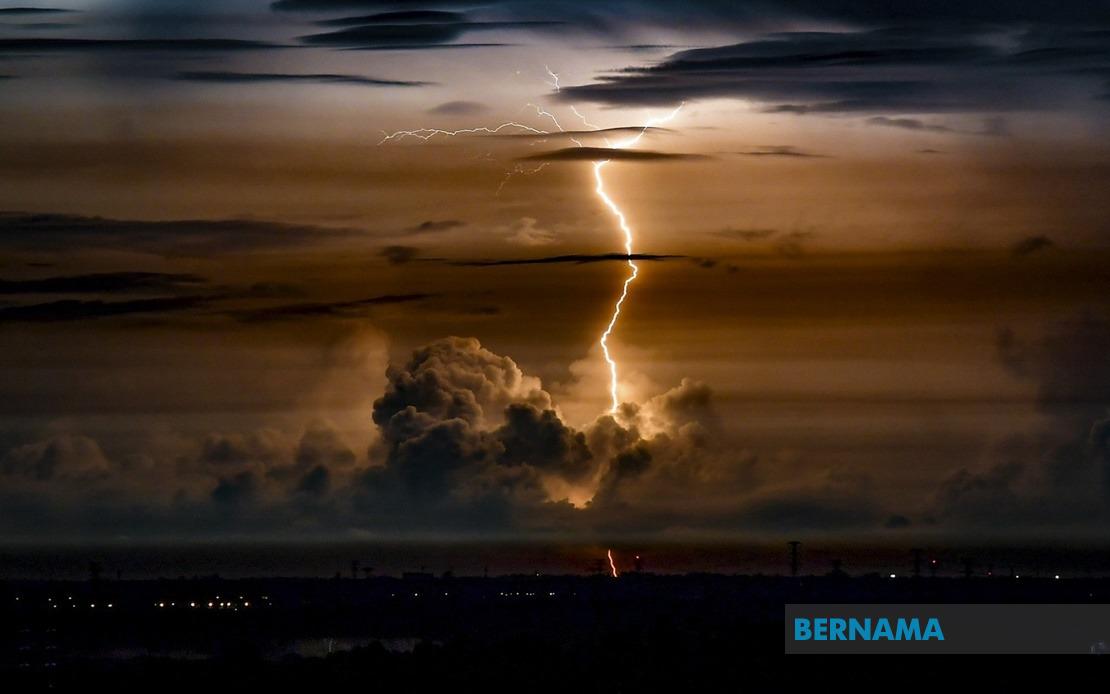
The Malaysian Meteorological Department has activated severe weather alerts across a significant portion of Peninsular Malaysia, cautioning residents and commuters to prepare for potentially hazardous conditions throughout the remainder of the day. The comprehensive warning encompasses thunderstorms, torrential rainfall, and gusty winds expected to persist until 9 pm, prompting authorities to advise caution among those travelling or conducting outdoor activities in the affected regions.
The alert covers a geographically diverse band of states stretching from the northern and central regions down towards the southern corridor of the peninsula. In Perak, the warning specifically targets four districts: Bagan Datuk, Muallim, Hilir Perak, and Batang Padang, representing a substantial eastern and southern portion of the state. These areas, which include both coastal and inland zones, face the full spectrum of threatened weather phenomena including lightning strikes and wind damage alongside the anticipated deluge.
The eastern seaboard regions of Terengganu and Pahang are also under alert, reflecting the monsoon patterns typically affecting these states during certain periods. These territories, known for their vulnerability to rapid weather changes and their role as economic and tourism hubs, represent a significant population and commercial centre requiring coordinated emergency preparedness. The isolated warning for Mersing in Johor, a coastal district with substantial marine activity, suggests localised atmospheric conditions of particular concern to fishing communities and maritime traffic in that vicinity.
The western corridor facing the Strait of Malacca also features prominently in the alert framework. Selangor, the nation's economic powerhouse and home to the capital region, has five districts under warning: Sepang, Klang, Sabak Bernam, Kuala Selangor, and Kuala Langat. This distribution encompasses the port facilities at Port Klang, critical infrastructure zones, and densely populated urban and suburban areas where disruptions to transport networks and utilities could cascade across broader regional systems. Such warnings in the Klang Valley area typically prompt increased alertness among commuters given the region's traffic-prone infrastructure.
Negeri Sembilan's inclusion targets Rembau and Port Dickson, the latter being a significant coastal tourist destination and naval hub. The extension of alerts to this historically strategic port region underscores the breadth of the weather system's geographic influence. Similarly, Melaka's coastal and central districts of Alor Gajah and Melaka Tengah round out the affected zones, creating a concentrated band of vulnerability across the western and southwestern peninsula.
Such coordinated multi-state warnings from MetMalaysia typically follow atmospheric analysis indicating organised convective systems or monsoon-related instability with potential for severe impact. The specificity of the alert—naming particular districts rather than issuing blanket state-level warnings—demonstrates refined forecasting that enables targeted emergency response and public communication. The seven-hour window until the 9 pm deadline provides authorities with a defined operational timeframe for managing potential emergencies, whether flood response, landslide prevention in hilly terrain, or traffic management on compromised road networks.
For residents across these regions, such warnings necessitate practical preparations. Residents in flood-prone areas should consider evacuation readiness, while motorists need to exercise heightened caution given reduced visibility and unstable road conditions during heavy downpours. Commercial operations, particularly in sectors sensitive to weather disruption, typically implement contingency protocols upon receipt of such alerts. The tourism sector across the affected states, which relies substantially on predictable weather conditions, faces potential disruptions to bookings and outdoor activities.
The issuance of such comprehensive warnings reflects Malaysia's sophisticated meteorological infrastructure and commitment to public safety through early notification systems. MetMalaysia's capacity to delineate affected areas with precision represents the maturation of Southeast Asian weather forecasting capabilities, enabling more efficient resource allocation and targeted public advisory. However, the frequency of such alerts during monsoon seasons also underscores the country's inherent climate vulnerability and the ongoing challenges of managing seasonal weather phenomena across densely populated regions.
For those in unaffected areas, the geographic concentration of today's alert provides perspective on the localised nature of tropical weather systems and the variable conditions that can persist across the peninsula even during uniform seasonal patterns. The warning system's effectiveness ultimately depends on public compliance and awareness, with authorities emphasising the importance of heeding guidance and monitoring official channels for real-time updates as conditions evolve through the afternoon and evening hours.

