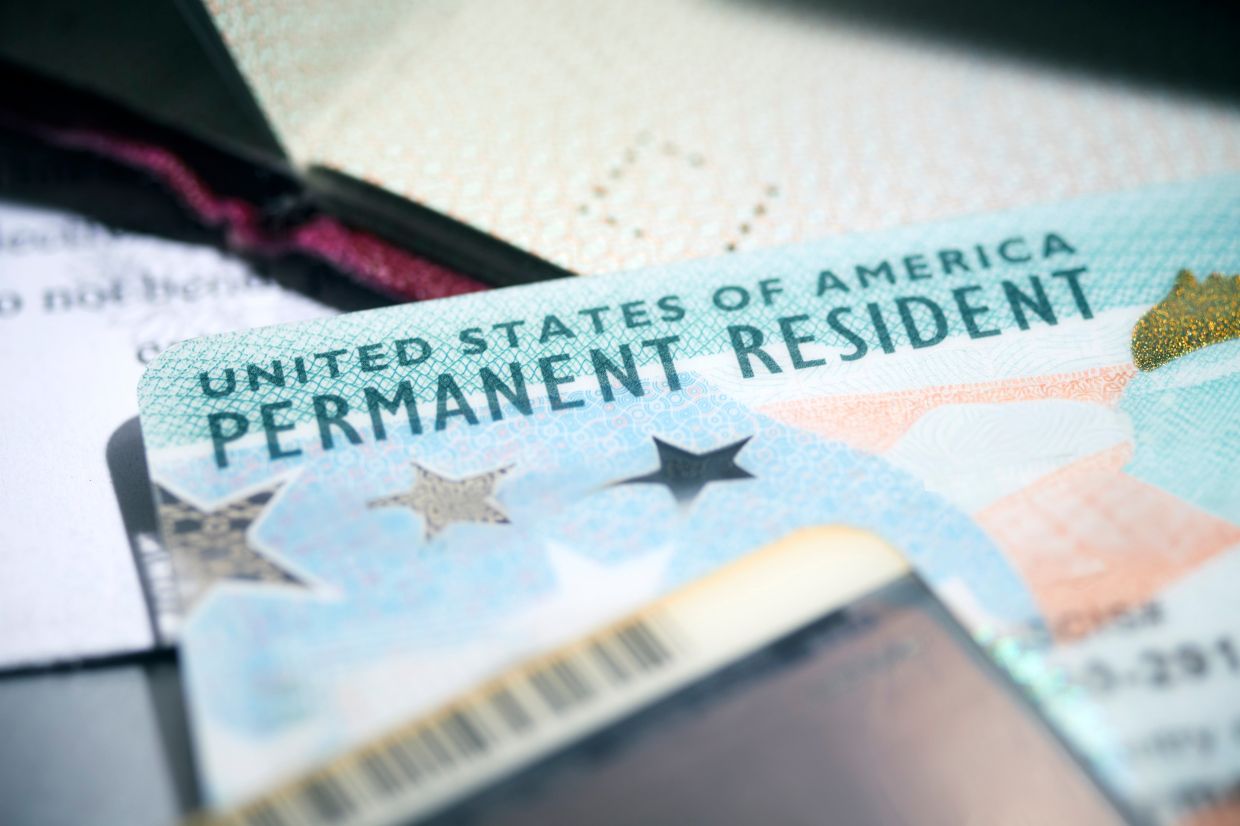
American embassies and consulates worldwide have suspended immigrant visa interviews to retrain staff on implementing a more rigorous examination of whether applicants might become dependent on government assistance. This freeze follows a federal court's rejection of a separate 75-country travel restriction based on the same principle, signalling a broader policy shift toward scrutinising the financial self-sufficiency of prospective permanent residents.
The concept of public charge—assessing an applicant's likelihood of drawing state benefits—is not novel in US immigration law. Age, health, family composition, financial resources, education, professional qualifications, and employment prospects have long formed the analytical framework. What distinguishes the current approach is the mandate for more stringent application of these criteria, including the power to impose public charge bonds to secure applicants' compliance. The State Department has instructed officers to evaluate these factors with greater consistency and intensity across all cases.
Sarah Pierce, director of social policy at the Washington-based Third Way think tank and former US Citizenship and Immigration Services analyst, characterised the Trump administration's execution as unnecessarily disruptive. She emphasised that the State Department had selected an approach maximising disruption rather than seamless integration of the new standards. Similarly, Charles Kuck, an Atlanta-based immigration attorney who has defended over 100 individuals against government enforcement actions, asserted that officers were receiving training explicitly designed to facilitate denial of cases under public charge provisions. The cumulative effect, he warned, would severely constrain family immigration pathways and undermine diversity visa programmes.
The practical consequences extend beyond policy principle to the lived experiences of applicants. Postponed interviews create cascading delays for individuals who have already scheduled travel, liquidated property, or completed medical evaluations. Pierce noted that the State Department has neither revoked underlying petition approvals nor clearly communicated when normal scheduling will resume. For diversity visa holders, this uncertainty carries particular weight: immigration law mandates that such visas be distributed by the end of the US fiscal year, 30 September, leaving a narrowing window for administrative completion.
Crucially, interview cancellation does not automatically invalidate approved petitions or reset an applicant's priority date in the queuing system. Petitions remain valid unless explicitly revoked, providing some protection against bureaucratic erasure. However, the real injury lies in temporal delay—not merely administrative inconvenience but lost opportunity, abandoned plans, and mounting uncertainty. The State Department has offered no timetable for resuming normal operations, leaving millions of applicants in limbo.
The freeze applies specifically to immigrant green card interviews conducted at foreign missions. Temporary visa categories—including H-1B skilled worker visas, student visas, and tourist visas—remain unaffected by the current suspension. Nevertheless, Kuck cautioned that the public charge provision carries latent authority to extend to non-immigrant visa holders, though current implementation targets only immigrant visa cases. This distinction matters for workers already selected in the H-1B lottery or students holding conditional acceptances, though proposed fee increases and lottery reforms represent future vulnerabilities.
Those most immediately exposed are individuals requiring visa stamps processed abroad—particularly family members seeking to join sponsors in America and diversity visa lottery winners with limited processing timeframes. Under previous practice, a properly completed I-864 affidavit of support (the sponsor's financial guarantee) typically satisfied public charge requirements in family cases unless officers identified unusually significant concerns. Now, officers exercise discretion to demand additional evidence, impose bonds, or return petitions for reconsideration by USCIS, the agency that originally approved them.
Pierce cautioned against characterising the new regime as an outright legal prohibition on immigration, yet warned that aggressive officer discretion creates functional barriers equivalent to bans for vulnerable populations. The statutory language governing public charge contains minimal guidance, Kuck observed, creating space for inconsistent interpretation and unpredictable outcomes. No centralised standards govern how officers in different countries apply the assessment, amplifying uncertainty and potential for disparate treatment.
Applicants navigating this environment face difficult strategic choices. Those awaiting interview appointments should generally remain in their home countries rather than risk travel complications, particularly if holding temporary US visas that require renewal. Workers with current lawful status should avoid international travel absent genuine emergency, since returning to the United States may now depend on securing new visa stamps under these stricter standards. Approved petitions and work authorisations provide no guarantee of smooth return, making even brief trips abroad potentially dangerous.
Documentation becomes paramount. Applicants should carry original proof of immigration status—green cards, I-94 arrival/departure records, and I-797 approval notices or employment verification letters—and maintain duplicates accessible to family members. Individuals travelling for work should bring recent pay stubs and signed employer letters confirming employment status. This precaution acknowledges that consular officers now possess authority to revisit USCIS decisions if they identify fraud, material changes in circumstances, or clear administrative errors, though Pierce noted that consular judgment cannot simply override USCIS approvals without evidence of these recognised grounds.
Family-based cases prove especially difficult to challenge once questioned. The fundamental question—whether an applicant qualifies as a spouse, child, or parent—rarely admits ambiguity or reconsideration. Employment-based petitions face greater vulnerability to officer second-guessing, though Kuck observed that many returned petitions eventually gained reapproval after USCIS review. Applicants should prepare to explain all elements of their submitted applications without speculation or guesswork, as inconsistencies may trigger suspicion even where underlying facts remain unchanged.
New arrivals to the United States now encounter tightened conditions of stay. Previously enjoying open-ended authorisation, they now receive fixed expiration dates, typically valid up to four years, with a 30-day grace period following departure—reduced from 60 days historically. This change affects those entering on new visa categories and represents a subtle escalation in monitoring and enforcement capacity. Combined with dramatically increased immigration enforcement activity across the administration, the consequences of minor bureaucratic mistakes or documentation lapses have magnified substantially.
For Malaysia and the wider Southeast Asian region, these developments carry significant implications. Malaysian professionals, particularly those in technology, healthcare, and finance sectors reliant on H-1B and L-1 visa pathways, face potential complications not only for their own immigration trajectories but increasingly for family members seeking to join them. Diversity visa applicants from the region, already at disadvantage due to per-country numerical caps, now confront additional procedural barriers and timeline pressures. The broader pattern signals that American immigration policy is contracting—not formally through explicit bans, but functionally through administrative rigour that achieves similar restrictive effects.

