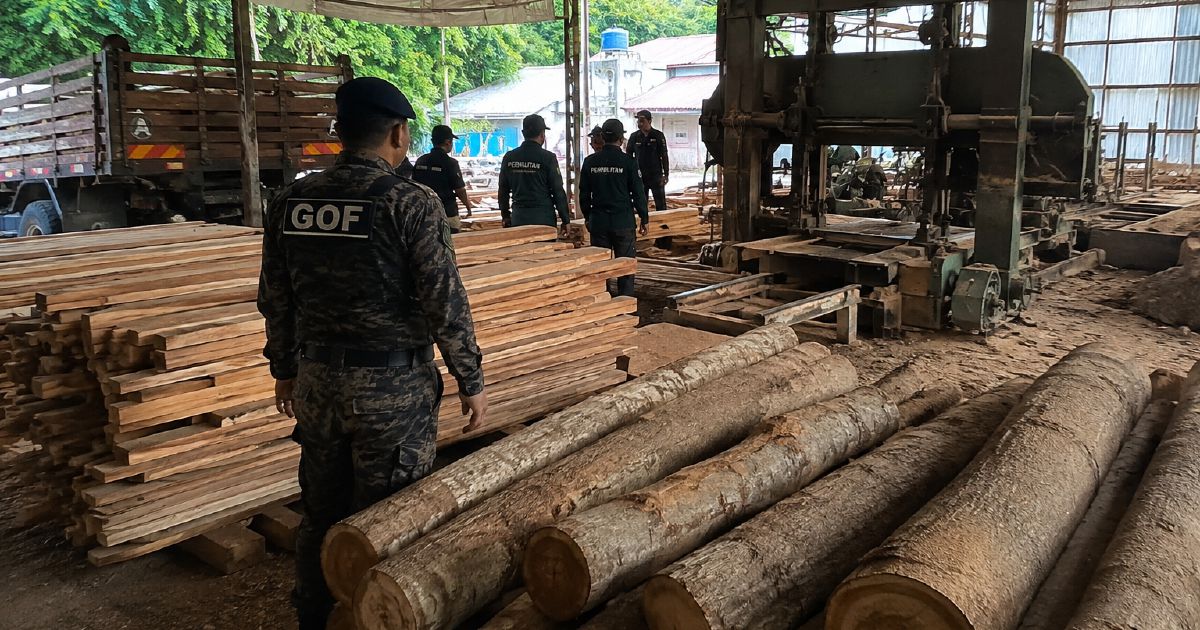
Malaysia's General Operations Force mounted an enforcement operation at a sawmill facility in Kuala Berang, Terengganu, leading to the recovery of timber stocks and industrial processing equipment with a combined estimated worth of RM640,510. The raid, which took place today, also resulted in the arrest of a 20-year-old individual found at the premises, according to operational reports.
The seizure represents a significant recovery of timber resources and machinery that authorities believe may have been involved in unlicensed or irregular processing activities. The diversity of what was confiscated—encompassing both raw materials and substantial equipment—suggests the facility may have had considerable operational capacity. Industrial sawmill operations typically require substantial investment in machinery, and the scale of equipment seized indicates this was more than a small-scale informal operation.
Enforcement agencies in Terengganu have increasingly focused on the timber sector as concerns mount about the management and sustainable utilization of forest resources in the state. Kuala Berang, located in Terengganu's interior, has traditionally been an active area for wood processing activities. The region's geographical position and proximity to timber sources make it a focal point for authorities monitoring the wood supply chain.
The arrest of the 20-year-old individual raises questions about the operational structure and management of the facility. Law enforcement officials will likely investigate the person's role in the operation, including their involvement in sourcing timber, equipment operation, and any wider networks connected to the sawmill. The age of the detainee also suggests potential links to organized operations where younger individuals may have been recruited into processing or logistical roles.
Timber enforcement remains a critical priority within Malaysia's natural resource management framework. The seizure aligns with broader governmental efforts to regulate the wood industry and ensure that harvesting and processing activities comply with forestry regulations and licensing requirements. Unauthorized sawmill operations can contribute to unaccounted timber extraction, complicating efforts to maintain records of forest resource utilization across the country.
The General Operations Force, known in Malay as Pasukan Operasi Am, is a paramilitary law enforcement agency that handles specialized operations across multiple sectors. Its involvement in timber enforcement demonstrates how Malaysia has mobilized different operational units to address resource management issues. The agency's operational capacity and inter-agency coordination with forest department officials have become increasingly important as enforcement demands grow.
For Southeast Asia's timber industry, Malaysian enforcement activities carry wider implications. The region faces persistent challenges regarding illegal and unregulated wood processing, with supply chains often opaque and difficult to monitor. Seizures of this magnitude, when publicized, send signals to industry participants about the risks of operating outside regulatory frameworks. They also provide enforcement agencies with intelligence about operational methods and supply networks that may inform future investigations.
The valuation of RM640,510 placed on the seized materials and equipment provides a window into the economic stakes involved in timber operations within Terengganu. These figures help quantify the scale of informal or unlicensed activity that authorities must contend with. The equipment component of the seizure is particularly significant, as machinery represents substantial capital investment that operators seek to protect, making such losses significant deterrents against non-compliance.
The investigation phase following the arrest will likely expand understanding of the facility's operations, including where timber was sourced, who purchased processed products, and what documentation—or lack thereof—accompanied the timber through the supply chain. Such intelligence feeds into broader enforcement strategies aimed at breaking links between extraction and processing operations that circumvent regulatory oversight.
This enforcement action reflects the ongoing tension between Malaysia's economic interests in timber resources and the need to manage extraction within sustainable parameters. Sawmill raids and equipment seizures are one enforcement tool, but they exist within a larger framework involving licensing systems, forest management planning, and industry oversight. The effectiveness of any single enforcement action ultimately depends on whether it contributes to systemic compliance improvements across the timber sector.
Terengganu's experience with sawmill enforcement is representative of challenges facing timber-producing states throughout Malaysia and across Southeast Asia. As international demand for wood products remains robust and domestic markets present economic opportunities, the incentives for operating outside regulated channels remain substantial. Authorities continue developing more sophisticated approaches to detection and enforcement, recognizing that traditional methods alone cannot comprehensively address the scope of the problem.

