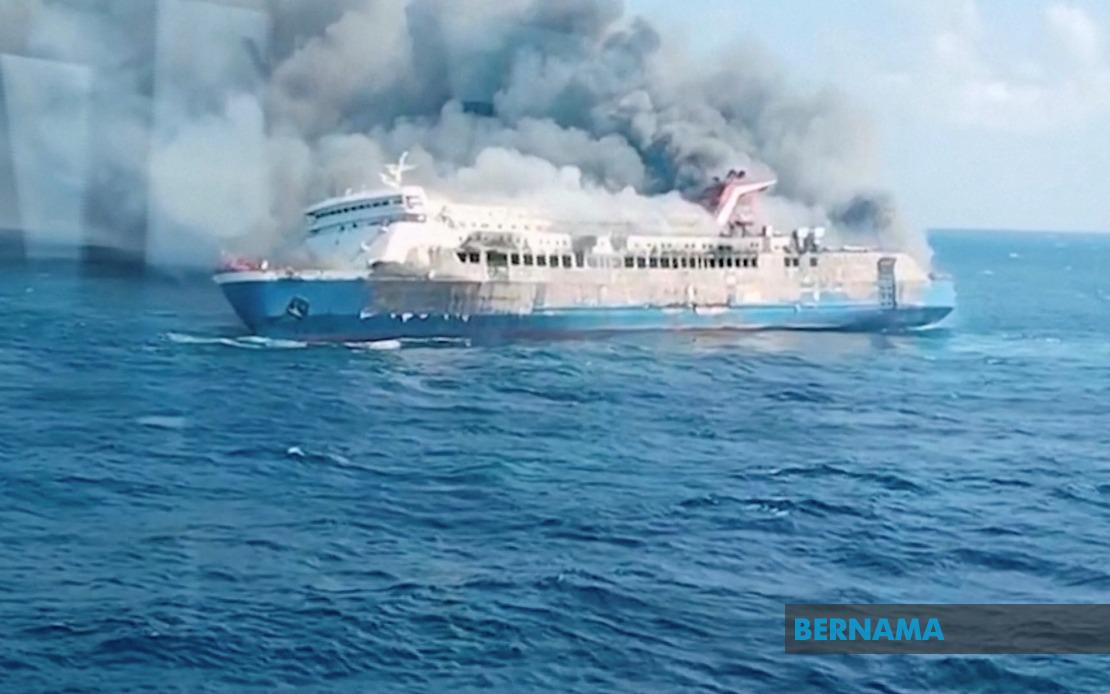
The search for dozens of people unaccounted for following the catastrophic ferry fire in waters north of Madura entered its critical second day on Monday, with Indonesian authorities significantly expanding their deployment of military and civilian assets to locate survivors and victims. The incident has prompted a coordinated response involving the country's armed forces, maritime authorities, and emergency services, highlighting the challenges Indonesia faces in responding to maritime disasters across its sprawling archipelago.
The KMP Mutiara Sentosa II, a passenger vessel carrying 232 travellers and 39 crew members, erupted in flames in the northern waters near Sumenep, Madura, at approximately 8.24 am local time on Sunday. The fire consumed much of the vessel, leaving investigators and authorities confronting a situation where the precise number of those still missing remains uncertain. The scale of potential loss has sparked a comprehensive rescue mobilisation involving multiple government agencies and military units coordinating from Surabaya, the major port city serving East Java.
Among the assets now engaged in the search operation is the TNI warship KRI Bung Hatta-370, representing the direct involvement of Indonesia's National Armed Forces in the recovery effort. This military contribution underscores the severity of the situation and demonstrates how maritime emergencies in Indonesian waters often require cross-agency cooperation. The deployment of military vessels carries particular significance in Southeast Asia, where naval resources are frequently stretched across vast ocean distances and numerous shipping lanes.
The Surabaya Search and Rescue Office, under the leadership of Chief Nanang Sigit, has been coordinating the operation and overseeing the deployment of additional vessels and aircraft. The search fleet now includes the State Ship Grantin P.211 and the patrol vessel Manyar 5003, while the East Java Police have contributed a helicopter to enable aerial reconnaissance of the search zone. This multi-layered approach—combining surface vessels, patrol boats, and air support—reflects established maritime rescue protocols designed to maximise coverage across challenging sea conditions.
Rescue personnel have managed to evacuate 229 survivors to safety, who are being transported in staged operations to Tanjung Perak Port in Surabaya for comprehensive medical evaluations. The successful evacuation of the majority of those aboard represents a significant achievement, though it underscores the uncertainty surrounding those who remain unaccounted for. Medical examinations of survivors will be crucial for identifying any individuals suffering from injuries, shock, or trauma related to the fire and evacuation process.
The recovery operation has so far identified five fatalities, whose remains have been transferred to Bhayangkara H.S. Samsoeri Mertojoso Hospital in Surabaya for formal identification and pathological examination. This grim toll, though modest relative to the vessel's passenger complement, may yet increase as search operations continue. The process of identifying recovered bodies and notifying next of kin represents an emotionally complex dimension of disaster response that extends beyond the immediate rescue phase.
For Malaysian observers, this incident carries relevance beyond the immediate humanitarian tragedy. The waters surrounding Madura and the broader Sunda Strait region form part of critical sea lanes utilised by vessels throughout Southeast Asia, including those carrying Malaysian cargo and passengers. Maritime safety standards, vessel maintenance protocols, and emergency response capabilities across the region directly affect transportation security and economic activity for all nations in the area. Indonesia's experience managing this crisis offers lessons applicable to Malaysian maritime authorities and operators.
The fire's rapid spread across the ferry raises important questions about vessel safety standards, crew training, and emergency equipment that extend throughout the Southeast Asian shipping industry. Older ferries operating inter-island routes in Indonesia, the Philippines, and elsewhere in the region often operate under scrutiny regarding their adherence to modern safety specifications. This incident will likely prompt regional discussions about maritime safety upgrades and inspection protocols for passenger vessels.
The response mounted by Indonesian authorities demonstrates both the capabilities and constraints of emergency services operating across an archipelago where geographic dispersion complicates rapid deployment. The coordination between military units, civilian rescue organisations, local police, and port authorities represents the standard operational model for Indonesian disaster response. However, the reliance on assets from Surabaya highlights how concentration of rescue resources in major urban centres can affect response times to incidents in more remote maritime zones.
Search operations continuing into subsequent days will face evolving weather conditions and sea state challenges typical of Indonesian waters during the monsoon transition period. The survivors' accounts will provide crucial information for investigators determining how the fire originated and spread, information that could influence safety recommendations affecting ferry operations throughout Indonesia and potentially across Southeast Asia. Maritime transport remains essential for Indonesia's economy and regional connectivity, making safety improvements a shared priority.
The incident also underscores broader questions about vessel registration, maintenance oversight, and operator compliance in an industry where economic pressures can sometimes compromise safety investments. These systemic considerations extend beyond emergency response and touch upon regulatory frameworks and enforcement mechanisms that Malaysian maritime authorities monitor closely given the interconnected nature of Southeast Asian shipping networks.

