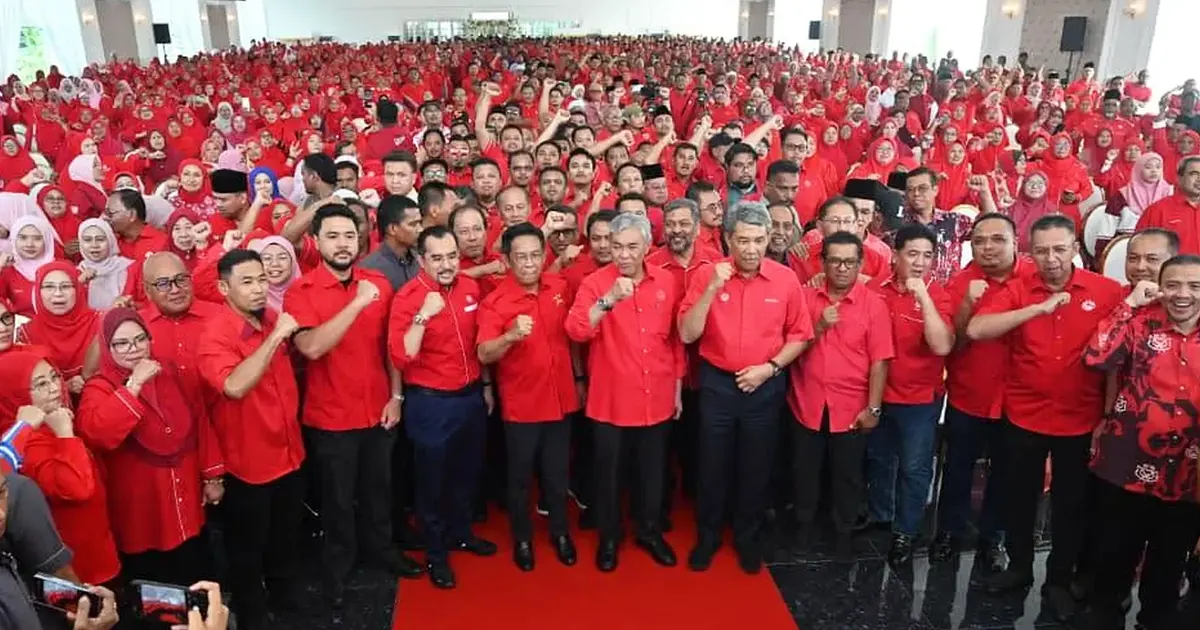
Barisan Nasional chairman Ahmad Zahid Hamidi has delegated authority for candidate selection and inter-party seat negotiations in Negeri Sembilan to the state-level coalition leadership, signalling a decentralised approach to the upcoming state election. The decision places Tok Mat, the Negeri Sembilan BN chief, at the centre of crucial discussions that will determine which constituencies each component party contests and which candidates will bear the coalition's banner. This move reflects a broader shift in how Malaysia's largest political alliance manages its internal dynamics ahead of crucial electoral contests.
The devolution of decision-making power to state-level leaders has become an increasingly common strategy within BN, allowing component parties to negotiate directly with each other without constant reference to the federal leadership. For Negeri Sembilan, this autonomy grants Tok Mat considerable influence over how resources and opportunities are distributed among the coalition's various parties, including UMNO, MCA, and MIC. The arrangement typically requires balancing competing interests while maintaining coalition cohesion, a delicate exercise that has become more complex as UMNO reasserts dominance within BN following the 2022 general election.
Negeri Sembilan occupies a strategically important position in Malaysian politics. The state has historically been competitive territory where BN's hold cannot be taken for granted, particularly as opposition parties have strengthened their ground operations in recent years. Winning a substantial majority in the state assembly is critical for BN to demonstrate electoral momentum and validate the leadership of both the federal and state administrations. The outcome of seat negotiations will therefore have ramifications far beyond Negeri Sembilan's borders, influencing perceptions of BN's ability to manage coalition politics effectively.
The candidate selection process in Malaysian politics carries profound implications for representation and party-member morale. The selection of contested seats—those where multiple parties wish to field candidates—requires negotiating committees to weigh factors including incumbency, electoral performance, demographic shifts, and party historical claims. In Negeri Sembilan, where several constituencies have shifted political hands in recent elections, these discussions promise to be particularly contentious. Local party leaders will advocate fiercely for their preferred candidates while regional heavyweights attempt to impose their own strategic preferences.
Ahmad Zahid's decision to step back from micro-managing these discussions should be interpreted within the context of his broader leadership approach since returning to the BN chairmanship. By granting state chiefs operational autonomy, he projects confidence in their administrative capacity while avoiding personalised blame should negotiations falter. This approach also prevents the federal centre from becoming a bottleneck for every electoral decision across Malaysia's 13 states and three federal territories, a logistical challenge that has previously contributed to delays in announcing election readiness.
For Tok Mat specifically, this responsibility represents both opportunity and risk. Successfully orchestrating candidate selection and seat talks that satisfy all component parties and leave members feeling fairly treated could enhance his standing within BN and strengthen his position ahead of any future party contests. Conversely, a botched process marked by accusations of bias or favouritism could undermine his credibility and create lasting resentments that carry into the campaign phase. The Negeri Sembilan BN chief must therefore navigate competing pressures from federal party leaders, state lawmakers, grassroots activists, and his coalition counterparts.
The interplay between UMNO, MCA, and MIC in Negeri Sembilan reflects broader patterns within BN. UMNO typically claims the largest share of seats given its organisational strength and Malay-Muslim demographic dominance, but MCA and MIC expect meaningful representation befitting their historical roles within the coalition. Each party also maintains different organisational capacities and electoral performances in different districts, factors that should ideally inform seat allocation but often become sources of dispute. Negotiations must accommodate these realities while producing an allocation that BN members believe gives their party a reasonable opportunity to win.
The timing of these discussions is particularly significant. As momentum builds toward the Negeri Sembilan election, parties must finalise their strategies quickly to allow adequate campaign preparation time. Delays in announcing candidates create anxiety among members, enable opposition parties to gain free publicity, and can generate negative press narratives about coalition dysfunction. Tok Mat must therefore balance the need for thoroughness in vetting candidates and negotiating fairly with pressure to reach conclusions that allow the campaign machinery to engage voters.
From a Malaysian electoral perspective, how BN manages the Negeri Sembilan process will be watched closely by analysts and opposition strategists. A smoothly executed transition that results in strong candidate quality and coalition unity strengthens BN's position. A process marked by acrimony, delays, or controversial decisions provides ammunition for opposition parties to attack BN as a dysfunctional coalition more interested in internal power struggles than serving the public. The state election therefore becomes a test case for whether BN's current structures and leadership approaches can deliver electoral success in an increasingly competitive political environment where margins of victory have narrowed considerably.
Ultimately, Ahmad Zahid's delegation to Tok Mat reflects confidence that state-level leaders possess both the political skill and local knowledge necessary to manage complex coalition negotiations. Whether this decentralised model proves effective will depend significantly on Tok Mat's ability to build consensus, manage personalities, and produce a final slate of candidates that energises BN's support base while maintaining coalition cohesion. The Negeri Sembilan election, therefore, represents an important proving ground for this approach to coalition management in contemporary Malaysian politics.

