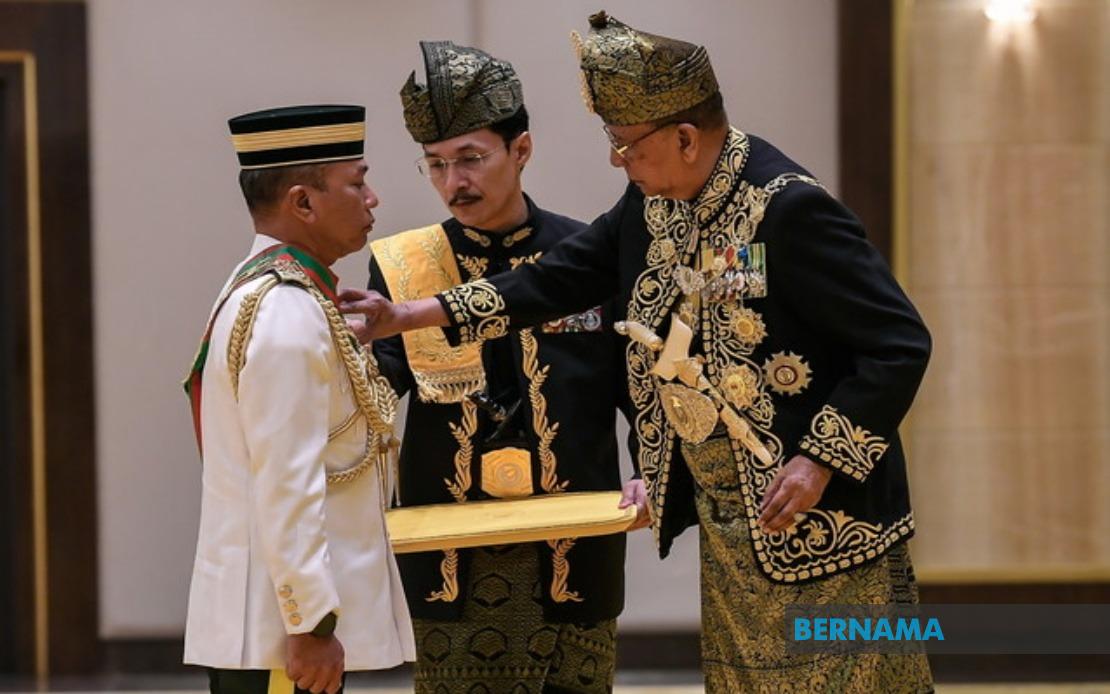
The Sultan of Kedah, Al Aminul Karim Sultan Sallehuddin Sultan Badlishah, bestowed a comprehensive slate of honours and medals during his 84th birthday festivities at Istana Anak Bukit in Alor Setar, with the nation's top military and police leadership receiving the highest recognition. Chief of Defence Forces General Tan Sri Malek Razak Sulaiman and Inspector-General of Police Tan Sri Mohd Khalid Ismail were recognised with the Darjah Dato' Seri Setia Pahlawan Yang Amat Dihormati (S.S.P.K), the most prestigious award presented at the ceremony. Their elevation to this rank underscores the continued importance that Malaysia places on institutional leadership within its security apparatus during a period of evolving regional challenges and domestic operational demands.
The honours system in Malaysian states reflects a sophisticated hierarchical structure designed to recognise meritorious service and contribution across diverse sectors. Beyond the top two appointments, the Sultan conferred the Orang Besar Enam Belas rank on Datuk Syed Khairol Anuar Syed Abidin, while Datuk Mohamad Che Nai received the Orang Besar Tiga Puluh Dua designation. These positions, traditionally held by prominent individuals who have contributed significantly to state administration and development, represent an important acknowledgement of institutional and administrative continuity within Kedah's governance structure.
Law enforcement received particular recognition at the ceremony, reflecting the critical role of policing in Malaysia's security landscape. Kedah's police chief, Datuk Adzli Abu Shah, was conferred the Darjah Dato' Setia Pahlawan (D.D.S.P), acknowledging his leadership during a tenure marked by ongoing efforts to combat organised crime and enhance community safety throughout the northern state. This honour signals the Sultan's appreciation for the state police's operational contributions and their role in maintaining public order in one of Malaysia's key economic regions.
Four additional individuals received the Darjah Dato' Setia Diraja Kedah (D.S.D.K), honouring their service to the state across various domains. Meanwhile, the Darjah Setia Sultan Sallehuddin Kedah (S.S.S) was awarded to two recipients including Major (Retired) Mansor Zakaria, a state executive council member whose dual roles in military service and state governance exemplify the intertwining of security and administrative responsibilities in Malaysia's federal structure. Alongside him, Afnan Hamimi Taib Azamudden, who leads PAS Youth, received the same honour, reflecting recognition of political and youth leadership within the state.
The honours extended significantly into the healthcare and medical professions, underscoring Malaysia's emphasis on recognising clinical excellence and public health service. Nine individuals received the Darjah Setia Diraja Kedah (S.D.K), including senior medical specialists at Sultanah Bahiyah Hospital such as Dr Adam Mohd Zakaria from the Neurosurgery Department and Dr Manisekar K. Subramaniam, a senior consultant general surgeon. Dr Jamaliah Omar, who serves as deputy director of the Health Ministry's Dental Health Programme, was similarly honoured for her contributions to preventive and clinical dental care. These appointments demonstrate Malaysia's commitment to recognising healthcare workers who form the backbone of the country's medical infrastructure.
Administrative and regulatory leadership also featured prominently in the honours list. Ir Mohd Fisal Ismail, director of the Kedah Public Works Department, and Zulkifli Romli, general manager of the Muda Agricultural Development Authority (MADA), received recognition for their roles in infrastructure and agricultural development respectively. MADA's inclusion reflects Kedah's continued reliance on agricultural advancement as a pillar of rural economic development, while the Public Works director's honour acknowledges the critical importance of infrastructure maintenance and expansion. Additionally, Maznim Ismail, deputy CEO (Management) of the Langkawi Development Authority (LADA), was recognised for contributions to one of Malaysia's premier tourism and development zones.
Religious affairs and business sectors received representation through the honours. Syeikh Mohamad Subhi Abdullah, director of the Kedah State Islamic Religious Affairs Department, was conferred the S.D.K, recognising the essential role of Islamic institutional leadership in maintaining religious harmony and implementing policy. The private sector was acknowledged through Yeoh Su Guan, chairman of the Real Estate and Housing Developers Association (REHDA) Kedah/Perlis, and Jaffri Ahmad, president of Bismi Empire Sdn Bhd, whose business contributions support employment generation and economic activity in the state.
Beyond the top-tier honours, the Sultan consented to broader recognition across multiple honour categories reflecting service at varying levels of seniority and duration. The Ahli Mahkota Kedah (A.M.K) was conferred to 31 recipients, while the Ahli Setia Pahlawan (A.S.P) went to five recipients, acknowledging contributions from mid-ranking officials and professionals. The Bintang Perkhidmatan Cemerlang Kedah (B.C.K), awarded to 31 recipients, recognises excellence in public service, while the Bintang Kebaktian Masyarakat (B.K.M) was presented to 43 recipients for community dedication.
The comprehensive nature of the honours distribution demonstrates the breadth of institutional recognition employed by Kedah's sultanate. Five individuals received the Ahli Cemerlang Semangat Jerai Kedah (A.S.K), while 55 recipients were appointed to the Pingat Perkhidmatan Cemerlang Kedah (P.C.K), honouring sustained excellence across the public service spectrum. The Pingat Jasa Kebaktian (P.J.K) was awarded to 40 recipients, recognising devotion to duty, and 15 individuals received the Pingat Perkhidmatan Lama (P.P.L) for long service, reflecting Malaysia's tradition of acknowledging career-long commitment to public institutions.
The ceremony at Istana Anak Bukit underscores how Malaysian sultanates utilise honours systems as instruments of institutional recognition and social cohesion. For federal appointees like the CDF and IGP, state-level honours represent an additional layer of recognition that reinforces the interconnectedness of Malaysia's federal and state governance structures. The recognition afforded to healthcare workers, religious leaders, and development authorities reflects contemporary priorities in nation-building, while the acknowledgement of business leaders demonstrates openness toward private sector contributions to state prosperity.
For observers of Malaysian governance, the composition of Kedah's honours list reveals institutional priorities and strategic focus areas. The prominence of security sector personnel reflects ongoing concerns about public order and safety, while the substantial representation from healthcare professionals signals investment in medical infrastructure. The inclusion of agricultural development authority leadership maintains Kedah's historical identity as an agricultural heartland, even as urbanisation and tourism development reshape the state's economic profile. Youth leadership recognition through PAS Youth's appointment demonstrates engagement across political spectrum representation.
The honours system, while ceremonial in nature, functions as an important mechanism for state-level governance and institutional morale-building. For the recipients, particularly those at mid-to-senior levels across various sectors, the public recognition serves to legitimise their leadership roles and signal continued confidence from the sultanate. For the broader public service and professional communities in Kedah, the breadth of recognition categories—from long-service medals to excellence awards—reinforces expectations of meritocratic advancement and institutional commitment, even as the political economy of honours distribution remains complex and influenced by various stakeholder interests.

