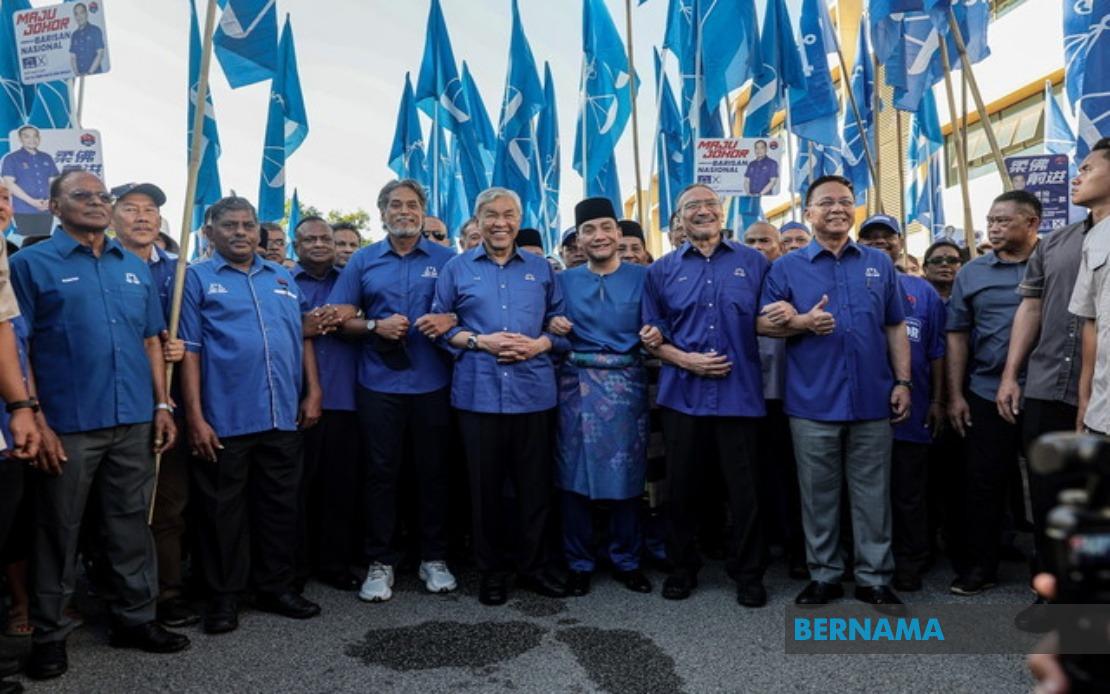
Johor Barisan Nasional chairman Datuk Onn Hafiz Ghazi formally entered the state election race on June 27, submitting his nomination papers at the Muafakat Hall of the Simpang Renggam District Council at 9.10 am. The move signals the beginning of the incumbent Machap state assemblyman's campaign for another term, with the submission backed by considerable political firepower from the federal UMNO establishment.
The show of unity extended beyond routine administrative procedure. UMNO president Datuk Seri Dr Ahmad Zahid Hamidi personally accompanied Onn Hafiz to the nomination centre, underscoring the party's commitment to the Johor campaign. This high-level presence reflects both the strategic importance of the state and the confidence the national leadership has invested in the BN machinery ahead of polling day. Ahmad Zahid's involvement signals that federal party apparatus will play an active role in the election effort.
Sembrong MP Datuk Seri Hishammuddin Tun Hussein also graced the nomination ceremony, lending his parliamentary credentials and ministerial experience to the occasion. Hishammuddin, who has held multiple cabinet positions and maintains significant influence within party circles, has long been regarded as a stabilising figure within UMNO's senior ranks. His presence alongside Onn Hafiz reinforces messaging about continuity and experienced leadership heading into the electoral contest.
Former minister Khairy Jamaluddin rounded out the delegation of top-tier UMNO figures, adding another layer of establishment credibility to the proceedings. Khairy's participation demonstrates generational depth within the party's backing for Onn Hafiz, bridging both established figures and newer voices within UMNO's leadership spectrum. This multi-generational show of support hints at consensus building within party structures regarding campaign priorities.
Former Johor Menteri Besar Datuk Seri Hasni Mohammad also attended the nomination submission, providing local continuity and institutional memory of state-level governance. Hasni's presence connects the current campaign to the broader history of BN administration in Johor, signalling a narrative of steady stewardship. His involvement suggests coordination between different tiers of party leadership and demonstrates that established state figures remain integrated into campaign structures.
The atmosphere at Simpang Renggam reflected grassroots enthusiasm, with supporters congregating around the nomination centre in visible displays of partisan enthusiasm. Party workers and sympathisers dressed in party colours and carried banners and flags, creating the visual spectacle characteristic of Malaysian electoral campaigns. These demonstrations suggest organisational mobilisation at ground level and reflect the competitive intensity surrounding state elections in peninsular Malaysia.
The 16th Johor state election represents a significant political moment for the southern state, traditionally a BN stronghold but increasingly contested terrain. Onn Hafiz's nomination with such heavyweight backing indicates the party's determination to maintain control and signal strength to both supporters and political opponents. The concentration of senior party leadership at a routine nomination procedure reveals how seriously UMNO views the Johor contest within its broader strategic calculations.
For Malaysian political observers, the composition of the delegation accompanying Onn Hafiz offers insight into UMNO's internal dynamics and campaign planning. The presence of Ahmad Zahid, Hishammuddin, and Khairy together demonstrates maintained cohesion among different power centres within the party at a moment when UMNO has worked to project unity after previous internal divisions. Their collective appearance suggests efforts to present a consolidated front to voters.
Regionally, Johor elections carry significance beyond state boundaries. As the southernmost peninsula state and Malaysia's closest connection to neighbouring Singapore, Johor's political direction influences broader Malaysian economic and foreign policy trajectories. A strong BN performance would reinforce Barisan's positioning in peninsular Malaysia and provide momentum for future federal-level considerations, making state-level contests meaningful indicators of national political direction.
The nomination process marks the formal beginning of the election campaign period, with candidates now able to engage in structured canvassing and campaigning activities. Onn Hafiz's submission with such prominent backing establishes early positioning in what promises to be a keenly contested electoral exercise. The show of force from federal party leadership suggests UMNO intends to mobilise resources and organisation comprehensively throughout the campaign period.

