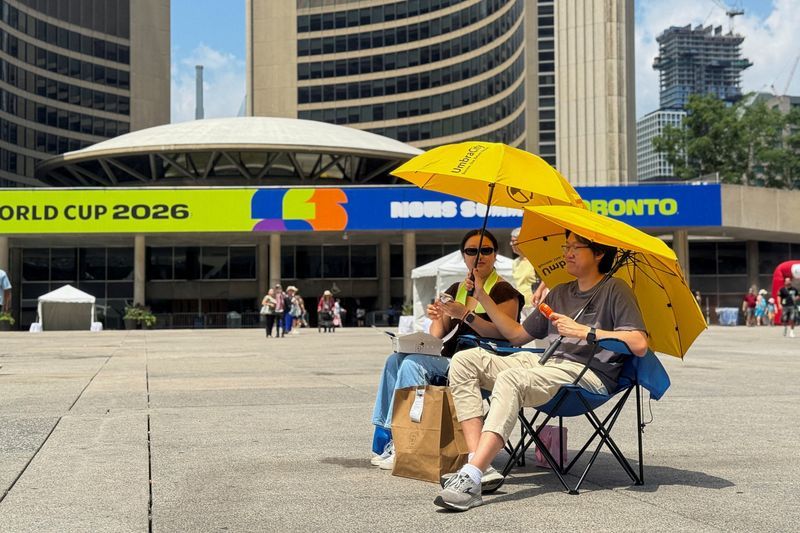
Public health authorities in Toronto have issued urgent guidance to football supporters planning to attend the Portugal-Croatia World Cup round of 32 fixture on Thursday, amid forecasts of extreme heat and humidity that could pose serious health risks. The City of Toronto's medical officer of health Michelle Murti stressed the importance of preventive measures, noting that the combination of high temperatures and moisture in the air could create potentially dangerous conditions for the thousands of spectators expected to gather across the city's viewing venues.
Environment Canada has issued a heat warning for the region, with temperatures expected to exceed 35 degrees Celsius, though the sensation on the ground could feel substantially hotter due to humidity levels. According to Murti, the perceived temperature could reach approximately 40 degrees Celsius when humidity is factored into the equation, making Thursday potentially one of the most challenging days weather-wise for outdoor gatherings in the city. This convergence of heat and moisture creates what meteorologists refer to as a high humidex value, a measure that better reflects how the human body experiences temperature.
Health officials are particularly concerned about dehydration and heat-related illness among fans who may become caught up in the excitement of the match and neglect to take necessary precautions. Murti's advice focuses on consistent fluid intake throughout the day rather than waiting until thirst signals emerge, a counterintuitive approach that helps maintain hydration levels before the body's warning systems activate. She has also cautioned against excessive alcohol consumption, as alcoholic beverages accelerate dehydration processes and can compound the effects of heat exposure, creating a compounding health risk for attendees.
Beyond the temperature concerns, weather forecasters are tracking the possibility of thunderstorms developing throughout the day and evening, introducing additional uncertainty for event organisers. The threat of severe weather could prompt cancellations or relocations of several public fan zones and viewing parties that the City of Toronto has arranged to celebrate the World Cup tournament. This dual challenge—managing both extreme heat and potential storm activity—has forced officials to prepare contingency plans and ensure adequate shelter and cooling facilities are accessible to the public.
Toronto Stadium, the smallest venue in the World Cup tournament, will host its final match of the competition on Thursday evening when Portugal faces Croatia. This match carries additional significance as it represents the conclusion of Toronto's involvement in the global football spectacle, making it a particularly anticipated event for local residents and visiting supporters alike. The stadium's modest capacity relative to other World Cup venues means that a substantial portion of the expected crowd will be distributed across the city's designated public viewing areas and fan zones.
In preparation for the event, the City of Toronto has established multiple watching stations throughout high-traffic areas, including around the iconic Nathan Phillips Square, a landmark that has become a focal point for public celebrations and gatherings. The municipality has taken the proactive step of installing misting stations at various locations to provide some relief from the oppressive heat. These temporary cooling installations offer a simple but effective mechanism for people to lower their body temperature while remaining outdoors and engaged with fellow supporters.
Canada has experienced increasingly volatile weather patterns extending from the Pacific coast to Atlantic provinces in recent weeks. The country has contended with severe flooding in some regions alongside dangerous heat waves in others, reflecting broader climate volatility that meteorologists attribute to shifting atmospheric conditions. The timing of these extreme weather events has coincided with Canada Day celebrations scheduled for Wednesday, adding further strain on public services and emergency response capabilities across the nation.
Observations from fans already gathering at public viewing areas underscore the genuine challenge posed by the forecasted conditions. Megan Rennie, a Toronto resident attending events at Nathan Phillips Square on Tuesday, expressed concern not only about her own comfort but also about the physical demands being placed on the players competing under these circumstances. She noted that while the misting stations and water facilities provided some relief, the intensity of the heat may compel early departures by some attendees unable to withstand prolonged exposure.
Visiting supporters from warmer climates have similarly noted the severity of the conditions. Laura Albarez, who travelled from Colombia to experience the tournament, acknowledged that despite coming from a tropical country, the combination of heat and humidity in Toronto felt particularly oppressive. She indicated a preference for retreating indoors to air-conditioned facilities rather than remaining outdoors for extended periods, a sentiment likely shared by many other visitors and locals alike.
The convergence of the World Cup fixture with severe weather demonstrates how sporting events in the modern era must contend with environmental realities that extend beyond the pitch itself. Authorities must balance the desire to provide memorable public celebrations with the imperative to protect public health and safety. The measures being implemented—from public advisories about hydration and alcohol moderation to the installation of physical cooling infrastructure—reflect a comprehensive approach to risk management during a significant community event.
For Malaysian and Southeast Asian readers familiar with tropical climates and heat management, the Toronto situation offers interesting contrast: while regions like Malaysia routinely experience similar or higher temperatures year-round, the adaptation infrastructure and public health awareness systems may differ significantly. The way Canadian authorities are approaching the heat challenge—through explicit public messaging, physical cooling interventions, and contingency planning—provides a model for event management during extreme weather that could inform practices across the region, particularly as climate variability increases globally.

