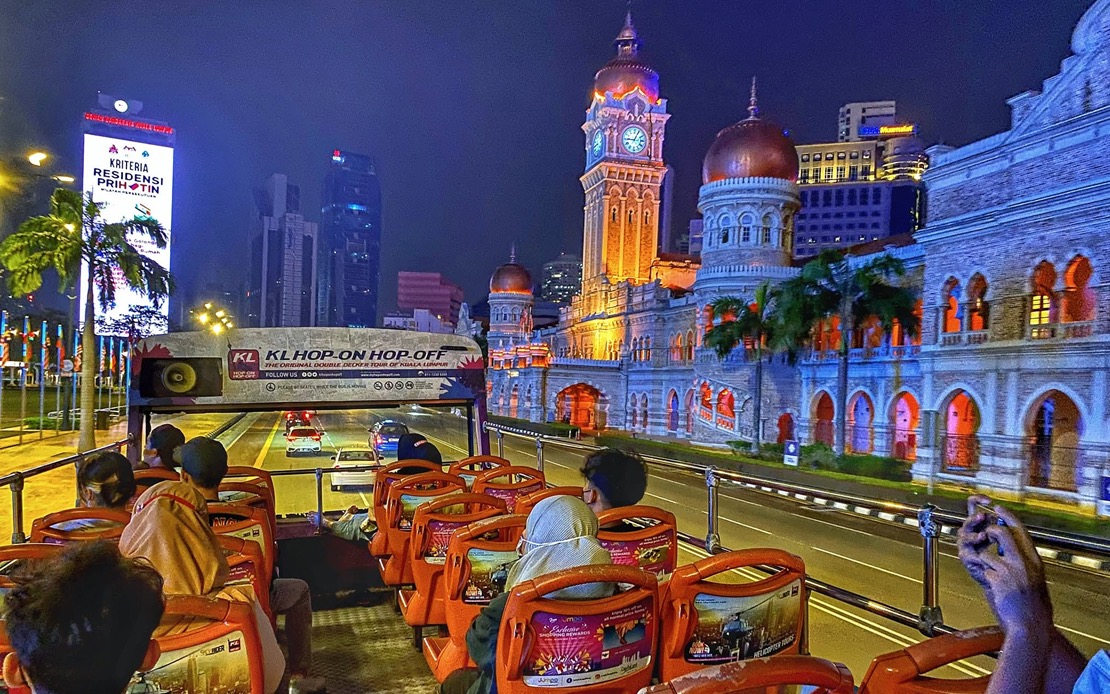
Tourism Malaysia has joined forces with KL Hop-On Hop-Off operator Elang Wah Sdn Bhd to launch an ambitious domestic tourism campaign designed to energize local travel patterns and build momentum for Visit Malaysia 2026 (VM2026). The initiative harnesses the high visibility of iconic sightseeing buses traversing Kuala Lumpur's streets to showcase the nation's diverse destinations and encourage Malaysians to explore their own country more thoroughly, a strategy that recognizes domestic tourism's foundational importance to the industry's resilience and growth.
According to Datuk Seri Tiong King Sing, Minister of Tourism, Arts and Culture, domestic tourism represents a cornerstone of Malaysia's travel sector, generating substantial economic spillovers that extend far beyond revenue figures. The minister emphasized that fostering internal tourism directly strengthens multiple economic channels—from employment generation in hospitality and transport to community development in secondary cities and rural areas that depend on visitor spending. By positioning domestic travel as equally valuable to international arrivals, the government signals recognition that building confidence and consumption patterns at home creates a stable foundation upon which international marketing campaigns can flourish.
The campaign's centerpiece involves six KL Hop-On Hop-Off buses adorned with eye-catching wraps that spotlight major tourism destinations spanning 15 states and federal territories. These designs transcend simple advertising; they function as mobile promotional platforms that expose commuters, tourists, and urban dwellers to attractions they may not have previously considered visiting. The featured destinations include landmarks such as the Sri Sendayan Mosque in Negeri Sembilan and the Pinnacles of Mulu in Sarawak, representing the geographical and cultural breadth Malaysia offers—from religious and architectural heritage sites to natural wonders that attract international recognition.
Technologically, the buses incorporate interactive QR codes embedded within their wraps, bridging the gap between outdoor advertising and digital engagement. Passengers and passersby can scan these codes to access curated VM2026 travel deals, information from the official Calendar of Events (COE), and dedicated state tourism promotional websites. This integration of traditional and digital marketing channels recognizes contemporary consumer behavior patterns, whereby purchasing decisions increasingly depend on immediate access to information and promotional incentives rather than passive exposure alone.
The campaign emerges at an opportune moment, capitalizing on demonstrated strength in Malaysia's domestic tourism sector. Throughout 2025, domestic tourism recorded a robust 21.3 per cent increase in visitor numbers, with 290.1 million domestic tourists recorded compared to 260.1 million in 2024. This substantial surge indicates growing appetite among Malaysians for domestic travel experiences, driven by factors including improved transportation infrastructure, heightened awareness of local attractions, and potentially enhanced disposable incomes among middle-class consumers.
Expenditure patterns corroborate this positive trajectory. Total domestic tourism spending climbed by 13.3 per cent to reach RM121.0 billion in 2025, up from RM106.7 billion in 2024, suggesting visitors are not merely taking more trips but also spending more per journey. This metric carries particular significance for the tourism industry, as higher per-visitor expenditure indicates improved profitability for businesses across accommodation, food and beverage, and attractions sectors. The growth rate in spending marginally trails visitor number growth, suggesting a modest increase in average expenditure per domestic tourist, which nonetheless contributes meaningfully to overall economic benefits.
For Malaysia's regional positioning, this campaign reinforces a broader strategic narrative. As Southeast Asian nations compete intensively for tourism revenue, domestic market strength provides competitive advantage. Strong internal demand reduces dependence on volatile international markets and demonstrates to international visitors that destinations merit domestic patronage—a confidence signal that influences foreign travel decisions. Countries with thriving domestic tourism sectors frequently enjoy enhanced international appeal, as consistent local visitation ensures superior service standards and well-maintained facilities.
The VM2026 initiative represents a critical inflection point for Malaysian tourism strategy. Rather than waiting until the official campaign year to mobilize tourists, Tourism Malaysia is using 2026's approach as catalyst to transform travel consciousness now. By distributing promotional materials through ubiquitous public transport, the campaign reaches diverse demographic audiences across socioeconomic strata, ensuring that tourism benefits extend beyond wealthy travelers to middle-income and aspirational segments of the population.
From a developmental perspective, amplifying domestic tourism particularly benefits secondary cities and rural state destinations that historically struggle to compete for tourist attention against established hubs like Kuala Lumpur and Penang. When domestic visitors from major urban centers explore secondary attractions—whether in Negeri Sembilan's religious heritage sites or Sarawak's natural formations—they inject spending into less-developed tourism economies, encouraging local entrepreneurship and infrastructure investment. This multiplier effect extends tourism's economic contribution beyond major metropolitan areas where international flights concentrate.
The partnership model itself warrants attention, as it demonstrates how public sector tourism authorities can leverage private sector assets and operational expertise to amplify campaign reach. KL Hop-On Hop-Off brings established networks and daily passenger volumes that Tourism Malaysia could not access through traditional advertising channels alone. This collaborative approach suggests evolving sophistication in Malaysian tourism marketing, recognizing that complex campaigns require diverse stakeholder participation rather than monolithic institutional efforts.
Looking forward, the success of this initiative will depend partly on execution quality and sustained consumer engagement. QR code activation rates, which can be tracked in real time, will reveal whether embedded digital elements genuinely influence purchasing behavior or merely supplement traditional awareness-building. Early performance metrics may inform how Tourism Malaysia calibrates subsequent campaigns, potentially leading to expanded use of mobile marketing integration across other platforms and destinations.

