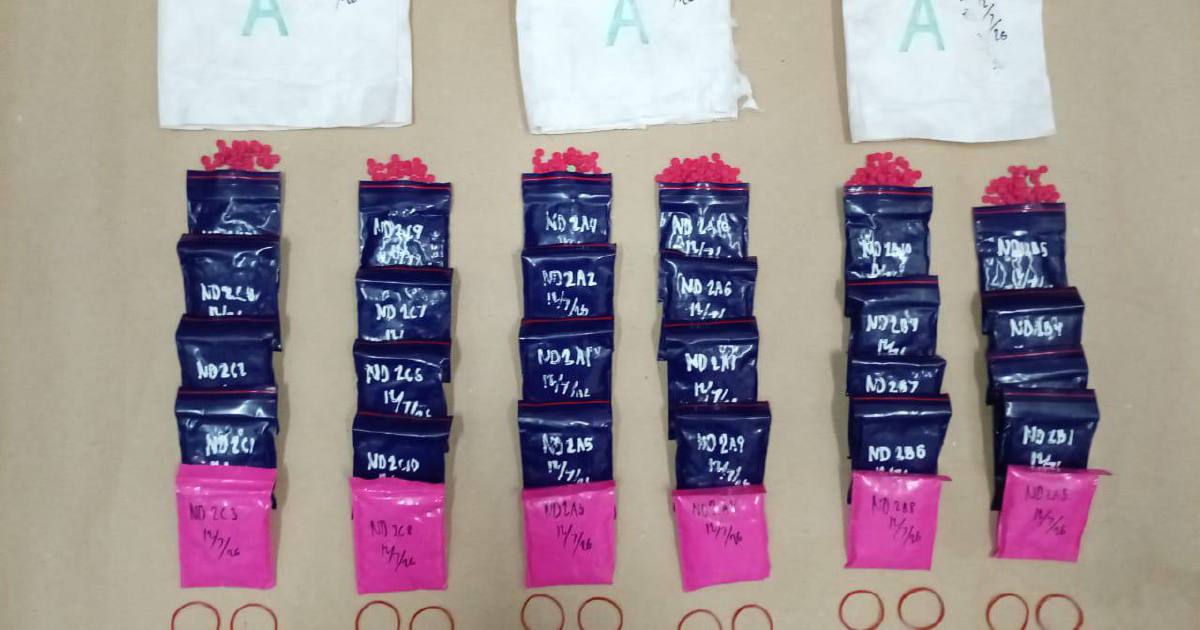
A major drug seizure in Kelantan has resulted in the arrest of a 35-year-old tow truck agent following the discovery of thousands of illegal methamphetamine tablets. Officers from the Tumpat police station apprehended the suspect after locating 6,000 yaba pills concealed within a vehicle positioned along Jalan Kubang Batang near Wakaf Bharu. The confiscated pills carry an estimated street value of RM60,000, representing a significant quantity of drugs intercepted before reaching consumers across the northern region.
The operation underscores the persistent challenge Malaysian law enforcement faces combating synthetic drug distribution networks that continue to penetrate suburban and semi-rural communities. Yaba pills, colloquially termed "crazy medicine" in Southeast Asia, remain among the most trafficked controlled substances in the region, driven by their relatively affordable pricing, convenient pill form, and potent methamphetamine composition. The Kelantan seizure reflects broader patterns of illicit drug movement through Malaysia's transport corridors, where vehicles conducting legitimate commerce frequently serve as concealment vessels.
The arrest location at Jalan Kubang Batang offers insight into operational patterns of drug distribution rings operating across the East Coast. Tumpat, located in the northern reaches of Kelantan bordering Thailand, has emerged as a strategic nexus for contraband movement given its geographic positioning relative to known trafficking routes. The intersection of commercial vehicle activity and proximity to international borders creates vulnerability that criminal organisations systematically exploit. Police operations in this corridor increasingly yield substantial seizures, suggesting enhanced detection capabilities alongside continued trafficking volume.
The tow truck sector has garnered particular attention from enforcement authorities investigating drug distribution networks. Operators within the vehicular recovery industry maintain legitimate reasons to traverse extensive distances and access multiple vehicle compartments, characteristics that inadvertently provide operational cover for trafficking activities. The occupation's regular contact with diverse clientele and reliance on vehicle access creates opportunities for concealment that criminal networks have historically leveraged. This arrest exemplifies law enforcement's expanding recognition of how seemingly innocuous occupational roles can facilitate contraband movement.
Yaba's prevalence throughout Southeast Asia reflects both supply-side manufacturing capacity in border regions and sustained demand among youth and working-age demographics. The pills' methamphetamine base delivers stimulant effects that appeal to individuals in demanding professions and social environments. Malaysian communities, particularly in Peninsular Malaysia's urban centres and northern states like Kelantan, demonstrate consistent consumption patterns that sustain robust black market pricing. The RM60,000 valuation reflects retail market rates rather than wholesale costs, indicating the profit potential driving trafficking investment.
Royal Malaysian Police have intensified counter-narcotics operations throughout 2024 following policy directives emphasising drug supply chain disruption. Kelantan's police contingent, operating under challenging resource constraints endemic to East Coast postings, has nonetheless maintained operational tempo yielding repeated seizures and arrests. The Tumpat apprehension contributes to cumulative enforcement success metrics, though police leadership acknowledges that individual operations represent tactical victories within an ongoing strategic struggle against entrenched trafficking infrastructure. Intelligence-led policing approaches increasingly guide resource allocation toward high-yield operational zones.
The 6,000-pill quantity reflects intermediate trafficking volumes consistent with regional distribution operations rather than large-scale importation interdictions. Yaba moves through Malaysian territory in parcels aligned with distribution network capacity and risk tolerance, with individual couriers or vehicles typically conveying quantities destined for subdivision among retail dealers. The arrested tow truck agent's role within trafficking hierarchy remains subject to investigation, though operational circumstances suggest involvement as a transporter rather than as a higher-level orchestrator. Police interrogation procedures will likely attempt to identify upstream suppliers and downstream recipients.
Legal proceedings following this arrest will navigate Malaysia's comparatively severe narcotics statutes, which impose mandatory minimum sentences and enhanced penalties for trafficking quantities exceeding designated thresholds. The 6,000-pill seizure substantially exceeds personal consumption thresholds established under the Dangerous Drugs Act, positioning the suspect for trafficking classification. Conviction trajectory carries significant sentencing implications, with potential imprisonment terms potentially extending toward the upper boundaries of penalty frameworks. Penalty severity reflects legislative determination to impose substantial deterrent effects against trafficker participation.
The apprehension occurs within broader regional context of fluctuating yaba availability and pricing dynamics reflecting supply disruptions and enforcement successes across Thailand, Myanmar, and Malaysia. Recent interdictions along the Thailand-Malaysia border have disrupted trafficking chains, temporarily elevating street prices and constraining supply consistency. These market effects incentivise traffickers to establish new distribution channels and reconstitute disrupted networks. Malaysian law enforcement thus confronts continuously adapting criminal organisations exploiting geographic proximity to manufacturing regions and transnational logistics networks.
Security implications extend beyond immediate drug control concerns toward organised crime ecosystem sustainability. Trafficking organisations operating yaba distribution networks maintain interconnected financing mechanisms, corruption networks, and violence infrastructure that generate broader societal harms. Drug proceeds fund additional criminal enterprises including extortion, gambling operations, and human trafficking. Police operations simultaneously targeting trafficking supply chains and consumer-side demand reduction represent comprehensive enforcement approaches requiring sustained investment and inter-agency coordination. The Tumpat seizure, while noteworthy, represents continuation of ongoing efforts rather than transformative intervention.

