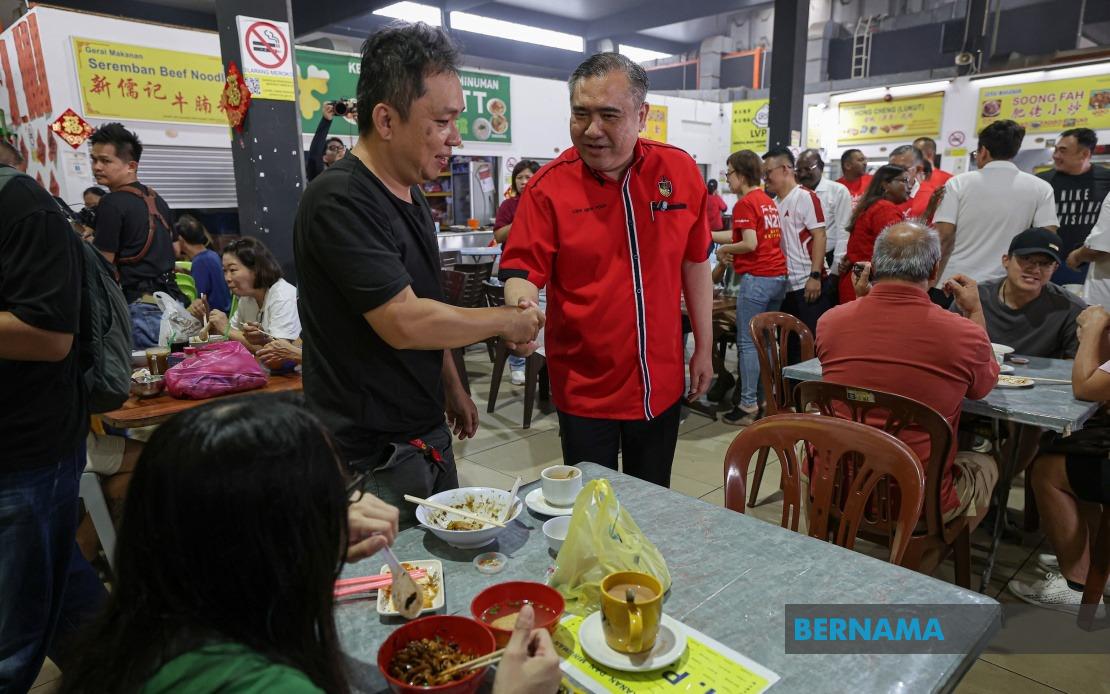
Transport Minister Anthony Loke has issued a firm directive requiring strict adherence to traffic laws and safety protocols throughout the ongoing 16th Negeri Sembilan state election campaign, signalling that electoral ambitions must never override public safety concerns. Speaking in Seremban following a campaign walkabout with Pakatan Harapan candidates, Loke emphasised that maintaining an accident-free campaign environment is a collective responsibility that transcends party affiliation and political rivalry.
The DAP secretary-general underscored that while every political formation naturally seeks victory, that pursuit cannot justify contravening established traffic regulations. He framed basic safety measures—particularly helmet-wearing for motorcycle riders—as non-negotiable baseline requirements rather than optional suggestions for campaign participants. This position reflects a growing recognition among Malaysian political leaders that campaign periods, characterised by high volumes of vehicle movements and enthusiastic supporter mobilisations, present elevated accident risks that demand proactive mitigation.
Loke detailed his personal enforcement approach, explaining that he has directly instructed all DAP campaign teams operating during this election cycle to wear helmets without exception whenever they travel by motorcycle. He reinforced this commitment by citing his recent experience during the nomination day proceedings, when he led a convoy travelling from Pekan Titi to Kuala Klawang. Rather than allowing exceptions or overlooking non-compliance, Loke established a clear prerequisite: participation in official campaign convoys requires proper helmet use. This hands-on approach demonstrates how senior political figures can model compliance and establish accountability within their respective organisations.
Beyond helmet requirements, Loke extended his safety warnings to encompass other high-risk practices prevalent during campaign season. He specifically condemned the practice of supporters riding on the tailgates of moving four-wheel-drive vehicles, characterising such behaviour as recklessly endangering human life. This particular concern addresses a widespread phenomenon in Malaysian campaign culture where enthusiastic supporters crowd onto vehicle exteriors to increase visibility and participation. While undoubtedly colourful and attention-grabbing, such practices create genuine hazards during sudden braking, tight turns, or unexpected obstacles—scenarios almost inevitable during busy campaign schedules traversing multiple constituencies.
The minister's intervention carries particular significance given his portfolio responsibility for transportation and road safety matters. His dual roles—as Transport Minister and as Seremban Member of Parliament actively campaigning in Negeri Sembilan—position him uniquely to bridge the gap between policy framework and practical campaign reality. This positioning enables him to communicate with moral and administrative authority that abstract regulatory requirements yield to concrete safety imperatives, making his directives particularly influential within his own party machinery.
Loke's broader appeal extends to all political contestants participating in the Negeri Sembilan contest, calling upon candidates, party officials, and supporters across the electoral spectrum to embrace leadership by example. Rather than adopting a confrontational regulatory stance, his framing appeals to leaders' responsibility to shape the culture and behaviour of their respective campaign operations. This inclusive messaging suggests an understanding that traffic safety compliance depends fundamentally upon voluntary adoption by grassroots participants rather than enforcement mechanisms alone.
The 16th Negeri Sembilan state election encompasses a substantial electoral participation landscape, with 889,490 registered voters eligible to participate. This electorate comprises 867,151 ordinary voters alongside 16,884 military personnel and their spouses, plus 5,455 police officers authorised to cast early votes on July 28. The state assembly dissolution occurred on June 5, with polling day scheduled for August 1. Such a large electorate, spread across multiple constituencies requiring extensive campaign coverage, inevitably generates the traffic movements and logistical challenges that heighten accident risks.
The campaign period spanning from dissolution through polling day creates a compressed timeframe during which campaign intensity reaches peak levels. Candidates, party workers, and supporters converge on constituencies, organising events, conducting walkabouts, holding rallies, and mobilising voters through various means. These activities fundamentally depend upon reliable vehicle transportation networks operating at higher-than-normal capacity. Without explicit safety protocols and leadership commitment to enforcing them, the combination of pressure to reach maximum voter contact with compressed timelines and vehicle congestion creates obvious collision and injury hazards.
Loke's intervention reflects a maturation in Malaysian electoral culture's approach to campaign safety. Rather than treating traffic accidents during campaigns as unfortunate but inevitable consequences of democratic competition, this directive frames safety as a fundamental value that political parties must actively champion. The emphasis on helmet compliance specifically addresses a persistent road safety challenge in Malaysia, where motorcycle riders—including campaign participants—frequently ride unhelmeted despite legal requirements. By making helmet-wearing a prerequisite for official campaign participation, Loke leverages campaign discipline as a vehicle for reinforcing broader public safety norms.
The practical implementation of these directives will test the actual commitment of DAP and other participating parties to safety compliance. Campaign season inevitably creates pressure for visible, impressive shows of supporter mobilisation, and some participants may resent restrictions on the kinds of dramatic, visually striking campaign presentations that bare-tailgate riding facilitates. Monitoring compliance requires sustained attention from party leadership throughout the campaign period, suggesting that Loke's initial directives must be reinforced through ongoing oversight and accountability mechanisms.
For Malaysian voters observing this campaign, Loke's emphasis on traffic safety provides an opportunity to assess how seriously political organisations take safety responsibilities. Campaign conduct often provides revealing indicators of how parties and leaders manage broader governance challenges. A party that struggles to enforce safety protocols among its own campaign participants may lack the organisational discipline necessary for effective governance. Conversely, demonstrated commitment to safety compliance demonstrates maturity and responsibility that extends beyond electoral calculations.
The broader implications of this directive extend beyond Negeri Sembilan, potentially establishing precedent for future electoral campaigns at state and federal levels. As Malaysia continues developing its democratic institutions and practices, establishing expectations that electoral campaigns operate within robust safety frameworks represents progress toward responsible democratic competition. Other state elections and future federal campaigns will likely reference Loke's directives as establishing reasonable standards for campaign conduct.

