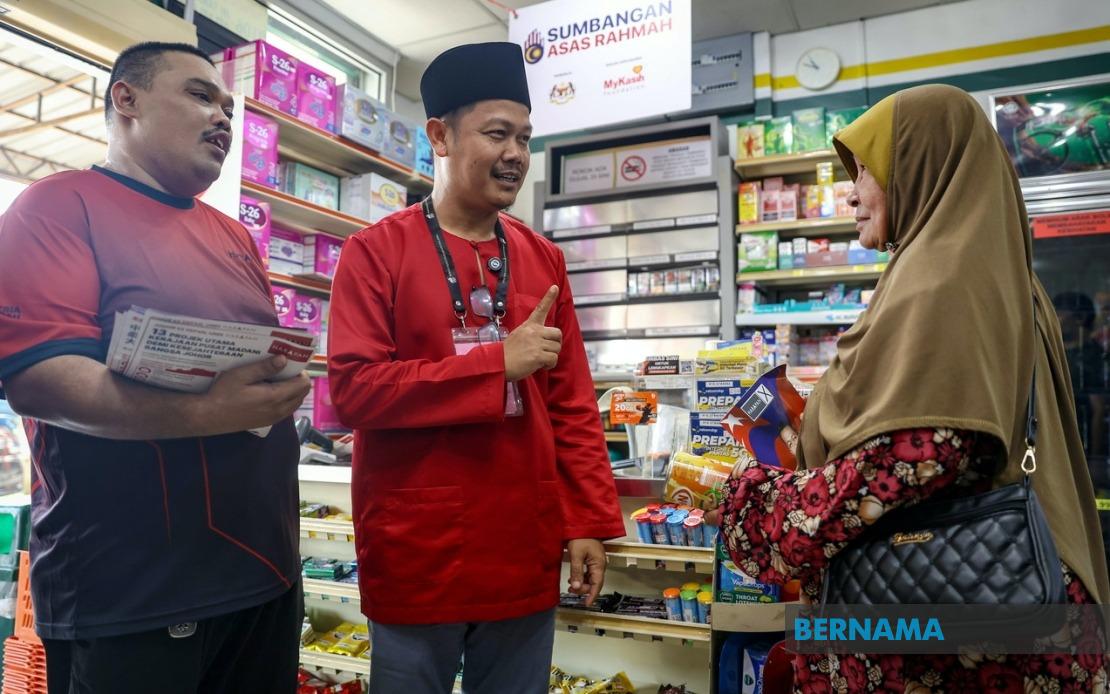
The Pulai Sebatang constituency emerges as a pivotal battleground in the July 11 Johor state election, with the contest crystallising two fundamentally different approaches to local governance. Pakatan Harapan's candidate Haniff @ Ghazali Hosman, 46, is championing a development strategy centred on transforming the constituency into a regional destination whilst preserving traditional livelihoods, whereas incumbent Barisan Nasional representative Hasrunizah Hassan is building her campaign on tangible progress achieved during her current term and the promise of completing ongoing initiatives.
Haniff's pitch emphasises the untapped potential within Pulai Sebatang's geography. He frames the constituency as a strategic asset, benefiting from its position encompassing Pontian town and proximity to established economic corridors in the region. His campaign material highlights the dual opportunity to attract quality investment whilst ensuring that development dividends reach ordinary residents without marginalising the fishing and agricultural sectors that have historically anchored the local economy. This messaging reflects a broader debate within Malaysian politics about reconciling modernisation with social protection—a tension particularly acute in rural and semi-rural constituencies where traditional livelihoods remain economically and culturally significant.
The PH candidate's platform extends beyond broad economic messaging. Haniff has prioritised addressing specific, longstanding grievances that have accumulated in the constituency. Fishermen in Pontian Besar have repeatedly sought compensation for losses, a demand that has featured prominently in community discussions. Meanwhile, residents in the farming areas around Parit Datuk contend with chronic drainage inadequacy that triggers seasonal flooding, destroying crops and damaging infrastructure. These localised concerns represent precisely the kind of granular constituency work that often determines election outcomes, particularly where residents perceive neglect of their particular sectoral interests.
Haniff's campaign methodology reflects a classical ground-level approach to voter engagement. Through systematic walkabouts and door-to-door canvassing, he has sought to build familiarity and demonstrate accessibility to constituents. His prior electoral experience—contesting Pontian parliament in 2013 and Benut state assembly in 2022—provides him with both organisational experience and local recognition, though his previous unsuccessful bids represent a potential vulnerability. Nevertheless, his confidence in replicating PH's 2018 performance in the constituency suggests internal polling data supporting competitive viability.
Hashrunizah's campaign rests on a different foundation: demonstrating tangible delivery within a constrained governance environment. The proposed expansion of Pontian Hospital has emerged as a defining issue throughout her campaign interactions, and she can point to recent momentum—approval for a new hospital block and ongoing procurement processes—as evidence of progress. For a rural constituency where healthcare access remains a legitimate concern, the prospect of expanded medical facilities carries substantial weight among voters. This focus on infrastructure investment reflects BN's traditional electoral strategy of emphasising concrete developmental projects as validation of electoral support.
Beyond the hospital initiative, Hasrunizah is emphasising the scale of her local development agenda. The completion of 25 remaining village road projects from 75 applications documented since her election in 2022 represents significant ongoing work, though the discrepancy between applications and completions might raise questions about implementation pace among scrutinising voters. Road infrastructure, whilst seemingly mundane, fundamentally affects quality of life in dispersed rural constituencies where connectivity directly impacts economic participation and access to services.
The incumbent is also leveraging state-level welfare initiatives as electoral assets. The Kasih Johor assistance programme, housing subsidies, and first-home ownership schemes represent redistributive policies that provide tangible material benefits to targeted demographics. These initiatives, administered through BN state structures, create constituencies of beneficiaries who may feel inclined toward electoral reciprocation. This dimension of the contest reflects how electoral politics in Malaysia intersects with the welfare apparatus, where government benefits become intertwined with party legitimacy.
Hashrunizah's campaign infrastructure combines traditional political engagement with contemporary digital outreach, acknowledging the necessity of reaching voters through multiple channels. Her appearance at the Johor TVET MARA Roadshow, alongside Pontian MP Datuk Seri Ahmad Maslan, served dual purposes: highlighting vocational training opportunities whilst reinforcing visual association between federal and state BN machinery. Such coordination demonstrates institutional party strength and suggests confidence in electoral machinery mobilisation.
Ahmad Maslan's endorsement of both Hasrunizah and the neighbouring Benut BN candidate Datuk Mohd Sumali Reduan underscores a coordinated regional campaign emphasising candidates' educational credentials and administrative track records. This messaging strategy targets middle-class voters and those concerned with governance competence, implying that formal qualification and professional background predict effective legislative performance. The emphasis on BN's election machinery motivation suggests internal confidence, though such statements also function as exhortations to party workers to maintain electoral intensity through polling day.
The Pulai Sebatang contest ultimately reflects a broader Malaysian electoral pattern: contests between incumbent parties emphasising delivery and opposition parties emphasising alternative visions tend to turn on local perceptions of government responsiveness and tangible benefit distribution. Haniff's transformation narrative appeals to voters seeking change and new directions, whilst Hasrunizah's continuity message targets those satisfied with incremental progress and wary of electoral uncertainty. For a constituency where fishing and farming communities coexist with expanding urbanisation, the outcome may hinge on which candidate more convincingly addresses the practical concerns of economically vulnerable voters whilst appearing credible as an agent for broader development.
Early voting scheduled for July 7 provides an indication of campaign momentum before the July 11 polling day. Participation rates in early voting, particularly among government employees and essential workers, may offer preliminary signals regarding electoral dynamics. The campaign period leading to election day will likely feature intensified grassroots activity from both camps, with particular focus on turnout mobilisation in areas where voter participation traditionally determines seat outcomes. For observers monitoring Johor state politics and Malaysian electoral trends more broadly, Pulai Sebatang represents a microcosm of contemporary political competition between established governance and demands for alternative development approaches.

