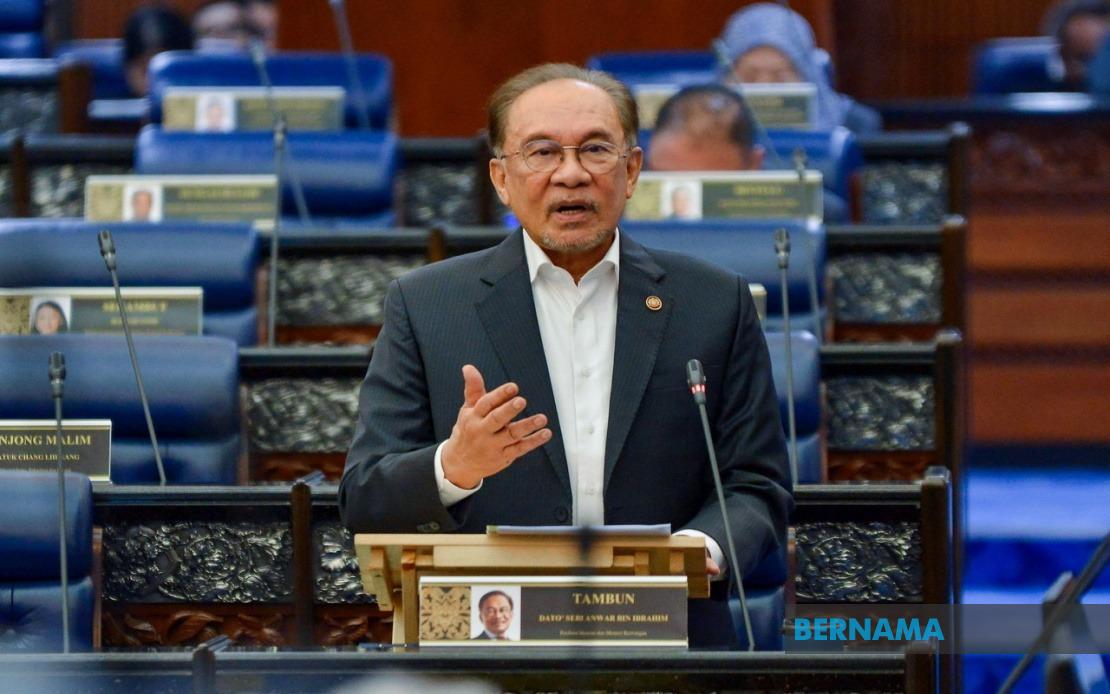
Prime Minister Datuk Seri Anwar Ibrahim has directed the Transport Ministry to undertake discussions on the strategic utilisation of ports positioned along the Malaysia-Thailand border as well as in Penang, with the broader objective of consolidating infrastructure development and improving logistics connectivity across the frontier region. The directive emerged from bilateral conversations between Anwar and his Thai counterpart, Prime Minister Anutin Charnvirakul, during the latter's recent official visit to Malaysia, highlighting how port accessibility has become a focal point in the two nations' infrastructure collaboration agenda.
Addressing the Dewan Rakyat during Ministerial Question Time, Anwar underscored that transport infrastructure—particularly port operations—featured prominently in the discussions with Anutin. The Malaysian premier noted that while a new transport corridor has been inaugurated in recent months, the conversation extended beyond roads to encompass railway systems and maritime gateways as potential vehicles for deepening economic integration along the shared frontier. This multi-modal approach reflects recognition among both governments that comprehensive border connectivity cannot rely on a single transportation channel.
The Premier specifically referenced two port facilities as central to the development strategy: Sanglang port and the Perlis Inland Port (PIP). Both installations represent relatively recent additions to Malaysia's cross-border logistics infrastructure and are positioned to capture economic opportunities arising from the Malaysia-Thailand border corridor initiative. By optimising usage of these facilities, officials believe Malaysia and Thailand can generate measurable spillover benefits for communities and businesses operating in proximity to the frontier, transforming border regions from peripheral zones into engines of shared prosperity.
The emphasis on port usage reflects a pragmatic understanding of how maritime infrastructure can supplement terrestrial trade routes. Unlike road networks that may become congested during peak trading periods, well-coordinated port systems can handle substantial cargo volumes while reducing transportation costs for goods moving between the two countries. For Malaysian businesses seeking to access Thai markets and vice versa, improved port connectivity offers alternative pathways that diversify risk and enhance supply chain resilience. This is particularly significant given post-pandemic attention to building redundancy into regional trade networks.
Beyond immediate commercial considerations, the port development agenda signals Malaysia's commitment to positioning itself as a logistics hub within Southeast Asia. By enhancing border port facilities, the country can attract transshipment cargo from third countries seeking efficient routing through the Malaysia-Thailand corridor. This potential has not escaped the attention of policymakers in both capitals, who recognise that infrastructure investments today can yield substantial dividends in the form of port revenues, employment, and tax receipts in subsequent years.
The Transport Ministry's forthcoming deliberations will necessarily involve coordination with multiple stakeholders. Port authorities, customs agencies, and private sector operators all possess relevant expertise and operational perspectives essential for crafting workable arrangements. Thai counterparts managing ports on their side of the border must also be engaged to ensure harmonisation of procedures, tariff structures, and operating hours. Without such coordination, infrastructure development risks remaining suboptimal, as misalignments in operational frameworks can negate technical advantages offered by upgraded facilities.
Railway infrastructure, which also featured in Anwar and Anutin's conversations, represents a complementary dimension to port development. The two transport modes can operate synergistically, with rail networks delivering cargo to ports for onward maritime shipment. Malaysia's ongoing interest in rail connectivity, particularly the proposed high-speed rail initiatives and freight lines, indicates recognition that comprehensive logistics solutions require integration across multiple modes. Port facilities that lack adequate rail access cannot fully realise their economic potential, and conversely, railways require effective cargo aggregation points to justify operational investment.
Tourism considerations, which Anwar also mentioned, introduce a broader development philosophy beyond pure logistics. Border regions often possess distinct cultural identities and natural attractions that appeal to leisure travellers. Improved port and transport infrastructure facilitates not only commercial cargo movement but also enables tourism flows that generate foreign exchange and employment in hospitality sectors. This diversification of economic activity helps ensure that border communities benefit across multiple channels rather than depending solely on merchandise trade.
The Malaysia-Thailand border corridor represents one of Southeast Asia's most economically dynamic frontier zones, given the substantial populations and industrial bases located on both sides. Historical trade volumes reflect strong demand for cross-border commerce, yet infrastructure bottlenecks have frequently constrained realisation of full potential. By addressing port utilisation now, Malaysian and Thai officials acknowledge that previous generations of infrastructure, while serviceable, no longer adequately accommodate contemporary trading volumes or modern cargo handling expectations. The directive to explore port usage thus reflects both retrospective assessment of infrastructure shortcomings and prospective confidence in border region growth prospects.
For Malaysian readers and businesses, the implications are tangible. Exporters utilising Malaysia-Thailand routes may eventually benefit from reduced transit times and lower shipping costs as port facilities improve. Import-dependent sectors similarly stand to gain from more efficient supply lines running through border gateways. Small and medium enterprises operating in Perlis, Kedah, and northern Perak—regions adjoining Thailand—should particularly monitor developments, as enhanced cross-border logistics can open market access that geographical proximity alone has not yet fully delivered. Conversely, transport operators and port workers should prepare for potential shifts in cargo flows and handling methodologies as new facilities and procedures are implemented.
The Transport Ministry's discussions will inevitably confront practical challenges. Infrastructure investments require substantial capital, raising questions about cost allocation between Malaysian and Thai entities. Different regulatory frameworks, labour standards, and customs procedures across the border necessitate careful negotiation to establish compatible systems. Environmental considerations, particularly regarding ports' ecological footprints, may introduce further complexity. These obstacles are surmountable, however, and the fact that both premiers have prioritised port discussions suggests sufficient political will exists to advance negotiations despite complications.
Anwar's public articulation of this port development agenda also serves a signalling function to investors, indicating that Malaysia remains committed to regional infrastructure development and cross-border cooperation. In an era when infrastructure financing options have expanded—encompassing bilateral deals, multilateral institutions, and private investment vehicles—clear government statements about priorities assist capital allocation decisions. Investors and infrastructure operators need confidence that government commitment will sustain through implementation phases, and prime ministerial remarks addressing parliament provide exactly such assurance.

