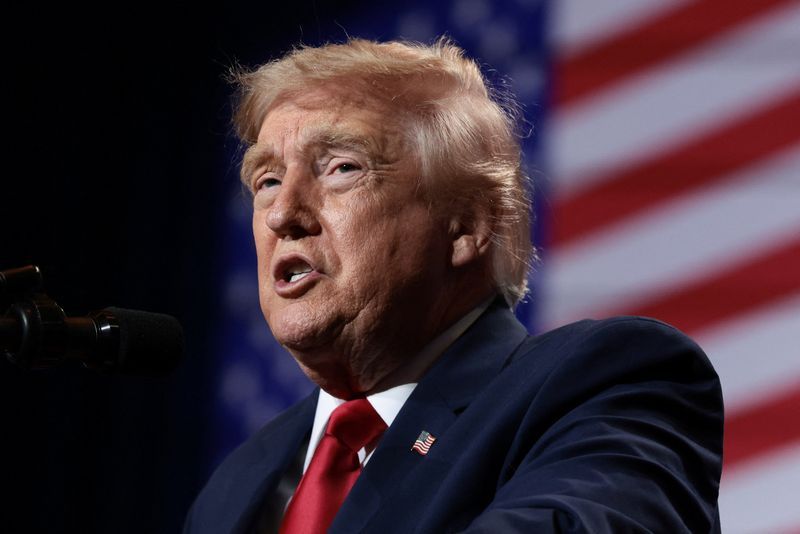
President Donald Trump has signed a national security presidential memorandum authorizing private sector participation in cyber operations targeting transnational criminal organizations that attack Americans from foreign jurisdictions. The White House framed the directive as a necessary expansion of law enforcement capabilities to combat evolving threats including ransomware attacks, financial fraud schemes, and other crimes orchestrated by internationally-based criminal networks.
The memorandum establishes a structured framework enabling federal agencies to harness private sector technological expertise and innovation in conducting cyber operations. Rather than limiting such activities to government agencies alone, the directive encourages private companies to partner with federal, state, local, tribal, and territorial authorities in identifying threats and proposing targeted cyber responses. This collaborative model represents a significant shift in how the United States approaches cyber defense against criminal actors operating across borders.
The Department of Homeland Security will administer the initiative through its National Coordination Center, working in conjunction with the Department of Justice to oversee specific cyber operations designed to disrupt foreign transnational criminal organizations. Private companies selected to participate must undergo vetting procedures and agree to maintain bonds or escrow accounts of at least $1 million as a safeguard, establishing financial accountability for their actions. This financial requirement signals the seriousness with which the government treats potential risks arising from privatized cyber operations.
Participating firms will be authorized to conduct two categories of operations under federal supervision: cyber surveillance activities and cyber effects operations. The latter encompasses potentially significant actions including manipulation, disruption, denial, degradation, or destruction of information systems, networks, physical or virtual infrastructure, and resident data. The broad definition of permissible cyber effects operations suggests that approved companies may conduct more invasive activities than traditional law enforcement surveillance, provided they operate within government-established parameters.
For Southeast Asian and Malaysian stakeholders, this development carries considerable implications. The region has emerged as a significant hub for cybercriminal activity, hosting servers, money laundering infrastructure, and operational centers for transnational crime syndicates targeting victims across multiple continents. Malaysian financial institutions, telecommunications companies, and government agencies have repeatedly encountered ransomware attacks, credential theft operations, and fraud schemes originating from or transiting through the region. Enhanced American cyber operations targeting these networks could potentially disrupt activities affecting regional security and economic stability.
However, the initiative also introduces complex legal and diplomatic questions relevant to Southeast Asia. The authorization for private American companies to conduct cyber operations in foreign jurisdictions, even against criminal targets, raises questions about sovereignty, international law, and potential collateral damage. Countries like Malaysia, Singapore, Indonesia, and Thailand—which host both criminal infrastructure and legitimate international businesses—may find themselves navigating unclear boundaries between authorized operations and potential interference with civilian systems.
The outsourcing of cyber operations to private companies is not unprecedented, yet it remains contentious among cybersecurity experts and international relations specialists. Previous iterations of similar programs have raised concerns about escalation risks, unintended consequences affecting non-target systems, and coordination failures between multiple private actors and government agencies. The absence of clear mechanisms for inter-agency oversight and dispute resolution could complicate responses when operations inadvertently affect critical infrastructure or civilian networks in third countries.
Private sector participation in cyber warfare and law enforcement operations introduces additional complexity regarding accountability and rules of engagement. Unlike uniformed military personnel or federal agents bound by explicit chains of command and international humanitarian law, private contractors operate in a murkier legal territory. The memorandum's requirement that operations occur under federal direction and control attempts to address this concern, yet questions persist about how effectively the government can monitor thousands of individual actions by vetted companies simultaneously conducting operations across global networks.
Regional governments and private sector actors in Southeast Asia should anticipate increased American cyber activity, both targeting criminal networks and potentially conducting intelligence gathering operations. Companies managing critical infrastructure, particularly in telecommunications, finance, and energy sectors, may experience heightened scrutiny or unwanted incursions as American cyber operators search for evidence of transnational criminal presence. Establishing clear communication channels with American authorities and implementing robust cybersecurity defenses will become increasingly important for multinational corporations and regional enterprises.
The White House has not yet provided detailed information about implementation procedures, specific targeting criteria, or mechanisms for third-country governments to report concerns about operations affecting their territories. The Department of Homeland Security and Department of Justice's silence on these procedural details suggests the framework remains under development. Malaysia and other regional nations may need to engage diplomatically with American counterparts to clarify how operations will be conducted, what safeguards exist for legitimate infrastructure, and how transnational disputes will be resolved.
International law experts have noted that cyber operations conducted by private companies, even against criminal targets, potentially violate sovereignty principles unless host nations provide explicit consent. The memorandum does not address whether the United States will seek permission from foreign governments before conducting operations within their borders. This ambiguity could create friction between the United States and regional partners, particularly if operations disrupt legitimate businesses or cause unintended damage to civilian infrastructure.
The financial requirement for participating companies—maintaining $1 million bonds or escrow accounts—suggests the government recognizes significant liability risks. This protection for victims of inadvertent damage, while valuable, may prove insufficient if operations cause widespread disruption to critical systems. Regional businesses and governments should consider whether their insurance and legal frameworks adequately address potential claims arising from American cyber operations conducted in their jurisdictions.
Looking forward, Malaysia and Southeast Asian nations should monitor implementation of this memorandum closely. Engaging with American officials to clarify operational parameters, establishing bilateral agreements governing cyber operations in regional territories, and strengthening domestic cybersecurity capabilities will be prudent responses. The initiative reflects broader American determination to combat transnational crime through expanded cyber capabilities, a trend likely to intensify regardless of political changes in Washington.

