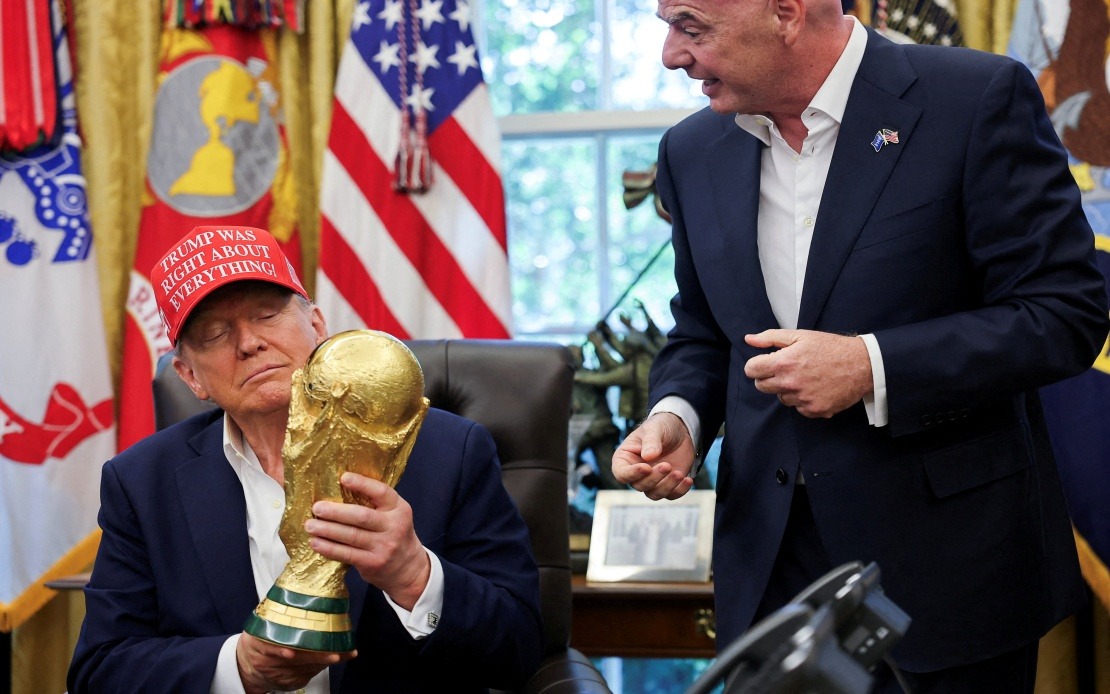
US President Donald Trump struck a notably diplomatic tone in Istanbul on Sunday when discussing Spain, congratulating the country on its 1-0 FIFA World Cup victory over Argentina and insisting he harbours no ill-will towards Prime Minister Pedro Sanchez. The remarks represent a striking reversal from Trump's vitriolic statements made just weeks earlier, when he had publicly demanded a complete cessation of American trade with the European nation and characterised Spanish officials in deeply unflattering terms.
The timing of Trump's softer rhetoric highlights the complex dynamics at play in transatlantic relations, where sporting achievements can occasionally serve as diplomatic circuit-breakers between nations in fundamental disagreement. When asked about any ongoing tensions with the Spanish leadership, Trump flatly denied their existence, stating "I have no tension with him. I have no tension with anybody," whilst acknowledging Spain's superior performance on the pitch during what he characterised as a competitive and thrilling World Cup final.
Trump's earlier condemnation of Spain had been sweeping and unsparing. At a NATO summit gathering in Ankara, Türkiye, earlier in July, he had labelled the country a "wasted cause" and a "terrible partner in NATO," citing Madrid's unwillingness to grant American military forces access to Spanish bases during operations related to Iranian tensions. The president had also taken issue with Spain's refusal to commit to the NATO benchmark of spending five per cent of gross domestic product on defence, a target that has become increasingly contentious as alliance members face pressure to elevate military investment.
The escalation had been severe enough that Trump declared at the Ankara news conference: "I don't want anything to do with Spain. Cut off all trade with Spain, please, including visits." He had further instructed aides and diplomats to cease engagement with Spanish counterparts, describing the nation and its officials as "hopeless" and "bad people." Such language represented the kind of sweeping geopolitical condemnation that had characterised Trump's approach to alliance management during his tenure.
For Malaysian readers and observers across Southeast Asia, the Spanish-American rift and its sudden thaw carries instructive lessons about the volatile nature of contemporary great power diplomacy. Nations across the region, many of which maintain complex security relationships with multiple major powers, would recognise the pattern of Trump's approach: the rapid oscillation between threat and conciliation, the weaponisation of economic leverage as a negotiating tool, and the willingness to openly castigate allies for perceived shortcomings in burden-sharing or military cooperation.
Spain's position within NATO has long been a source of tension with American administrations concerned about defence spending levels across the alliance. The 5 per cent target that Trump cited represents an especially ambitious threshold that few European nations have consistently met. By invoking this metric during the dispute, Trump was attempting to use economic coercion to force budgetary alignment, a tactic that reflects broader American frustration with what Washington perceives as inadequate European investment in collective security.
The World Cup final victory, whilst symbolically significant, likely provided Trump with a face-saving opportunity to walk back the earlier hostility without appearing to capitulate on the underlying policy disagreements. By pivoting to praise Spain's athletic achievement and sportsmanship, the president could acknowledge Spanish success whilst the backdrop of international sporting goodwill created a more forgiving context for diplomatic recalibration. The observation that "Spain played better," even whilst characterising the match as "very close," allowed Trump to concede competitive superiority without conceding political ground.
For regional observers, this episode underscores the unpredictability inherent in dealing with mercurial American leadership. While Southeast Asian nations have generally sought to maintain balanced relationships with both China and the United States, the example of Spain illustrates how quickly strategic disagreements on defence commitments or military base access can escalate into comprehensive economic and diplomatic confrontation. The region's smaller economies lack Spain's capacity to weather such threats, making understanding and anticipating American moods a critical foreign policy competency.
Spain's experience also demonstrates the limited leverage that traditional NATO allies possess when confronted with American demands. Despite generations of alliance membership, shared democratic values, and integrated defence structures, Spanish officials found themselves subjected to severe personal and institutional criticism by the American president over disputes concerning military spending and base access. This suggests that even long-standing relationships offer little protection against sudden shifts in American bilateral posture when Trump perceives inadequate burden-sharing or strategic alignment.
The sudden mellowing of Trump's rhetoric also raises questions about the durability of any reconciliation. Spanish officials would likely remain cautious about interpreting Sunday's congratulatory comments as a genuine resolution of the underlying disputes. The core disagreements regarding defence spending commitments and American military access to Spanish territory remain unresolved, and Trump's demonstrated willingness to pivot rapidly between cooperation and confrontation suggests that further tensions could emerge if Spain continues to resist his demands on these matters.
Regionally, the Spanish-American episode may also inform ongoing discussions across Southeast Asia about defence spending and security cooperation with Washington. Various ASEAN nations have faced American pressure to increase military expenditures or provide greater access to facilities, and the Spanish precedent demonstrates how such requests can be coupled with aggressive rhetoric when governments decline to comply. Nations negotiating with American counterparts must weigh the risks of being branded as reluctant partners against the fiscal and strategic costs of meeting Washington's demands.
Ultimately, Trump's shift in tone, whilst temporarily easing bilateral tensions with Spain, does not resolve the fundamental disagreements that prompted his earlier outburst. Spain maintains its own defence spending priorities, and American military interests in the Mediterranean region remain unchanged. The congratulatory remarks following the World Cup final represent a pause in hostilities rather than a comprehensive reset, illustrating the episodic and personalised nature of contemporary American foreign policy under Trump's leadership.

