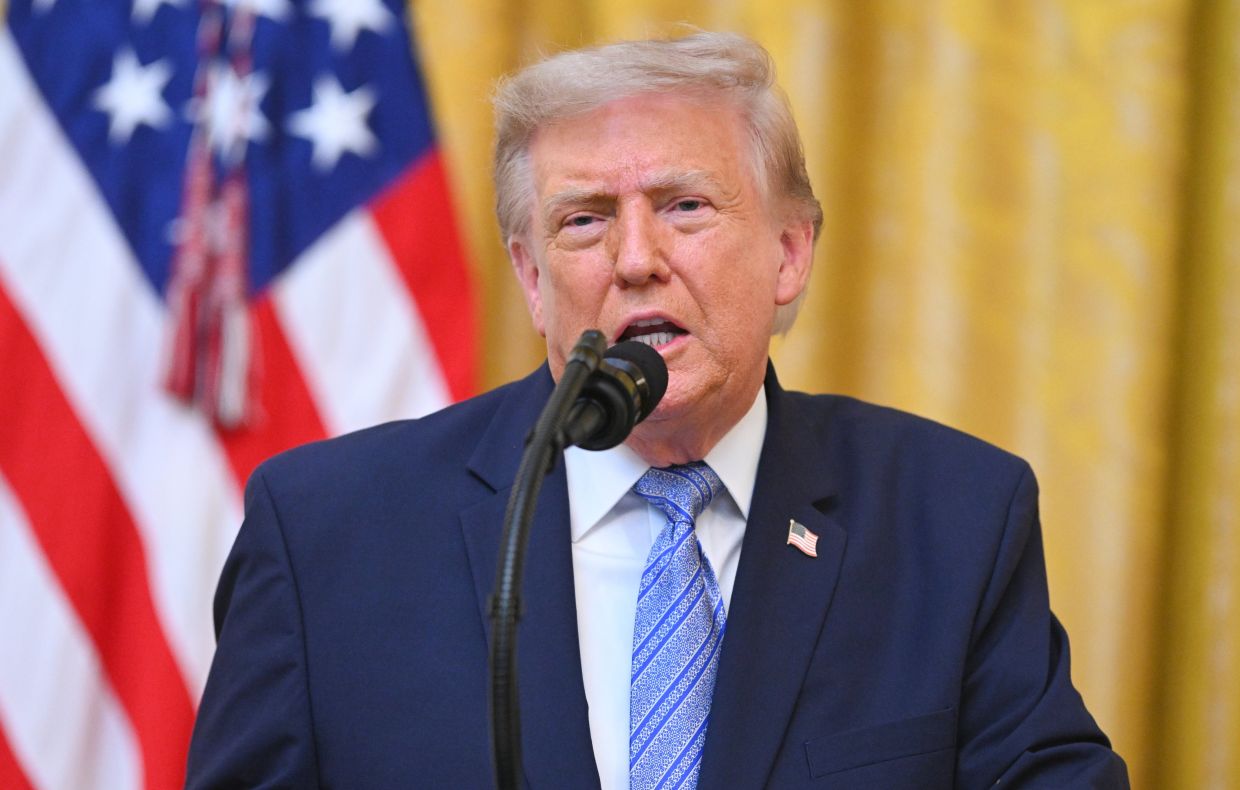
During a significant White House address marked by escalating accusations and domestic political maneuvering, President Trump delivered what ranks among his administration's most confrontational speeches, pivoting seamlessly between allegations of Chinese electoral interference, heightened tensions with Iran, and sweeping calls for voting system overhauls. The speech strategically timed ahead of the midterm elections demonstrated the administration's intent to frame geopolitical threats and domestic policy through a unified lens of protecting American institutions from what it characterizes as unprecedented foreign and internal challenges.
At the centrepiece of Trump's remarks lay an assertion that China orchestrated what he termed the "largest compromise of election data in history"—a claim he presented as fundamentally threatening American national security. Rather than treating the matter as a technical breach requiring routine remediation, the White House positioned it as a deliberate act of strategic sabotage demanding immediate and aggressive response. For regional observers in Southeast Asia, this framing carries particular significance, as it signals how Washington intends to weaponize cybersecurity concerns in its broader competition with Beijing, potentially influencing technology policies and data governance discussions throughout Asia-Pacific economies.
Beyond allegations of data theft, Trump extended accusations to suggest a more insidious campaign of influence operations targeting American elites. He claimed that China had successfully persuaded US business leaders and media figures to turn against the sitting president—a contention that underscores concerns within the administration about Beijing's soft power activities and intelligence operations within American society. This narrative reflects growing anxieties within Washington policy circles about Chinese influence networks and their potential penetration of corporate boardrooms and editorial offices, concerns that have gained credibility among lawmakers from both parties despite limited public evidence of the scale Trump described.
The president went further in attributing to China a deliberate strategy aimed at undermining his own political survival during his initial term. By framing election interference as personally targeted rather than merely opportunistic, Trump recast what might be considered routine foreign intelligence activity as an existential threat to his administration. This rhetorical move carries implications for how US-China relations may develop, as it establishes a precedent for interpreting Chinese actions through a lens of direct political targeting rather than broader systemic competition.
Significantly, Trump anchored these international accusations within a domestic political framework centred on the upcoming midterm elections. His repeated emphasis on the necessity for "free and fair elections" served dual purposes: legitimizing concerns about foreign interference while simultaneously amplifying long-standing Republican arguments about domestic electoral vulnerabilities. For Malaysian observers accustomed to witnessing electoral competition, the American president's focus on systemic election integrity concerns reflected a particular American anxiety about the robustness of democratic institutions that contrasts notably with governance challenges in other regions.
The administration's policy response crystallized around specific voting reform proposals, particularly those enshrined within the SAVE America Act framework. Trump's push for mandatory voter ID requirements and proof of citizenship documentation appeals to a particular vision of electoral security, one contested within American civic debates but presented by the administration as essential safeguards against fraud. These proposals carry international resonance, as they reflect broader ideological divides about balancing ballot access with verification mechanisms—tensions that resonate differently across democracies with varying demographic compositions and institutional histories.
Trump's address signalled a broader repositioning of American foreign policy toward what he characterized as an end to strategic "complacency" regarding China. This rhetorical move suggests the administration views its second term as an opportunity to fundamentally recalibrate the US-China relationship away from accommodation toward sustained confrontation across multiple domains. For Southeast Asian nations seeking to maintain balanced relationships with both superpowers, such rhetoric complicates their strategic calculus by suggesting that American policymakers may view neutrality as increasingly untenable.
The speech's treatment of Iran reflected a pattern of sustained tension consistent with the administration's broader Middle East strategy, though details remained limited in public accounts. The inclusion of Iran alongside China in a major presidential address underscored how the White House frames distinct regional challenges within a unified framework of great power competition and American interests, suggesting coordinated policy approaches across geographies rather than compartmentalized strategies.
Perhaps most striking was Trump's explicit threat regarding broadcast licensing, with suggestions that networks ABC and NBC might face consequences for coverage he deemed hostile. This unprecedented challenge to media regulatory frameworks raised fundamental questions about executive power and press freedom, concerns that transcend American borders. For journalists and media practitioners throughout Southeast Asia operating in increasingly politicized environments, such rhetoric from the world's foremost democracy carries uncomfortable implications about acceptable boundaries for executive pressure on independent media institutions.
The address collectively presented a coherent worldview wherein foreign interference, domestic electoral concerns, and media accountability merge into a single crisis narrative demanding comprehensive response. Whether viewed as a realistic assessment of contemporary threats or a politically strategic framing, the speech establishes parameters for how the Trump administration intends to prosecute competition with China, manage regional tensions, and reshape domestic political discourse throughout its second term. These positions will likely influence both bilateral relations with Beijing and the strategic calculations of regional powers navigating an increasingly fraught geopolitical environment where spheres of influence remain contested and the rules governing great power competition continue evolving.

