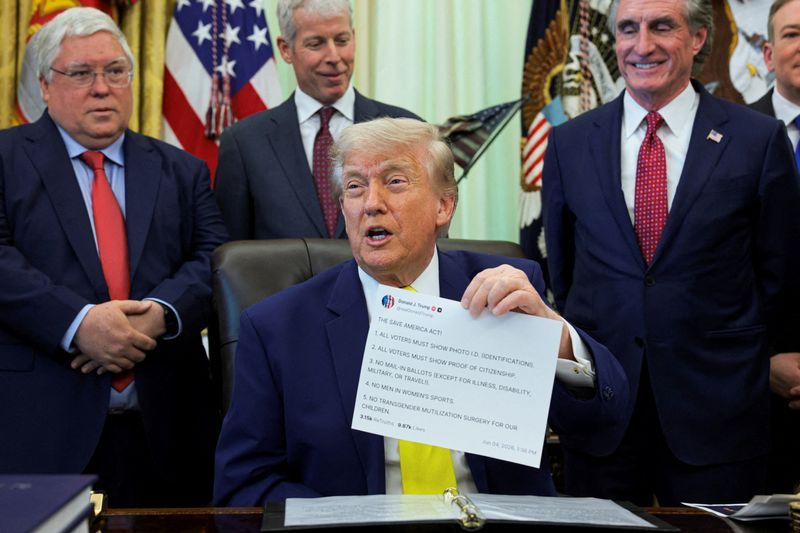
The U.S. President has become embroiled in a significant legal dispute centring on Truth API, a subscription service operated by Trump Media & Technology Group that grants wealthy subscribers privileged early access to posts from senior government officials. The complaint, filed in federal court in Manhattan by the Intercept and the Freedom of the Press Foundation, seeks to shut down the service entirely, contending it represents a profound constitutional violation and an unconscionable conflict of interest. The plaintiffs argue that citizens and journalists deserve equal and simultaneous access to official government communications, particularly those that can influence financial markets and public understanding of national policy.
The service, which launched on 1 August, charges subscribers as much as $100,000 per month for rapid access to posts from ten prominent Truth Social accounts, notably including the President's own feed alongside those of Vice President JD Vance, FBI Director Kash Patel, Health and Human Services Secretary Robert F. Kennedy Jr., and official White House accounts. This tiered access system emerged just four days after Democratic Senators Elizabeth Warren of Massachusetts and Adam Schiff of California formally requested that the Securities and Exchange Commission investigate whether Truth API endangered the integrity of financial markets by granting Wall Street and wealthy insiders trading advantages while simultaneously enriching the President himself.
The conflict of interest is substantial and unavoidable. The President holds a 41.3% stake in Trump Media through his Donald J. Trump Revocable Trust, a position valued at approximately $950 million according to available financial data. His eldest son, Donald Trump Jr., serves as a director of Trump Media and oversees this trust arrangement, creating a direct family financial incentive to maximize subscriptions and revenues from the Truth API service. The plaintiffs contend that when the President posts market-moving announcements regarding tariffs, military operations in the Middle East, or other consequential policy matters, paying subscribers receive these communications minutes or hours before the general public and institutional investors, creating an illegal advantage in trading and information access.
The legal challenge rests on two distinct constitutional and statutory foundations. First, the plaintiffs argue that the First Amendment guarantees all Americans equal access to official government communications issued by the President and cabinet officials. The complaint states that there is no legitimate government interest in monetizing presidential statements or in allowing the President to profit personally from privileging certain citizens over others in the dissemination of official policy announcements. Second, the suit targets the White House's practice of posting official government announcements exclusively on Truth Social while this paid tiering system exists, effectively creating a private gatekeeping mechanism for public information.
Trump has a documented history of using Truth Social to disclose sensitive information that moves markets. Throughout his presidency, he has announced tariff changes, geopolitical developments, and other economically significant decisions initially through Truth Social posts, sometimes without simultaneous official White House press releases or announcements through traditional channels. This pattern, the plaintiffs argue, demonstrates that Truth Social posts are not merely personal commentary but function as official presidential communications that warrant the transparency and equal access protections historically afforded to White House statements and presidential addresses.
The Trump Media spokesperson dismissed the lawsuit as a politically motivated attempt to suppress the President's speech. In a statement, the company argued that countless media outlets and subscription platforms already disseminate and repackage information from the President, and that other news services offer premium subscription tiers. This defence essentially normalises the practice of paid access to information derivative from the President's statements, though it does not address the fundamental distinction that Truth API provides early access to primary government communications before they reach the general public. The company portrayed the plaintiffs as left-wing activists weaponising the courts to censor the President and harm Trump Media shareholders.
During an earnings call on Monday, Trump Media's interim Chief Executive Kevin McGurn characterised Truth API as enabling subscribers to receive news "fractionally faster" than other members of the public. This language, though minimising, inadvertently confirms the central allegation in the lawsuit: that the service exists precisely to grant paid subscribers an information advantage measured in minutes or hours during which markets could be trading and decisions could be made by corporate insiders with advance knowledge that competitors lack. The phrase acknowledges the temporal advantage while attempting to frame it as trivial or unremarkable.
The regulatory environment surrounding this dispute remains complex and politically charged. The SEC currently has three Republican commissioners, meaning the agency's investigation into Truth API, if conducted, would occur under Republican leadership unlikely to view the service as inherently problematic. This regulatory composition stands in contrast to the Democratic senators who initiated the inquiry, raising questions about whether the SEC will pursue the investigation with vigour or whether partisan considerations will influence how the agency treats allegations that a Republican president is profiting from information advantages.
For Malaysian and Southeast Asian observers, this case illuminates broader tensions in democracies regarding technology, media access, and executive power. The Truth API controversy demonstrates how social media platforms and personalised digital services can fragment the information ecosystem, creating elite access tiers that undermine the principle of equal citizenship and equal access to government information. In the Malaysian context, where concerns about media plurality and equal information access remain significant, the Truth API model presents a cautionary example of how digital-age communication infrastructure can concentrate information advantages among the wealthy and connected, widening disparities between ordinary citizens and privileged subscribers.
The lawsuit also raises fundamental questions about the relationship between the President's personal financial interests and his exercise of official powers. The President's substantial ownership stake in Trump Media creates an undeniable incentive to promote Truth Social as the primary channel for government communications, potentially distorting which platforms receive official attention and resources. This dynamic potentially compromises the President's obligation to serve all citizens equally and transparently, rather than directing official communications through services that enrich him personally.
The case is likely to proceed through federal court proceedings that may take months or years to resolve. However, regardless of the ultimate legal outcome, the Truth API controversy has already exposed serious structural questions about how government in the digital age should balance official transparency with technological innovation, and how to prevent elected officials from using their control over government communications to profit personally. The decision will likely set important precedent for how courts address similar schemes in the future, particularly as other officials and platforms experiment with tiered access models for government information.

